
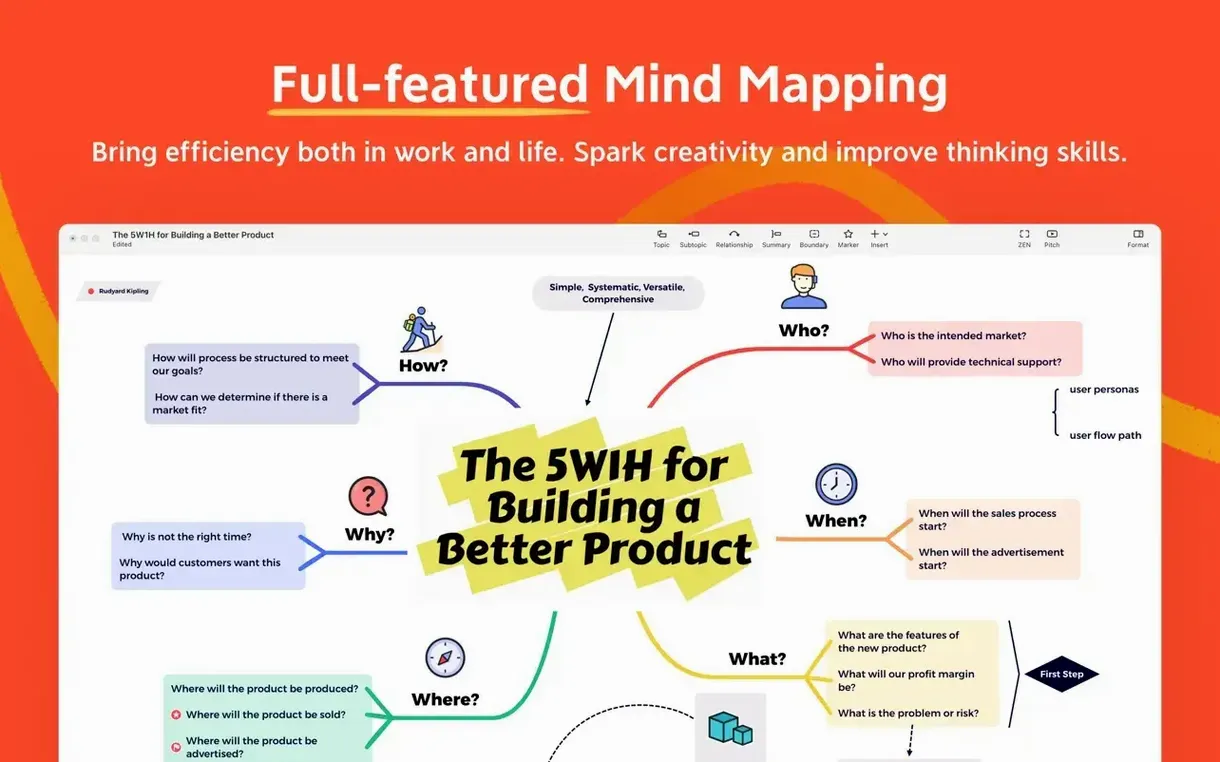

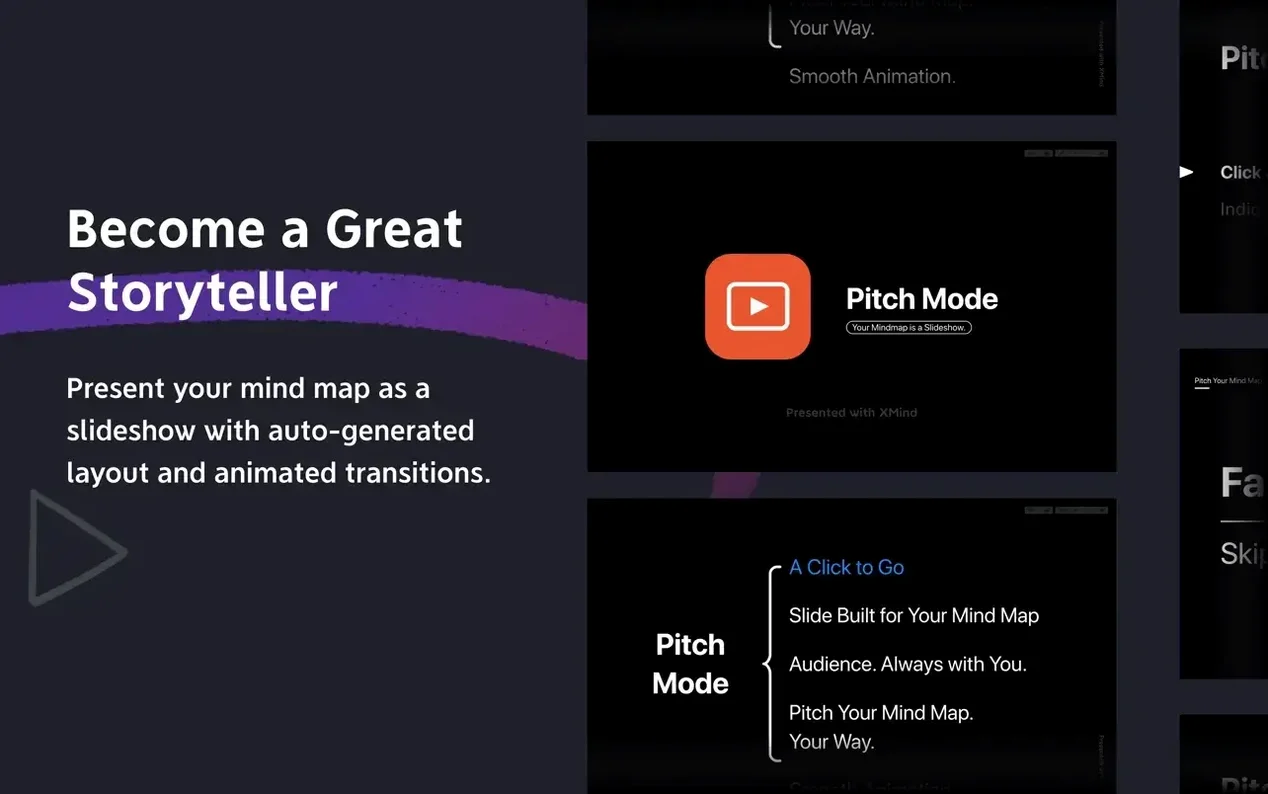
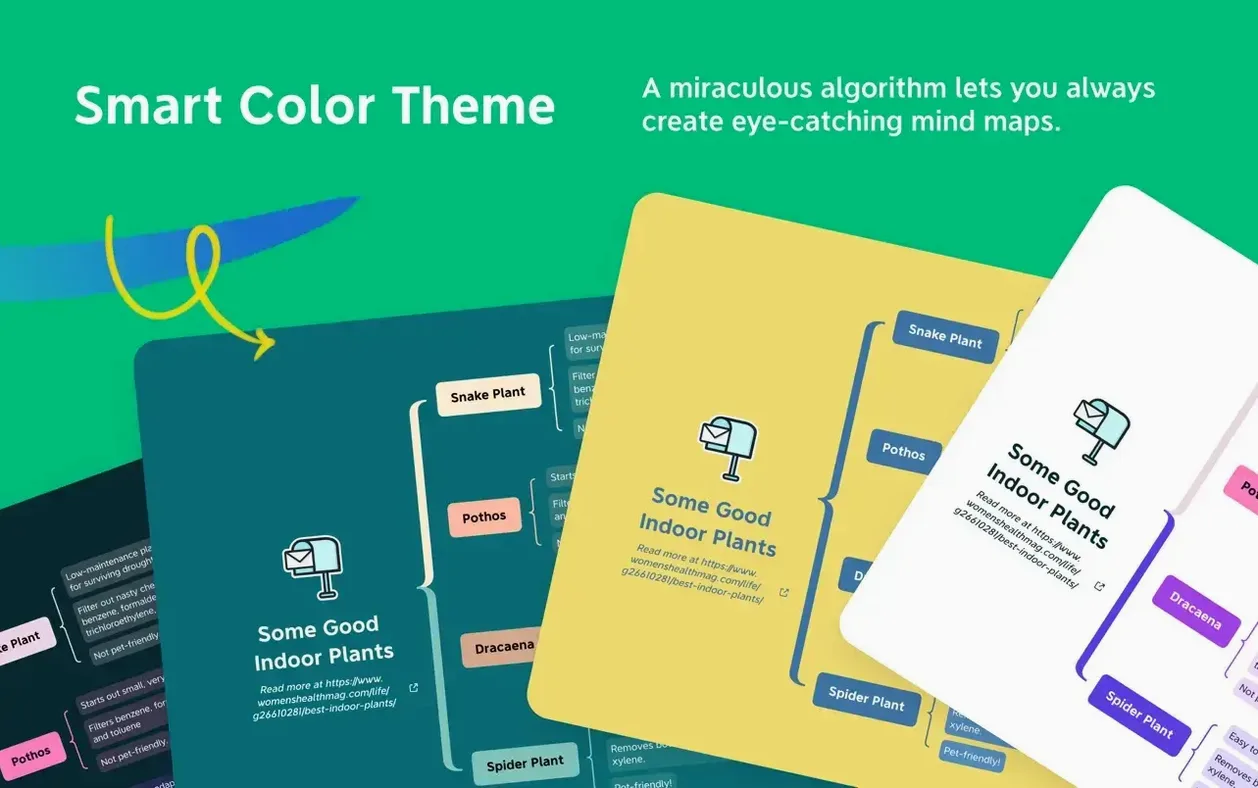
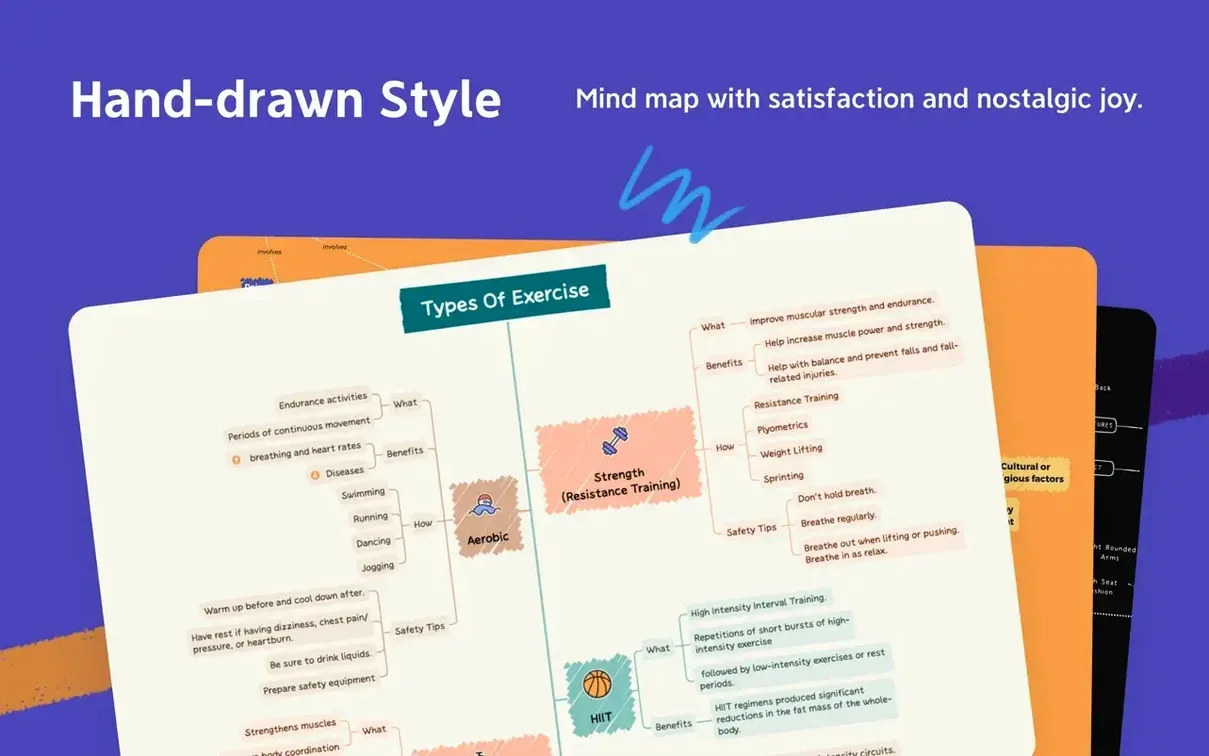

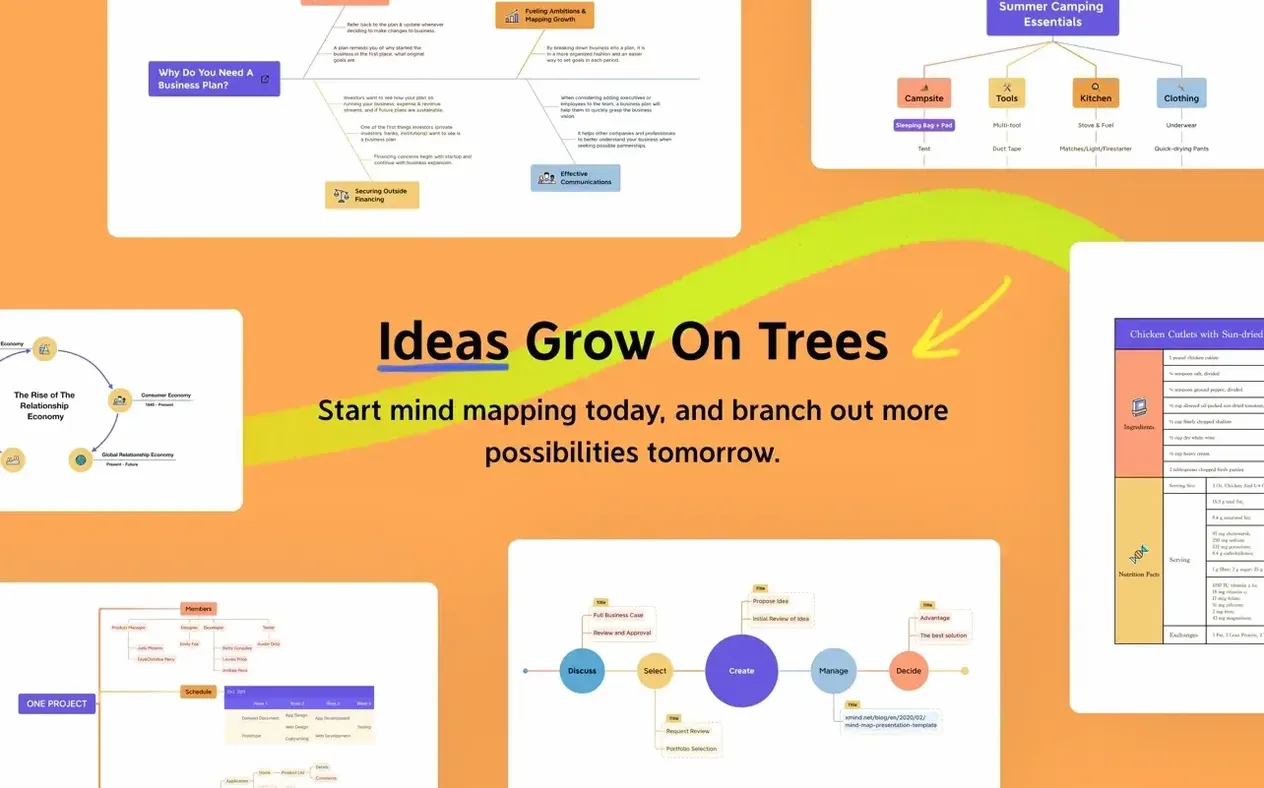
There's a feature called 'Pitch Mode' that turns your branches into slides. It's clever — not a separate presentation tool, just your map, rearranged for walking someone through an idea. XMind Pro is a brainstorming and mind-mapping app for people who need to untangle complicated thoughts without the software getting in the way. It handles the usual mind maps, but also Ishikawa (fishbone) diagrams, logic charts, and tables. Collaboration is built in if you need to share the thinking with others.
See your whole project shape at once
- Project planning when you need to see the whole shape at once
- Writing outlines that start messy and need structure later
- Teams hashing out a problem together on a shared canvas
Your maps live inside a proprietary format
- Proprietary format — your maps live inside XMind
- Not a sketching tool; it works best when you have words to organize
- Runs on Apple Silicon and Intel Macs with macOS 11 or later
Master one diagram type this week
Don't try to master every diagram type at once. Pick the one you actually need this week and live in it. The muscle memory for Tab to add a child and Return to add a sibling builds faster than you'd think.
- Open Preferences on day one and set the default save location. XMind keeps your maps in a proprietary format, so knowing exactly where they land saves hunting later.
- Resist the urge to decorate early. A clean default style with two or three colors beats a map that looks like a fireworks display. You can dress it up when the thinking is done.
- Try the Outline view from the toolbar. If you're coming from a plain text outliner, it's a comfortable bridge — same vertical list, same indentation, but with the mind map silently building itself in the background.
- Export a test map to FreeMind format right away, even if you don't use FreeMind. It confirms the interchange works and gives you a plain-XML backup path you'll be glad to have later.
I typed 'kitchen redo' and hit Tab
Let's say I'm planning a small kitchen renovation. I open a blank map and type "kitchen redo" as the central topic. That's the easy part.
With the central topic selected I hit Tab — one child topic appears. I type "cabinets" and hit Enter. Another sibling appears, I type "countertops." Three or four of those and the first layer is done. I don't arrange anything; I just dump every category that belongs to the project.
Now I walk the branches. I click "cabinets" and hit Tab twice. "Paint vs replace," then "hardware." Just keywords. The map starts to look lopsided — "countertops" has two children, "appliances" has five. That's fine. The imbalance tells me which decisions are fuzzier.
When the map feels complete enough to talk through, I switch to Pitch Mode. XMind walks the branches one at a time, full-screen, and I can click through the logic with a contractor sitting next to me. No separate slide deck. The map is the deck. I add a quick boundary around the "budget" branch to separate it visually from the design decisions, and save.
The whole session took maybe twenty minutes. I started with noise and ended with a shareable outline. That's the pattern that makes the app stick.
Fishbone diagrams MindNode won't touch
Compared to MindNode, XMind Pro feels more like a workshop than a sketchpad. MindNode excels at fast, pretty maps where you think by connecting dots. XMind gives you fishbone diagrams, tree tables, and logic charts — formats MindNode doesn't touch. If your work leans toward root-cause analysis or structured meeting notes, XMind covers more ground.
Next to FreeMind, the difference is night and day. FreeMind runs on Java, reads like software from 2006, and does one thing: classic mind maps. XMind imports FreeMind files without complaint, so you can open old work and immediately give it a modern layout, pitch-ready navigation, and collaboration options. The trade-off is that FreeMind stores everything in open XML you can read with a text editor. XMind's format is proprietary, which is worth knowing if long-term portability matters.
Compared to Scapple, the two barely compete. Scapple is a freeform note-scattering board where connections are loose and optional. XMind Pro wants structure — parent, child, sibling, boundary. Use Scapple when the ideas are still fog on a windshield. Switch to XMind when you're ready to name the relationships and walk someone through them in order.
- macOS 11 or newer
- Apple Silicon or Intel 64-bit processor
Questions I actually get
Does XMind Pro work on newer Macs?
Yes, it runs natively on Apple Silicon and Intel 64-bit Macs, from macOS 11 onward.
Notes from the tables 0
Sign in or pull up a chair to leave a note.
No notes on this one yet. They go up after I read them.