If you lean on MATLAB for heavy numerical work, think of Mathematica as the one that never forgot its symbolic roots. The difference shows up in version 14.3 with quiet additions like Lommel functions and Hilbert transforms — not the stuff of splashy ads, but exactly the kind of machinery that saves an afternoon when you're deep in a derivation.
On the visualization side, ListFitPlot and the expanded surface plotting tools make it simpler to turn a messy notebook into something you'd actually present. The new vector-based maps and mesh processing functions mean geometry-heavy workflows get their due, whether you're computing geodesics or cleaning up a 3D scan.
Under the hood, the Python and R links feel noticeably snappier, and the addition of ColumnwiseCombine tidies up data wrangling that used to need a few extra lines of code. Markdown export is finally here, so sharing results outside the Wolfram bubble takes one less conversion step. And yes, dark mode now runs through the whole interface properly, with new standard colors tuned for both light and dark environments.
Bottom line: this update doesn't rewrite the playbook. It sharpens the tools you already reach for and fills in a few gaps that experienced users have been navigating around for years.
Symbolic math vs. Simulink and control systems
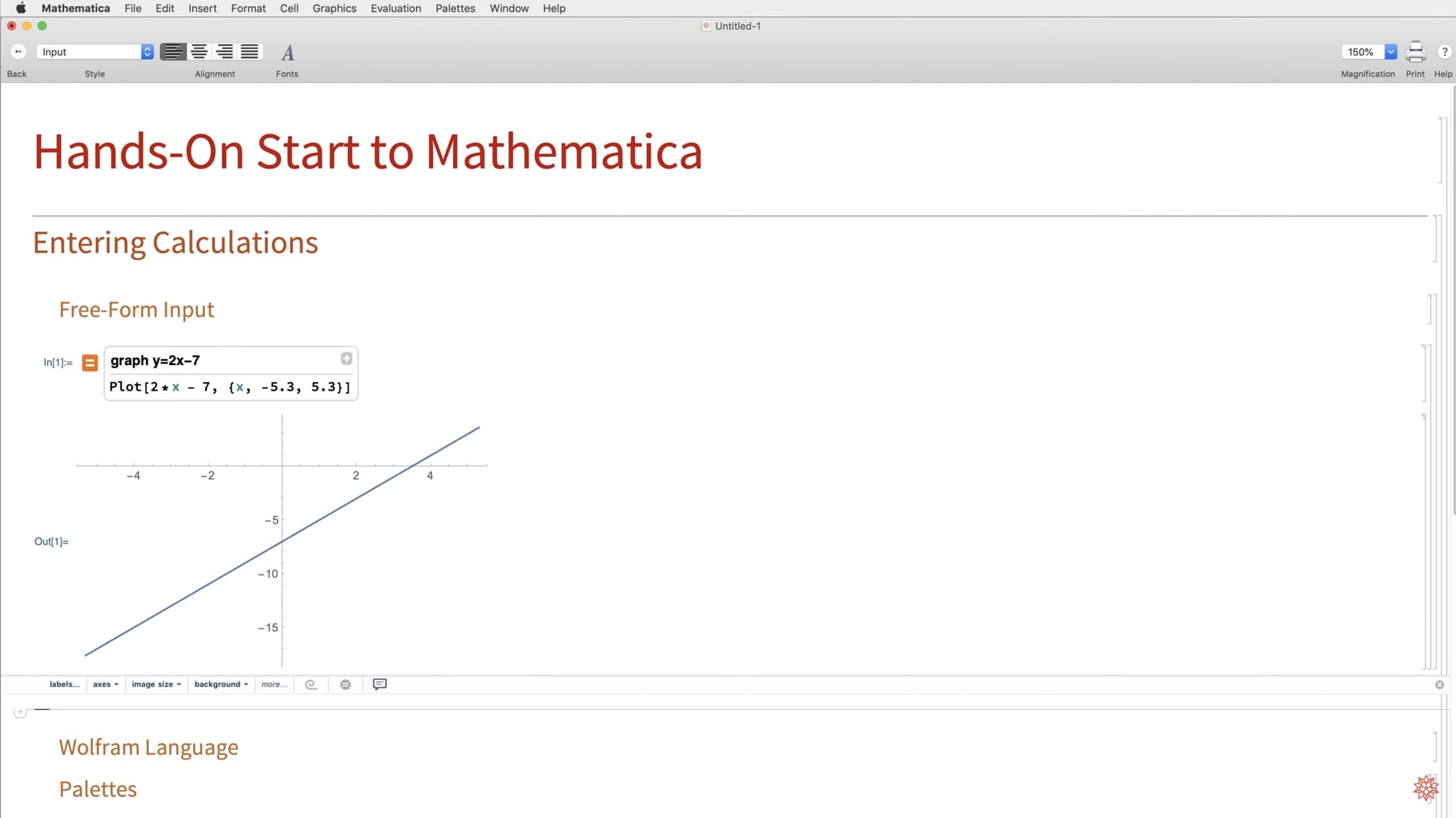
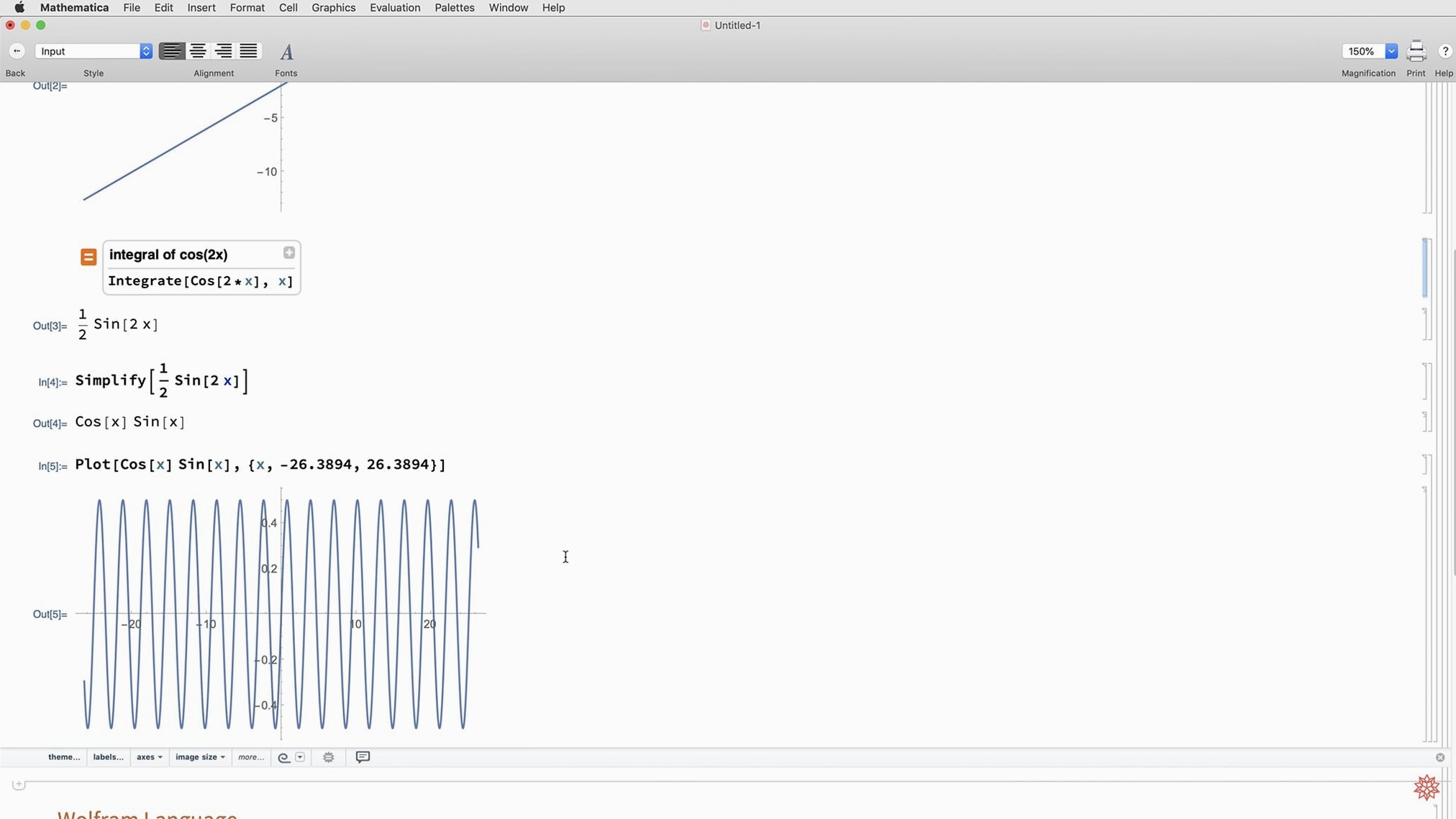
Mathematica sits at a crossroads. Next to MATLAB, it leans far harder into symbolic work — solving integrals analytically, simplifying expressions, handling assumptions. MATLAB counters with Simulink and a deeper foothold in control systems, but if your workflow starts on a whiteboard, Mathematica feels more natural. Maple covers similar symbolic ground and often feels gentler for pure-math teaching, though its programming layer doesn't stretch as far into deployment, image processing, or the kind of mixed notebook Mathematica has refined over the years.
Against a Python stack like Jupyter with SymPy and Matplotlib, Mathematica bundles everything into one curated environment. You trade the sprawling open-source ecosystem for a notebook where plots, code, and text stay in conversation without pip-installing half a dozen packages. The version 14.3 additions like Markdown export narrow that gap a little, making it easier to push results into documentation or a blog post.
Pasting a PDE straight from the whiteboard
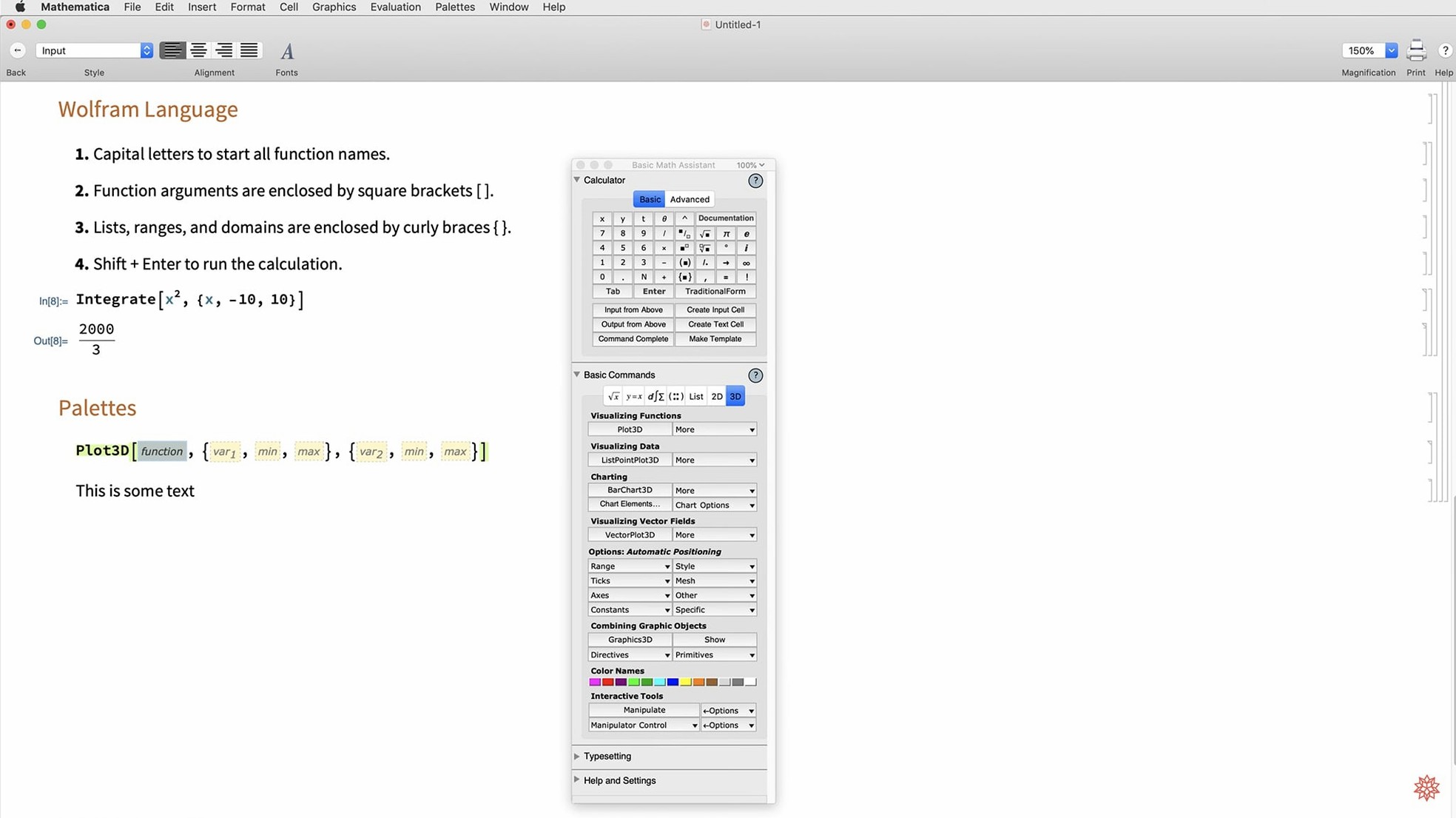
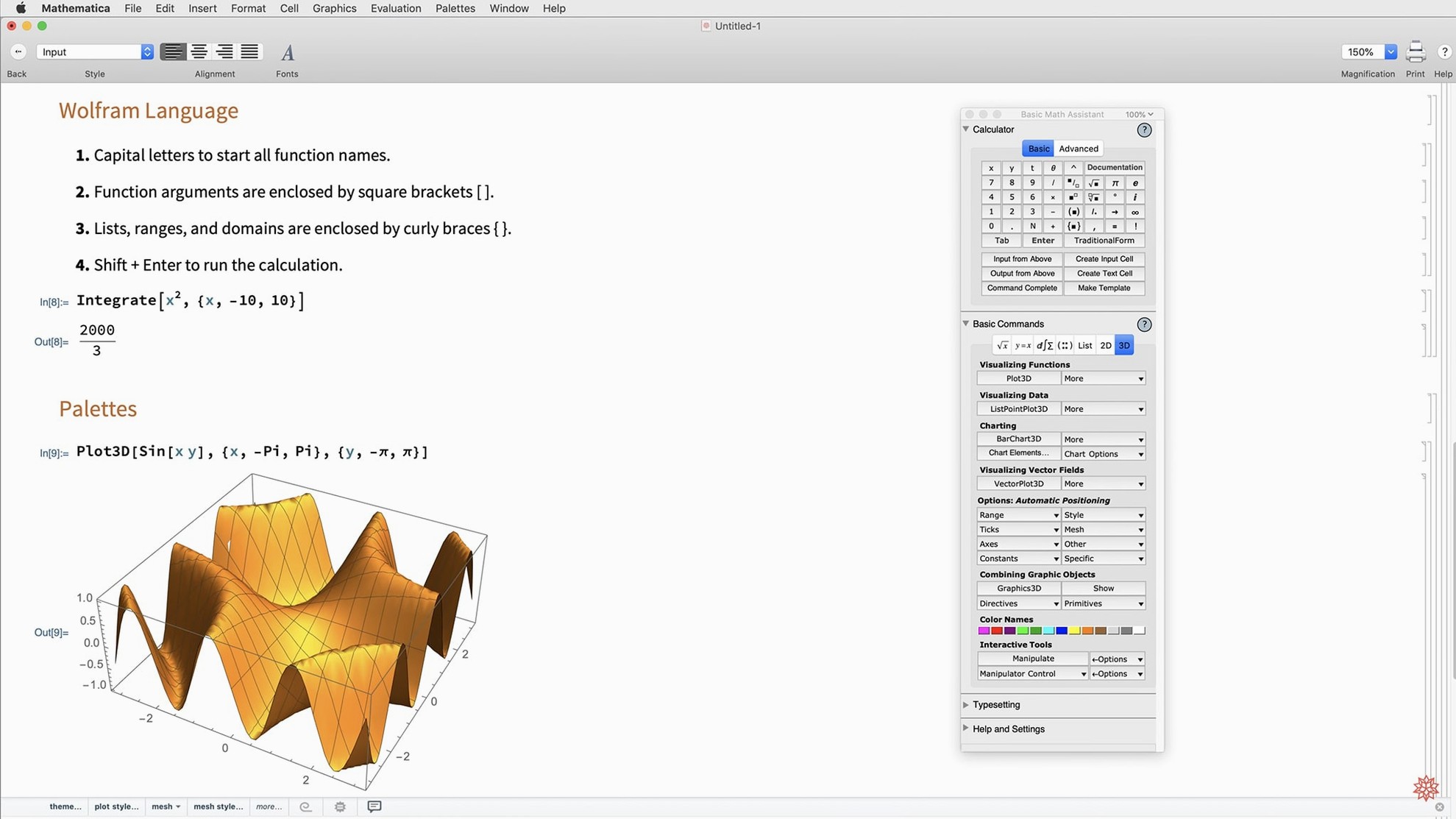
Imagine a grad student midway through a nonlinear optics problem. The whiteboard has a partial differential equation with three boundary conditions. She types it into Mathematica roughly as written — Greek letters, partial derivatives, the works — and lets DSolve chew on the symbolic form while she grabs coffee. It returns a family of solutions involving Bessel functions, so she plots a few modes with the new surface tools, tweaks a parameter, and watches the field distribution shift on screen.
Later, she pulls in experimental data from a CSV, uses ColumnwiseCombine to align time series, and overlays the analytical curve on the measurements. The fit isn't perfect, so she adjusts the model, re-runs the symbolic step, and exports the updated notebook as Markdown for her advisor. One environment, no file-format gymnastics, and a dark-mode interface that doesn't scorch her eyes at midnight.
Version 14.3 is one of those updates where the list looks dry but the daily experience improves. Here's what landed:
- Full dark mode support across the interface, with new standard colors that look right in both dark and light environments.
- New mathematical tools: Hilbert transforms, Lommel functions, and additional matrix decompositions.
- Visualization gets a boost with ListFitPlot, more surface plotting functions, vector-based maps, and mesh processing tools.
- Geodesic computation, LLMGraph, faster Python and R integration, ColumnwiseCombine, system model validation tools, and Markdown export support.
- macOS 12 or later
- Runs on both Intel and Apple Silicon Macs
Questions I actually get
Can I use Wolfram Mathematica on a mobile device?
Yes, Wolfram supports mobile access alongside the desktop application, though the full development environment is built for macOS, Windows, and Linux.
Notes from the tables 0
Sign in or pull up a chair to leave a note.
No notes on this one yet. They go up after I read them.