
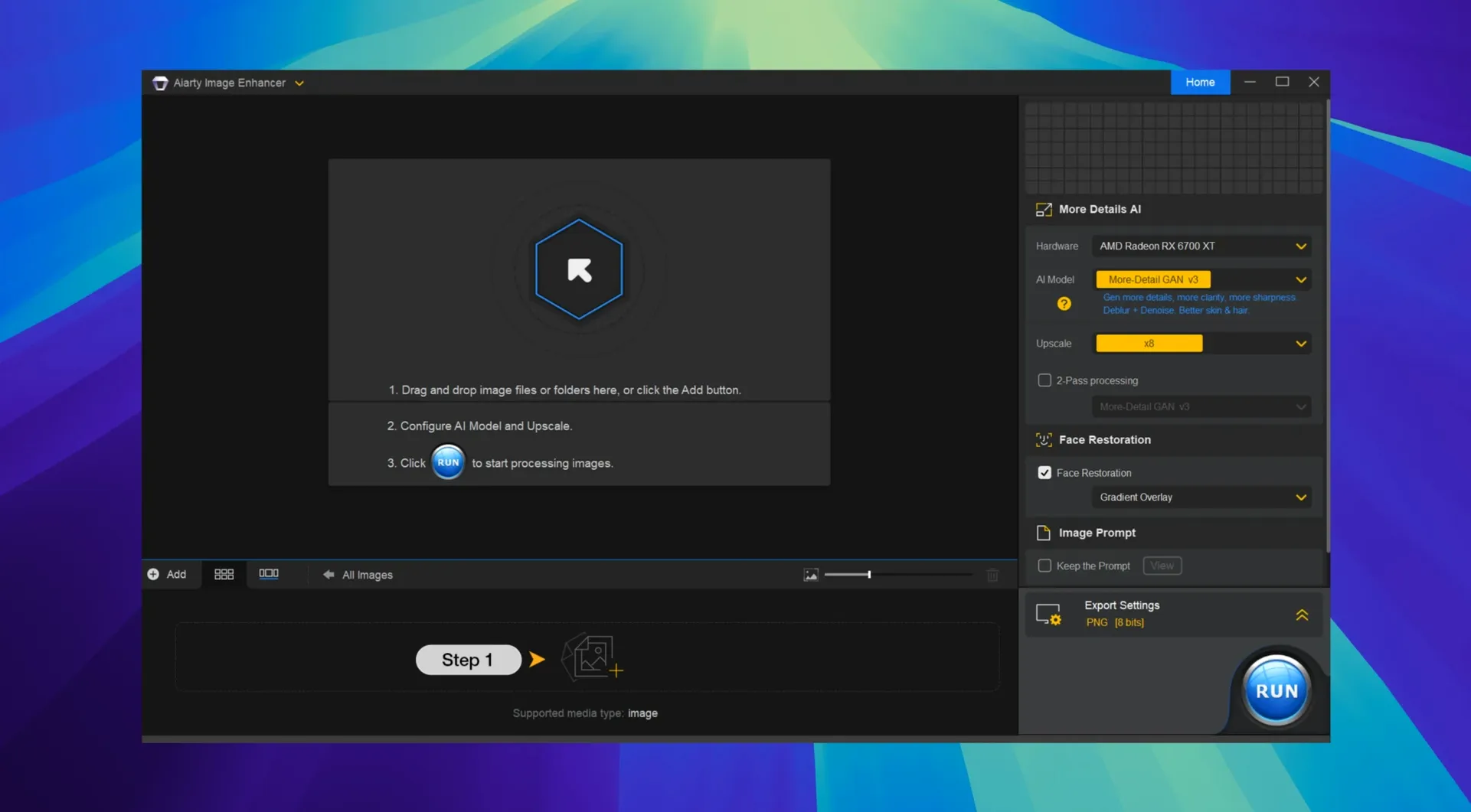
Aiarty Image Enhancer runs on any Mac that can handle macOS 11, whether you're on an older Intel machine or a newer Apple Silicon workhorse. It's not fussy.
| Key detail | What you get |
|---|---|
| Max output | 32K resolution |
| File formats | JPEG, PNG, TIFF, WebP, BMP, AVIF |
| Core tech | Deep learning models for denoising, deblurring, and detail generation |
What makes this desktop enhancer interesting once you look past the basic upscaling is how it handles texture. The software doesn't just sharpen edges — it generates new detail for skin, hair, and fabric, which matters when you're working with old family photos or low-light shots where noise has eaten the fine stuff. It's trained to recognize what those surfaces should look like and fills in the blanks without turning everything into plastic. The 32K ceiling means you're not going to hit a resolution wall anytime soon, and the format support covers pretty much anything a photographer would throw at it. Bottom line: if you're already comfortable with image editing and want control over how detail gets rebuilt rather than just stretched, this is where the app earns its keep.
Batch-clean ISO 6400 shots while you grab coffee
Photographers who batch-process hundreds of event shots or wedding candids get the most immediate payoff. You drop a folder of noisy ISO 6400 images, let the denoising models do their thing, and export clean files while you make coffee. It is not a filter toy — it is a production tool for people who already know their way around Lightroom Classic or Capture One and want to rescue borderline shots without pixel-peeping every single frame.
Restoration folks — the ones digging through scanned family albums or archival TIFFs — are the other natural fit. The detail generation for hair and fabric turns a soft, faded scan into something that actually looks like the person you remember. If you are the relative who always gets handed the box of old prints at Thanksgiving, you will use this more than you think.
Graphic designers working with stock assets that arrived too small for print layouts benefit from the upscaling, but only if they understand that a 600-pixel web image will never truly become a billboard. The AI fills in what it can; the rest is managing expectations.
A real workflow: rescuing a low-light portrait
Picture this: you shot a portrait at dusk, no flash, and the only usable frame has grain crawling all over the subject's face like sand. Here is how that goes from disappointment to deliverable in Aiarty.
- Open the RAW file directly — no pre-processing in Lightroom needed unless you want to tweak exposure first.
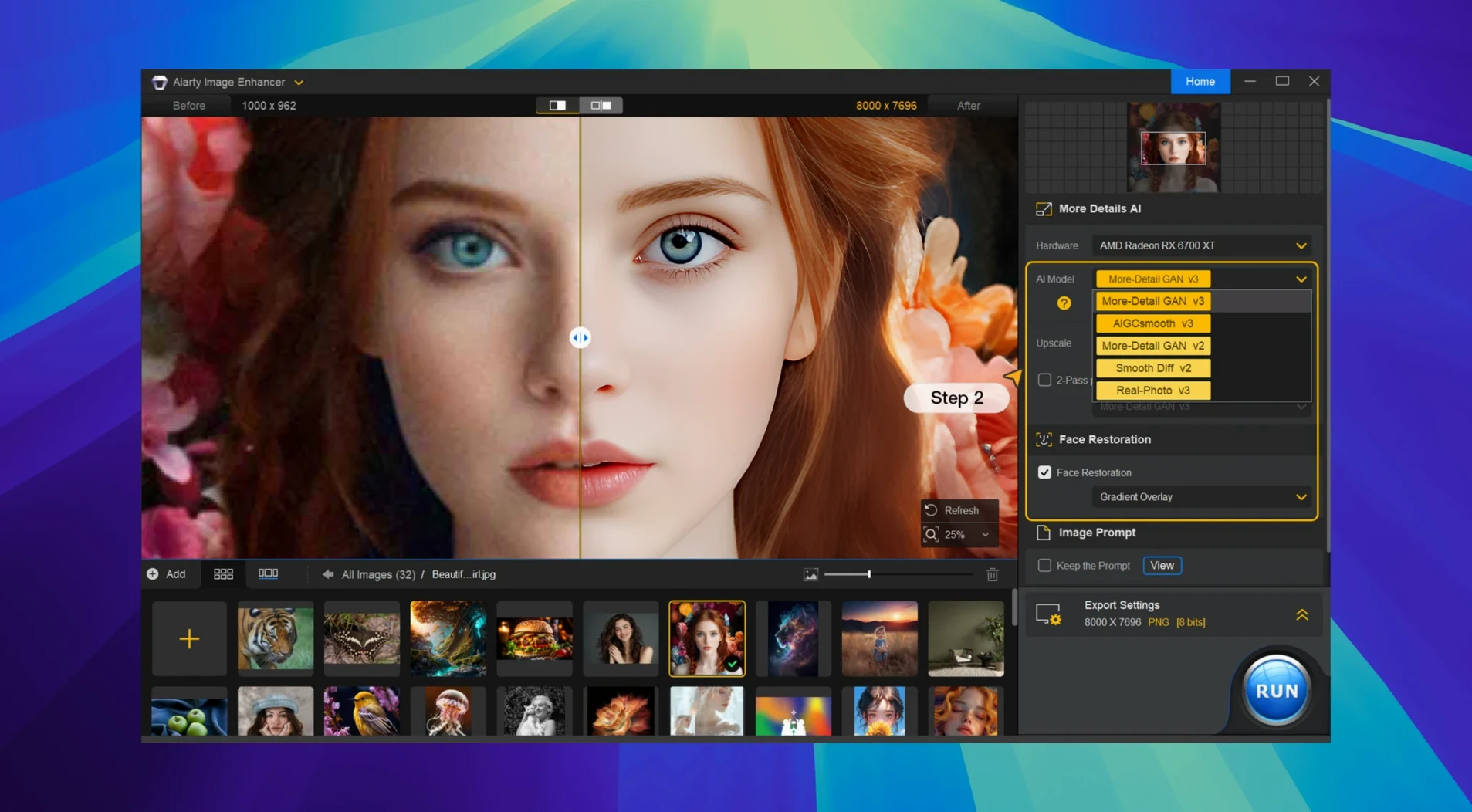
- Pick the AI model dropdown and select the one tuned for portraits. It biases toward skin texture and eye detail rather than architectural sharpness.
- Set the output scale. For a print-worthy 11x14, 4x upscaling is plenty. The 32K ceiling is there if you need it, but most jobs do not.
- Toggle on the side-by-side preview and drag the split line across the subject's face. Watch how the model rebuilds eyelashes and the catchlight in the iris — that is the part that sells the edit.
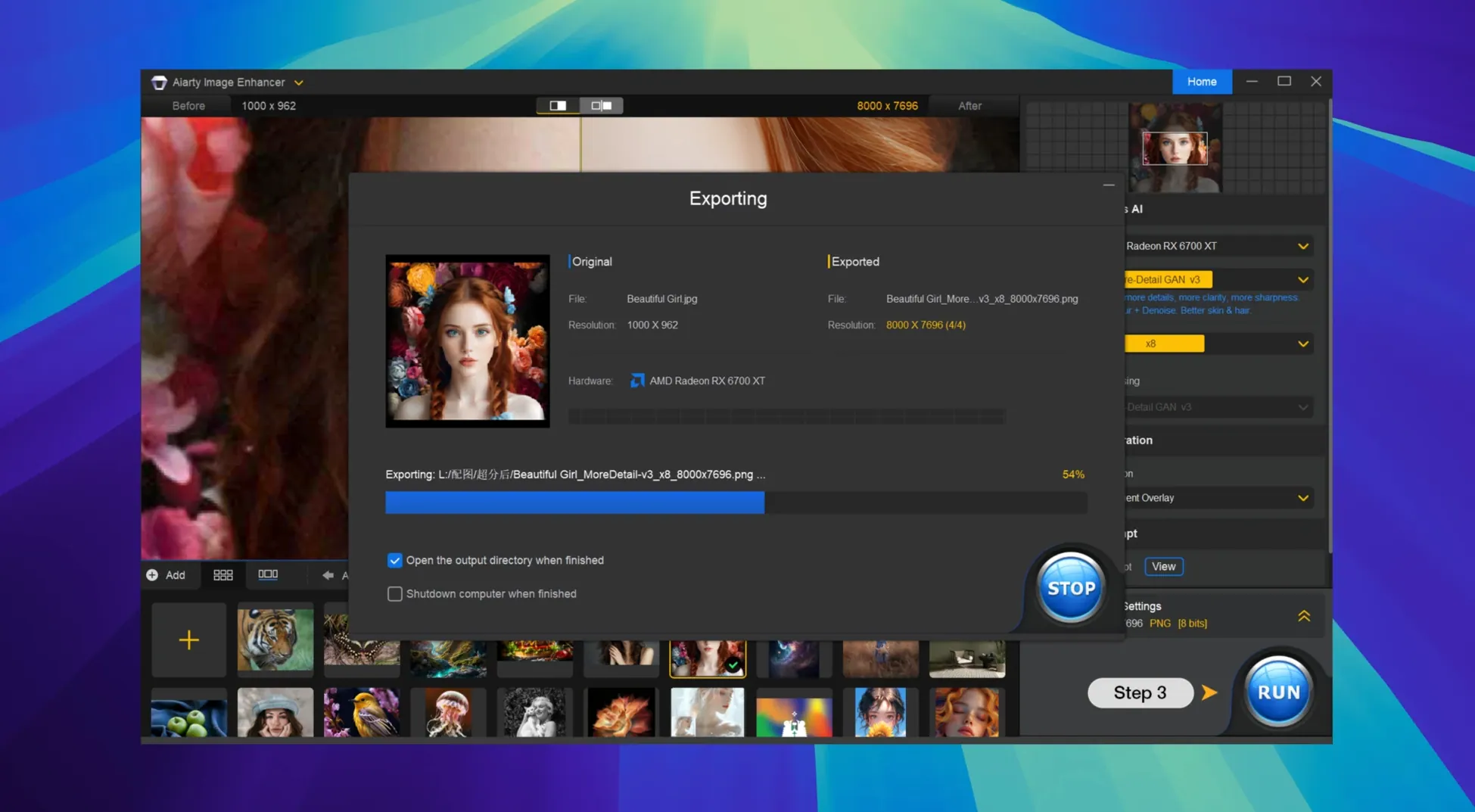
- Export as TIFF for your editing workflow, or JPEG if it is heading straight to a client gallery.
The whole thing takes maybe ninety seconds once you know which model does what. The software remembers your last settings, so a second portrait from the same shoot is even faster.
Copy EXIF data straight from the panel
A few conveniences sit right in the interface but do not announce themselves. First, the EXIF panel in version 3.14 is not just a readout — you can copy aperture, shutter speed, and ISO straight from it when you are documenting edits for a portfolio. Saves typing.
Second, the Lightroom Classic integration works as a send-to plugin, not a full sync. You right-click an image in Lightroom's library, hand it off to Aiarty, process, and the result lands back in your catalog. No export-import dance. If you are deep in a Lightroom workflow, that alone cuts out five minutes of file management per session.
Third, the supported format list includes AVIF, which not every enhancer handles yet. If you are building for the web and want small, sharp files, you can upscale a JPEG and output AVIF in one pass. The same goes for WebP — useful for anyone updating an online portfolio.
Finally, the interface remembers your last-used AI model and scale factor between sessions. It is a minor thing, but when you are processing the same type of image all week, not having to reset the dropdown every morning feels like someone actually thought about how you work.
- macOS 11 or later
- Apple Silicon or Intel 64-bit processor
Notes from the tables 0
Sign in or pull up a chair to leave a note.
No notes on this one yet. They go up after I read them.