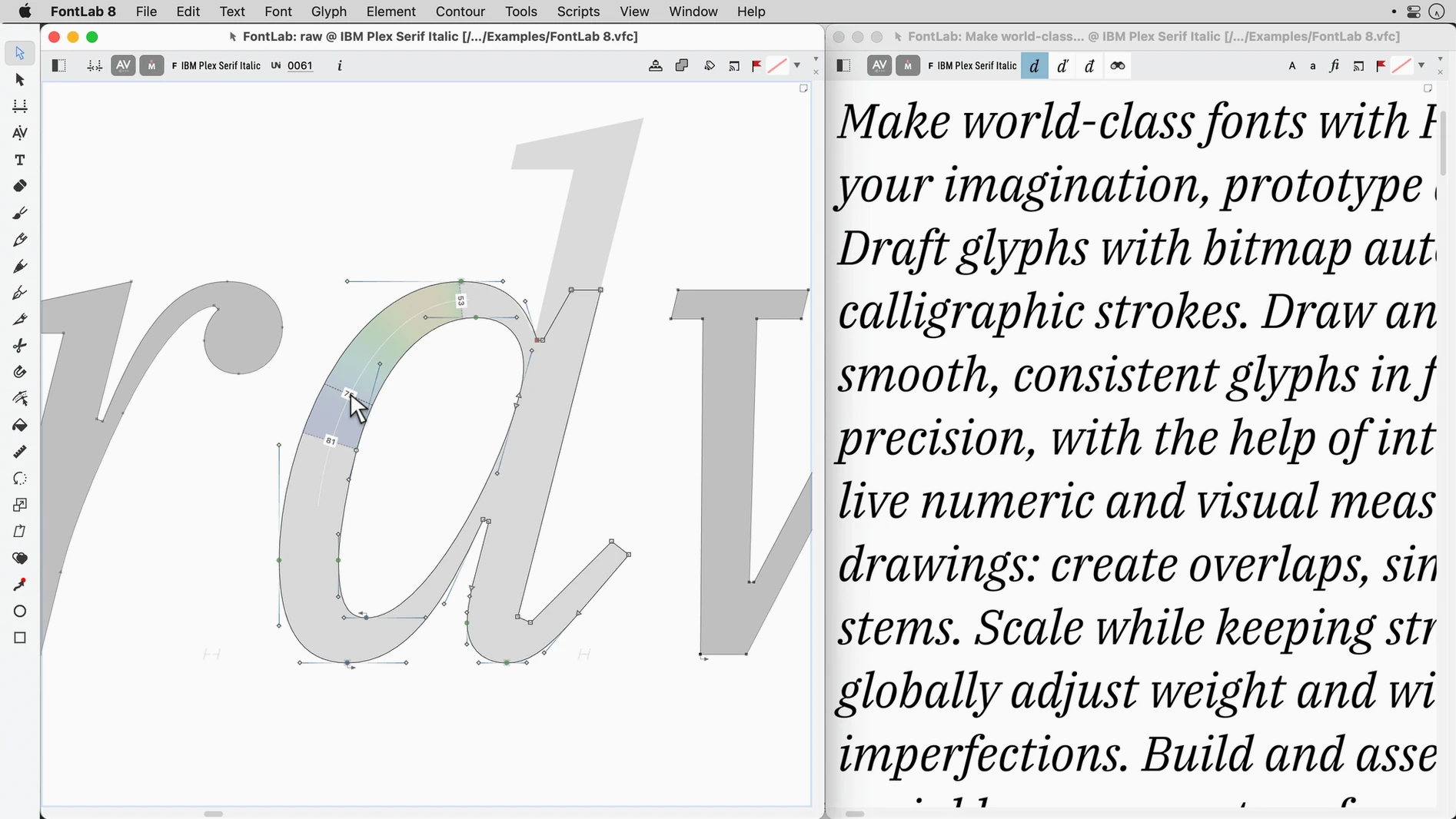
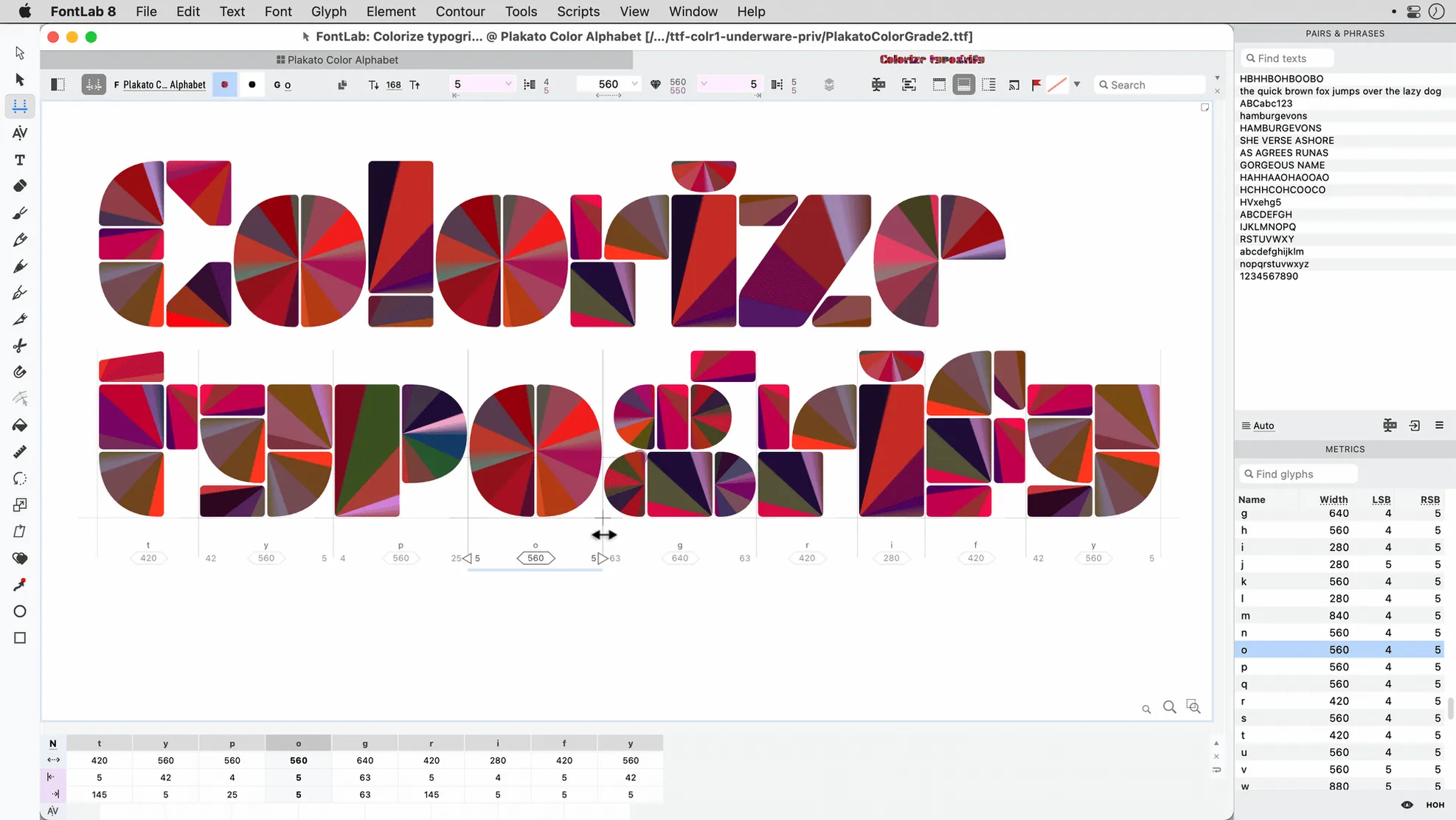
Type designers, foundries, and serious graphic artists live in this software. It's the pro-level workshop for drawing, spacing, and testing typefaces, from a single display face to a multi-script family supporting Arabic and Hebrew.
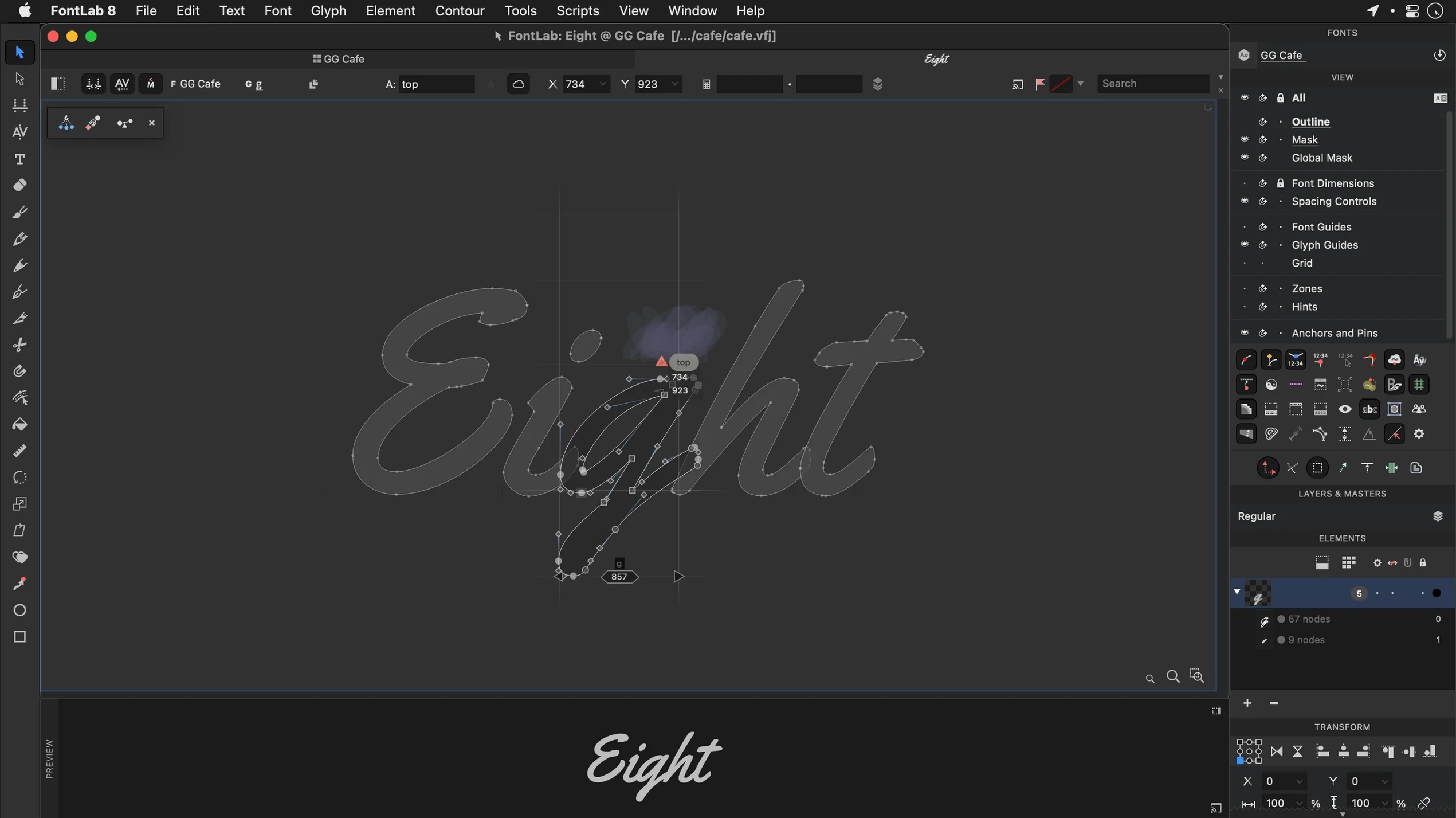
Draw a glyph by hand or drag a shape onto the canvas
| What it handles | System details |
|---|---|
| OpenType & TrueType fonts | macOS 10.15 through Tahoe |
| Mac TrueType, Unicode | Runs native on Intel & Apple Silicon |
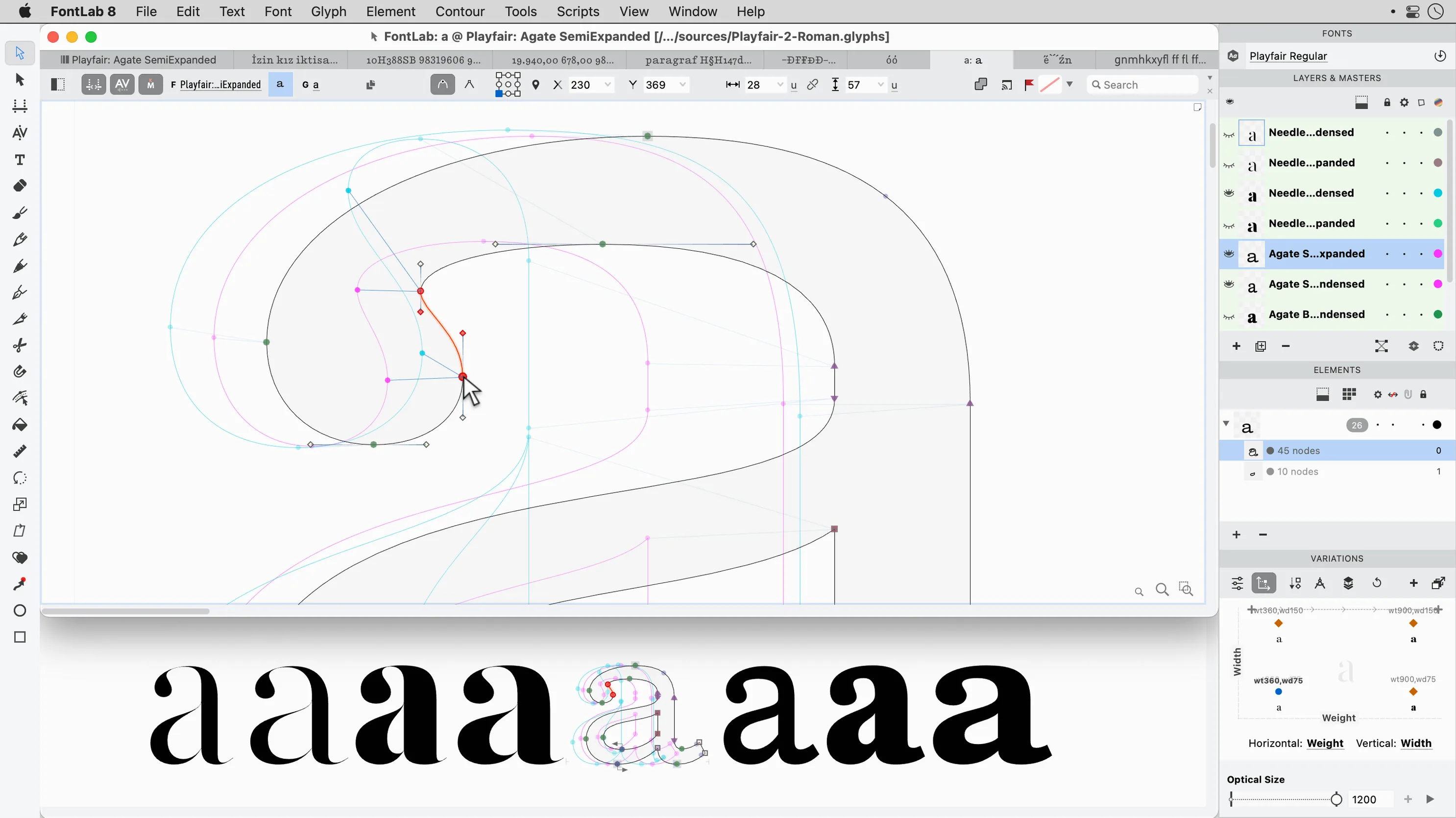
This is the kind of tool where you can draw a glyph by hand, drag another onto the canvas for reference, and adjust a whole batch of curves by a set value without opening a dozen menus. The built-in viewer and editor keeps everything under one roof instead of bouncing between apps. With more than 200 levels of undo, you can chase an idea down a rabbit hole and still find your way back. Version 8.4 brings about five hundred refinements over the original FontLab 8, and nearly nine hundred over FontLab 7—nothing flashy, just steady, practical evolution.
How an independent book designer uses it
Picture somebody laying out a poetry collection for a small press. The publisher bought a commercial serif for body text, but the display face on the cover needs a custom swash on the capital R and an alternate ampersand that feels handwritten. Opening the existing typeface, tracing a few rough sketches placed as a background layer, then nudging Bézier handles until the new glyphs feel native to the family—that's an afternoon's work. The drag-and-drop glyph placement means the ampersand doesn't have to be rebuilt from scratch; you pull a similar shape onto the canvas, reshape the terminals, and test it against the neighboring letters in the preview panel. By the end of the day, the book has a cover that looks hand-lettered without a single calligraphy pen.
Releasing a twelve-weight sans with small caps
If your work stops at picking fonts from a menu, this isn't your tool. But three groups live in it. First, independent type designers building retail families—the kind of people who release a twelve-weight sans with small caps and a Cyrillic extension. Second, in-house designers at mid-size magazines who need to tweak an existing headline face so the question mark doesn't collide with a tight left margin. Third, anyone working with Arabic, Hebrew, or other right-to-left scripts, because the bidirectional text support and editable encodings handle shaping and mark positioning that simpler editors ignore.
Thirty nodes where eight would hold the curve better
New users almost always overdraw. They place thirty nodes where eight would hold the curve better, then wonder why the exported font file balloons in size. The vector drawing tools are precise, but they reward restraint—fewer points mean cleaner hinting and smoother rendering on screen. Another classic stumble: editing an existing system font directly instead of working on a copy, then finding the original overwritten. And plenty of newcomers skip the batch transformation tools entirely, manually adjusting fifty glyphs one at a time when a single action applied across a selected set would do it in seconds.
The 8.4 update is mostly a tightening-of-the-bolts release. The developer counts roughly 500 improvements over the initial FontLab 8, and close to 900 compared to FontLab 7. Nothing that screams for attention, but the kind of tweaks that make a long work session feel smoother.
- macOS 10.15 through macOS 26 Tahoe
- Intel or Apple Silicon Mac
Notes from the tables 0
Sign in or pull up a chair to leave a note.
No notes on this one yet. They go up after I read them.