
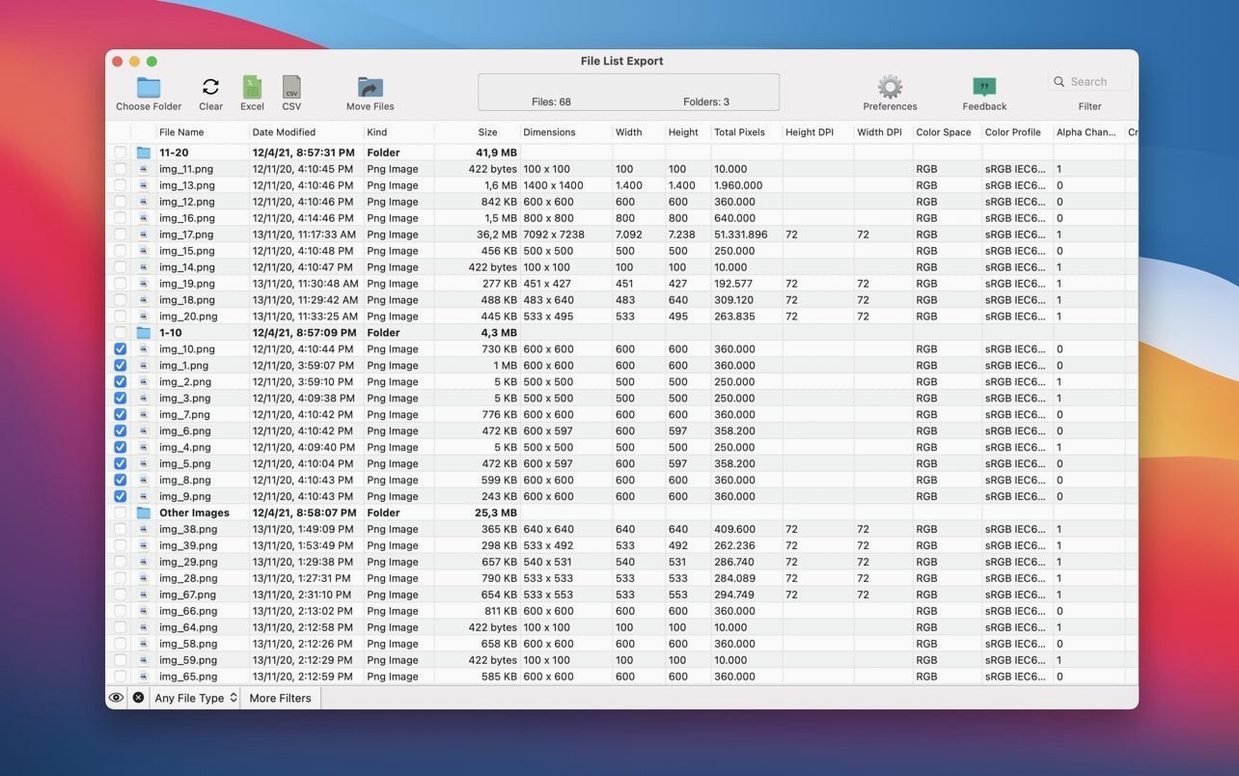
File List Export is a straightforward Mac app that turns any folder into a detailed, exportable list of its contents.
- Compatibility check: Runs natively on both Intel and Apple Silicon Macs, needs macOS 11 (Big Sur) or later.
- Simple workflow: Pick a folder or drag files right into the window to build your list.
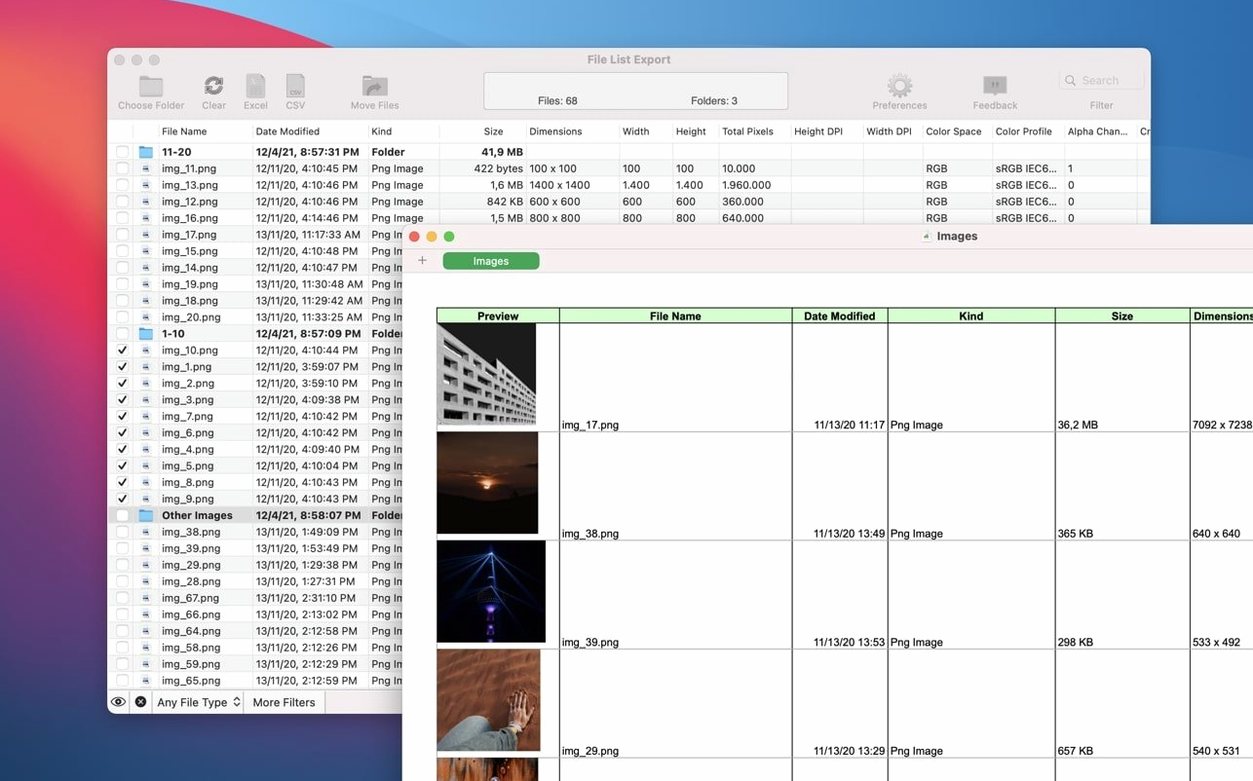
- Export formats: Save your list as Excel, CSV, PDF, HTML, JSON, or Markdown.
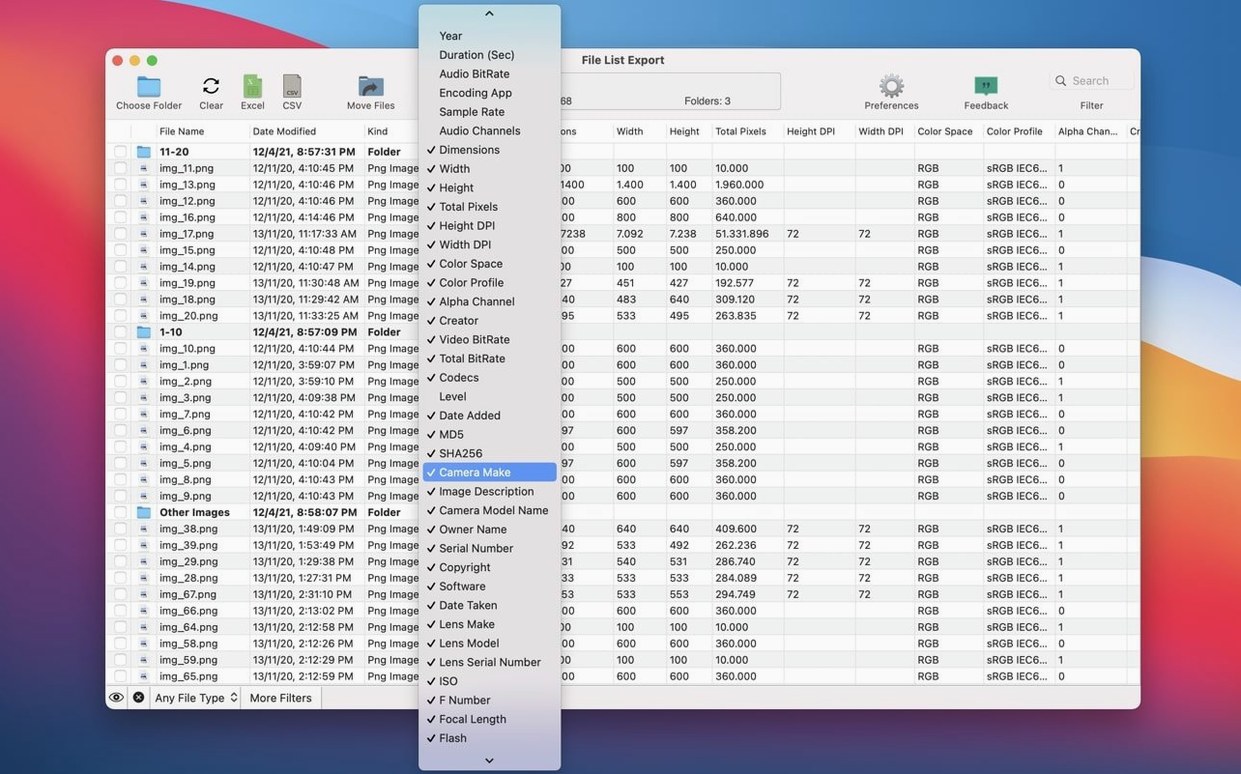
- Metadata that matters: Pull out image details like dimensions, DPI, and color space; video specs like bitrate and codecs; or audio fields like artist, album, and duration.
- Verification tools: Generate MD5 and SHA256 checksums right in the list.
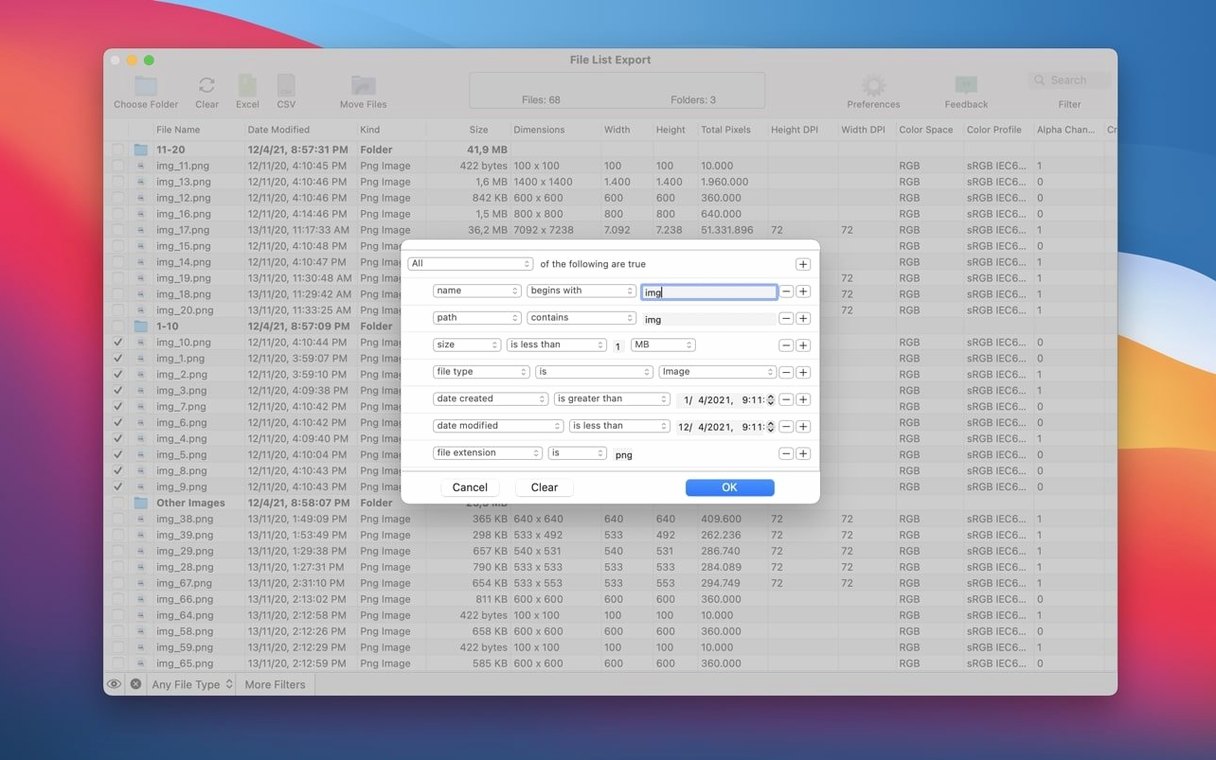
- Powerful filtering: Narrow things down by file type or search for specific entries. Version 3.1 adds image width and height filters.
It’s the kind of utility that fits a real gap. If you've ever needed to hand a client a spreadsheet of photo specs or just get a handle on a messy drive, it does the job without fuss.
Slow list for deep folders, not a crash
Most hiccups come down to the source folder, not the app. If you drop a folder with thousands of nested files, the list might take a beat to populate — that’s normal. Give it a moment. If nothing shows up, check whether macOS has granted the app folder access under System Settings > Privacy & Security > Files and Folders. On first launch, File List Export asks for permission, and skipping that step leaves you staring at a blank window.
Another thing: EXIF fields like lens model or GPS coordinates show up empty for some images. That’s not a bug — the data simply wasn’t recorded by the camera. The app reads what’s there. For video files, codec and bitrate columns rely on metadata the file actually contains; older AVI containers sometimes come up short.
When you’re after a file list export Mac users can open on a Windows machine, stick with CSV or Excel. The PDF export looks clean but isn’t meant for further sorting.
Pick up where Finder stops
File List Export doesn’t try to replace Finder — it picks up where Finder stops. You browse and select in Finder, then hand off to the app for the structured output. The drag-and-drop support means you can pull files straight from a Desktop stack or a Spotlight search result.
Once you’ve exported a CSV or Excel file, the list slides right into Numbers or Excel for further wrangling. JSON exports play nicely with Shortcuts and Automator workflows if you’re stitching together a custom pipeline. HTML and Markdown exports are handy for pasting a file inventory into a Notion page, a dev wiki, or an email to a collaborator — no reformatting needed.
Checksum generation is a quiet standout. Generate an MD5 or SHA256 list, save it as CSV, and you’ve got a verifiable manifest you can check against later with any hash utility. Photographers who batch-rename in another tool and then want a dated inventory of a shoot will find the creation-date and EXIF columns slot naturally into that routine.
If you've ever set a filter and watched the progress bar sit there like it was waiting for dough to rise, this update is for you. Version 3.1.1 fixes exactly that.
- Much faster filtered scans. When you pick a filter like 'Video', the app now reads only the matching files right from the start. Before, it read every single file in the folder first, which could make large folders and network drives look stuck on 'Loading files' forever.
- Smarter progress window. The item count now updates as the folder is searched, so a big job no longer looks frozen. You'll see the numbers moving right away.
- Now requires macOS 12 Monterey or later.
- macOS 11 or later
- Works on Apple Silicon and Intel Macs
Notes from the tables 0
Sign in or pull up a chair to leave a note.
No notes on this one yet. They go up after I read them.