Where it runs
Nuendo 15 needs macOS 11 or newer, and it runs native on Apple Silicon as well as Intel machines. The installer is under 1.8 GB. If your Mac can handle a dense mix session, it can handle this.
A dialogue editor's walkthrough
Here’s how a few of the deeper tools in 15.0.30 fit into a real post-production day.
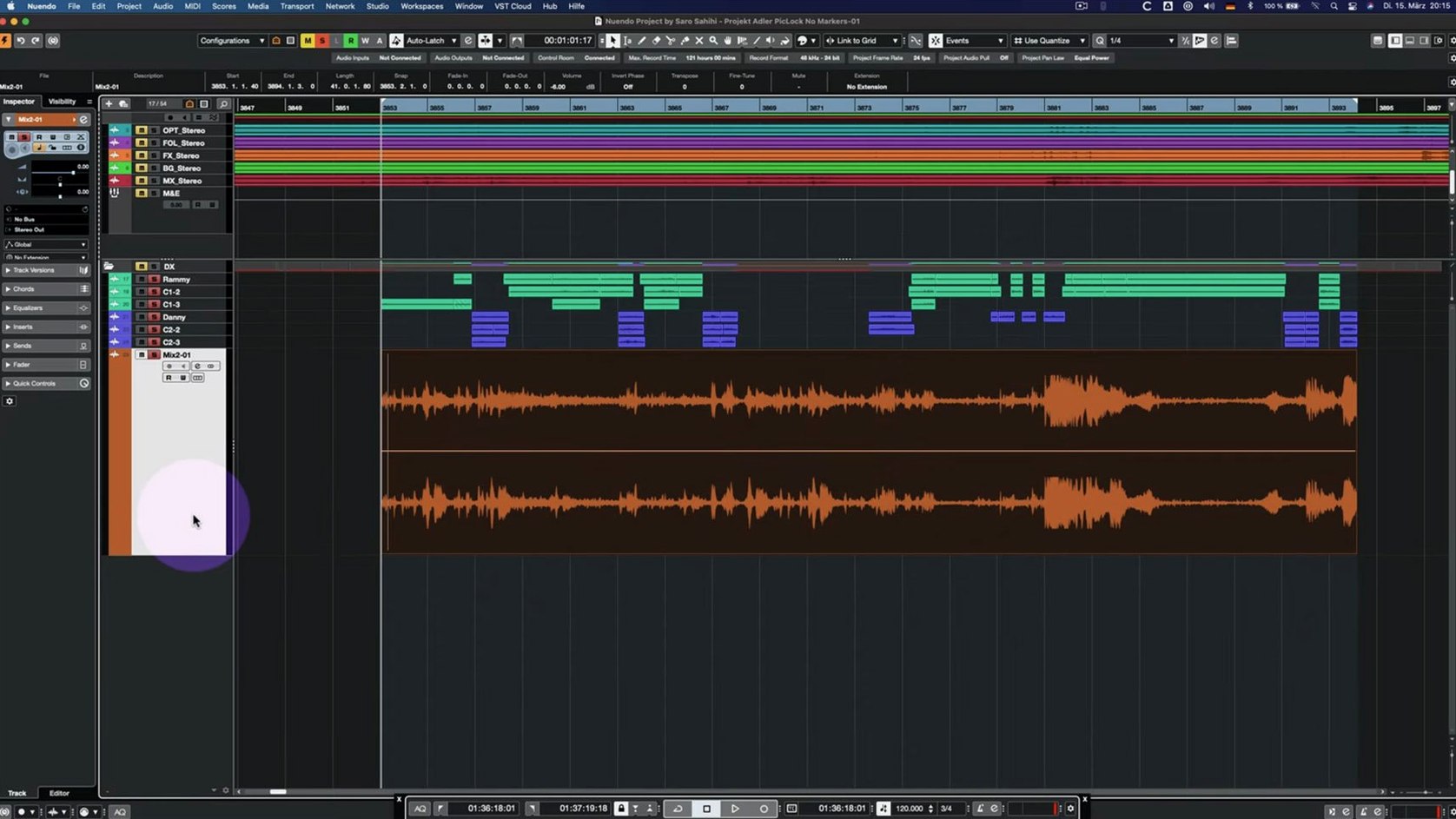
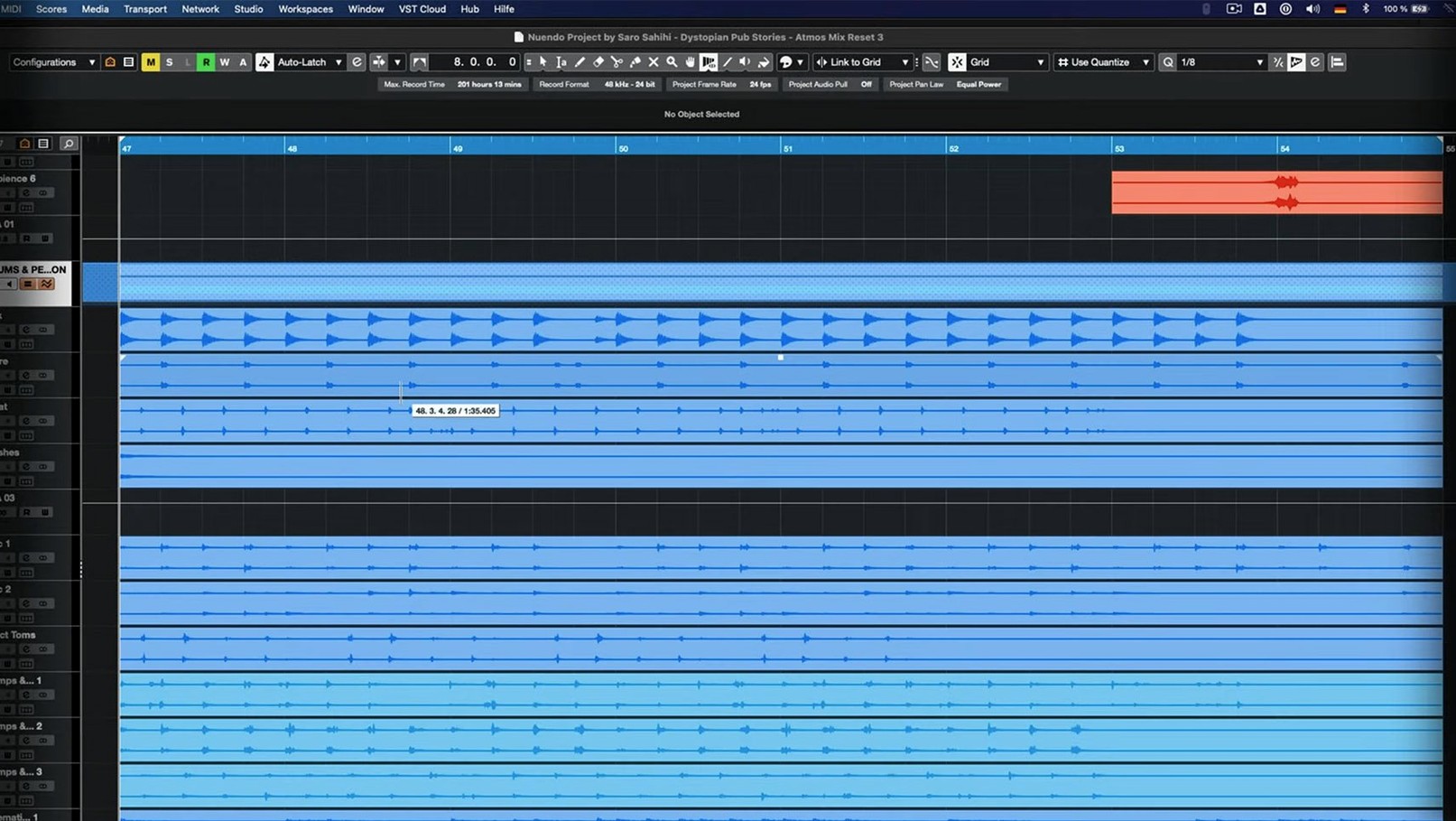
- Group editing with the Comp Tool. You’ve got seven mics on a single actor. Rather than comping each track separately, Group Editing lets you swipe across takes and have every linked track follow. The recent fixes make that behaviour predictable, which is the whole point.
- Folder tracks as Group Channels. Route a folder of footsteps to a group bus without leaving the project window. The updated routing behavior in 15.0.30 means inserts and sends on those folders now react the way an experienced mixer expects.
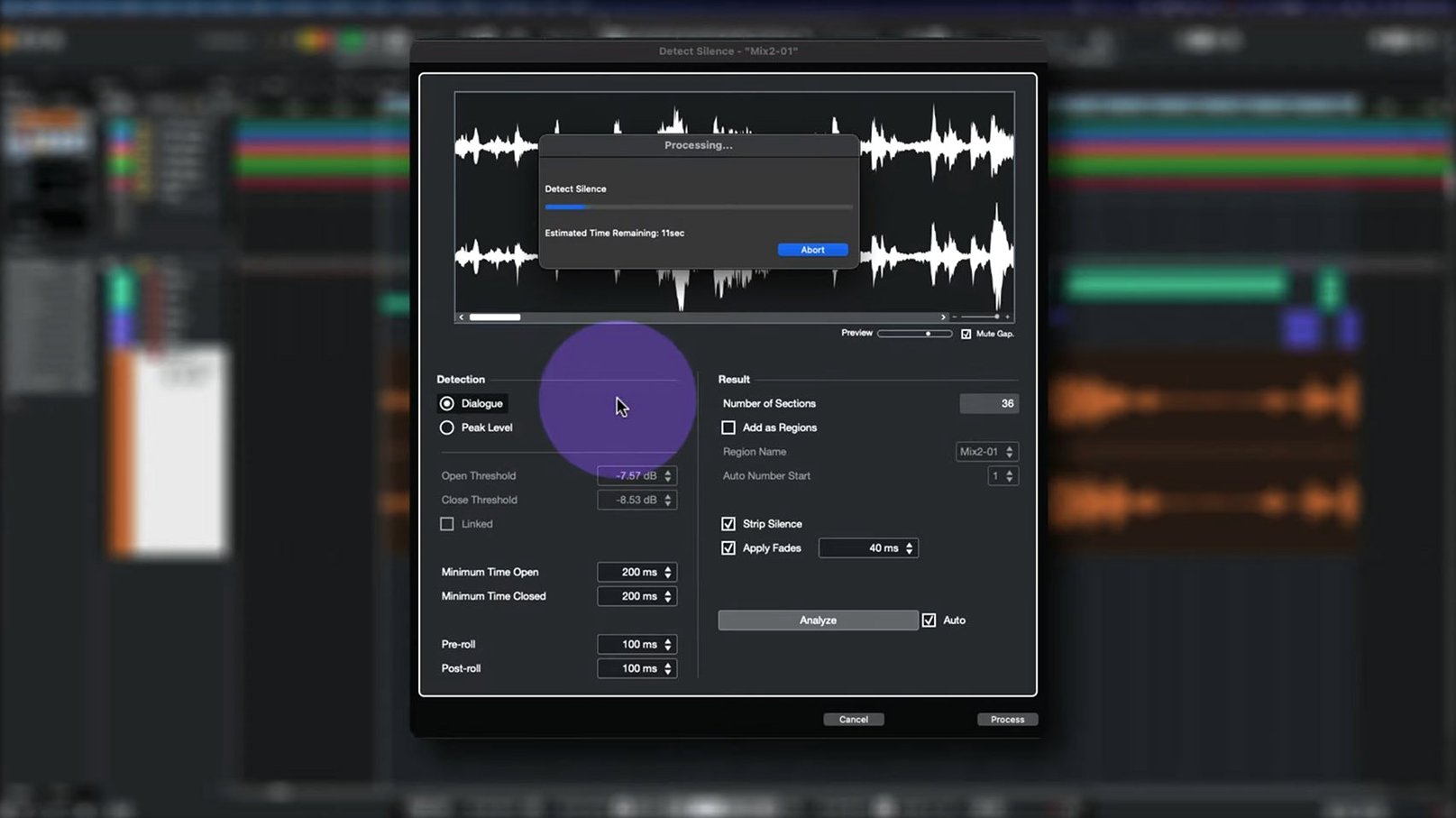
- Direct Offline Processing cleanup. Applying VST Bass Amp or VST Amp Rack as an offline effect no longer fights the interface. It’s a small fix that saves a restart when you’re processing a hundred clips of radio chatter.
- Multiband Envelope Shaper bypass. The performance optimization here matters when you’re working on a long-form documentary. Bypassing no longer carries a CPU penalty, so you can A/B quickly.
Nuendo was built for people who cut dialogue, design sound, and mix in immersive formats every day. The 15.0.30 update doesn’t add flashy marquee features — it tightens the bolts on the tools working editors already rely on. If you’re deep in a project with hundreds of tracks, the folder routing and Comp Tool fixes alone make the update worth taking.
Shorten the auto-save interval before you lose work
Out of the box, Nuendo makes a few assumptions about how you like to work. A handful of tweaks in the first ten minutes saves friction later.
- Auto-Save intervals. The default is generous. If you're cutting dialogue for a feature, set it to every five minutes and bump the number of backup copies to at least ten. Disk space is cheap; redoing an afternoon of ADR edits is not.
- Default track width and height. Nuendo ships with a one-size-fits-all track appearance. Go into Preferences under Editing and set new tracks to a narrower height if you regularly mix stem sessions with eighty-plus channels. Your scroll wheel will thank you.
- Fade and crossfade defaults. The stock fade length is too long for tight dialogue cutting. Dial it down to three or four milliseconds and set the shape to an equal-power curve. You can always lengthen fades later, but tiny clicks at edit points break immersion fast.
- Plug-in search paths. If you use a custom VST3 folder on an external drive, tell Nuendo about it now, not when a client is behind you. Rescanning the plug-in list mid-session is a mood killer.
- Metering ballistics. Switch the main meter to a standard you actually read — DIN or Nordic for broadcast work, K-system for film. The default peak program meter isn't wrong, but if your deliverables demand a specific scale, set it once and forget it.
Dialogue editors and re-recording mixers live here
This isn't a do-everything DAW for casual songwriters. It's a post-production rig, and certain workflows practically live inside it.
Dialogue editors and re-recording mixers are the core audience. The integration between the Comp Tool, Group Editing, and folder routing means a dialogue premix that used to take two passes can happen in one. If you're cleaning production audio, syncing lavs to booms, and handing off stems to a dub stage, Nuendo's toolset maps directly to that chain.
Game audio designers get a lot from the batch-processing capabilities. Direct Offline Processing across hundreds of footstep or weapon variants is faster than running them through a real-time chain. Paired with the quick-link MIDI routing fixes in 15.0.30, integrating Nuendo with middleware like Wwise or FMOD feels less like translation work.
Immersive audio specialists working in Atmos or higher-order Ambisonics benefit from the routing discipline that Nuendo enforces. The Analyzer track changes in this build give clearer visual feedback on object panning, which matters when you're placing a sound in a 7.1.4 bed and need to confirm it reads correctly on a fold-down.
If your workday ends with an AAF export and a stem delivery, Nuendo fits. If you're tracking a band in a garage, it's overkill — you'd wrestle with features you never touch.
Test your routing on an old 16-track session
Don't open a paying project on day one. Here's a low-stakes way to get comfortable.
Grab a rough mix from an old project — something with at least sixteen tracks of dialogue, effects, and music. Import it and practice setting up folder-to-group-channel routing the way the 15.0.30 update now supports. Route the dialogue folder to a bus, drop an EQ and a de-esser on the bus, and listen to how inserts behave across the group. Then break the routing on purpose and rebuild it. You want that muscle memory before a director is in the room.
Next, run a comping drill. Take a multi-mic recording, group the tracks, and use the Comp Tool to assemble a clean take. Pay attention to how Group Editing responds with the recent fixes — crossfade behavior, slip edits, and take-switching should feel predictable. If you've used older builds, the difference is subtle but real.
Finally, batch-process a folder of short clips through Direct Offline Processing using a couple of amp sims and the Multiband Envelope Shaper. Bypass and re-engage plugins while the processing window is open. The interface should stay snappy, and the bypass optimization should be noticeable if you're pushing the session hard.
After a couple of evenings like this, the application fades into the background and the work takes over. That's the goal.
Version 15.0.30 is a stability and refinement release that touches several corners of the application.
- Comp Tool now behaves correctly with Group Editing enabled.
- Folder track routing and Group Channel assignments were reworked.
- Direct Offline Processing interface fixed for VST Bass Amp and VST Amp Rack.
- Analyzer track behavior adjusted.
- Multiband Envelope Shaper bypass is now lighter on the CPU.
- Fixes for Quick Link, MIDI port handling, imported track settings, and Score Editor locked global tracks.
- macOS 11 or newer
- Apple Silicon or Intel processor
- Under 1.8 GB of free disk space for the installer
Notes from the tables 0
Sign in or pull up a chair to leave a note.
No notes on this one yet. They go up after I read them.