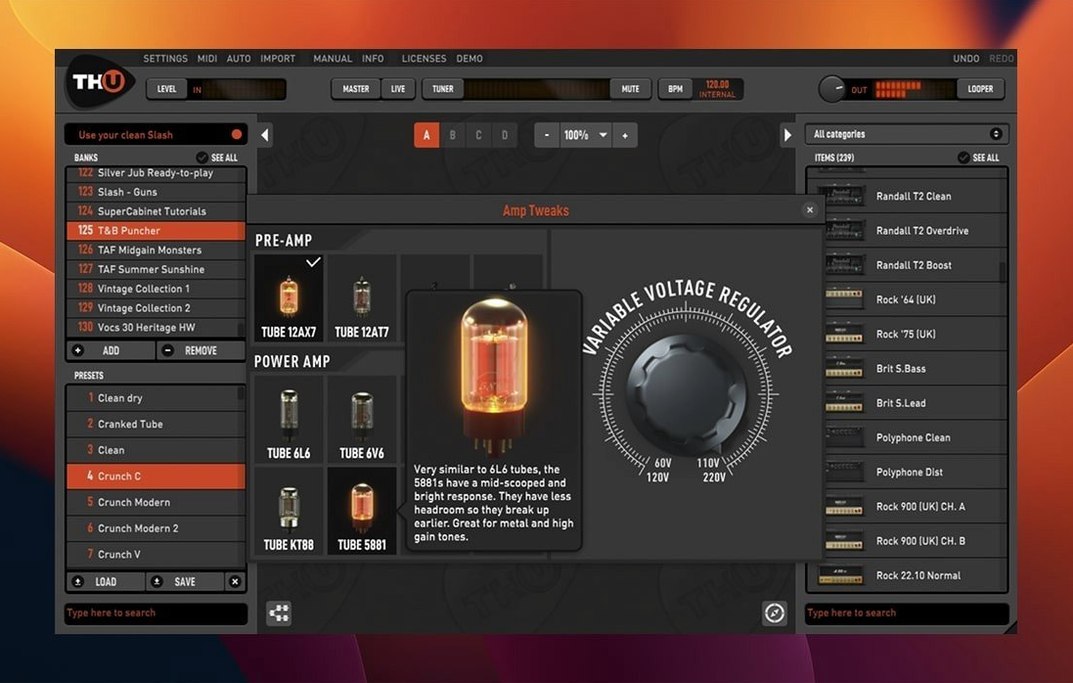
89 guitar amplifiers and 4 bass models live inside this one plug-in. That’s a lot of tone before you even touch a pedal. Overloud’s flagship amp simulator puts modeling, capturing, and their Fluid IR processing into a single window on your Mac, running natively on Intel and Apple Silicon machines from Mojave onward.
Built-in bass rigs and TH3 preset compatibility
- Players who want a large, built-in amp collection without hunting down third-party captures.
- Producers who already work with TH3 presets—TH-U loads them without complaint.
- Bassists. There’s a dedicated bass preset bank, plus two bass cabinets and four bass amps to build from.
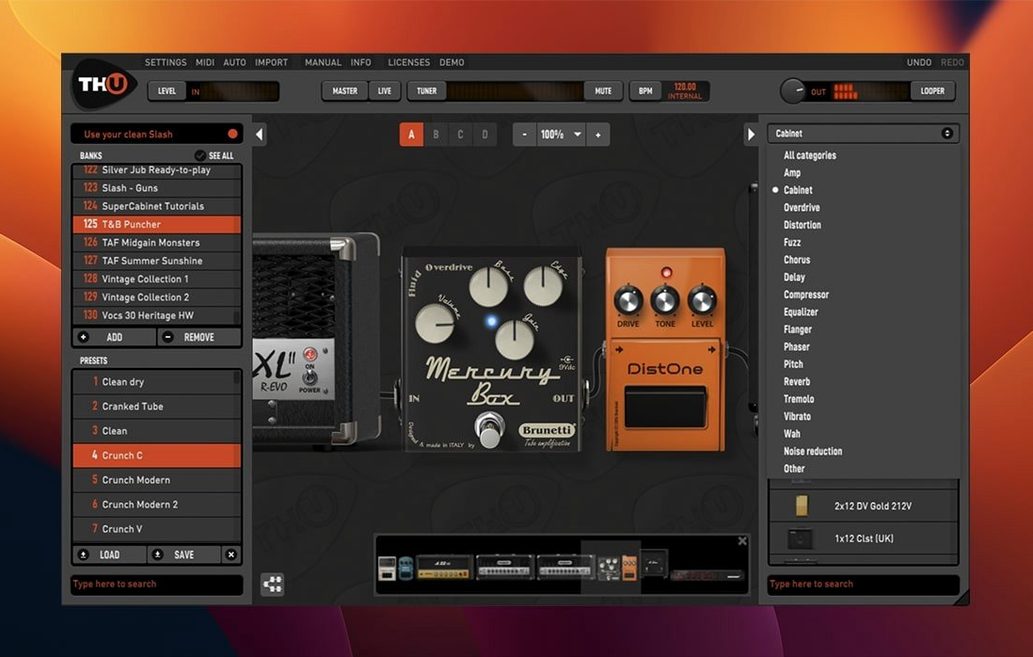
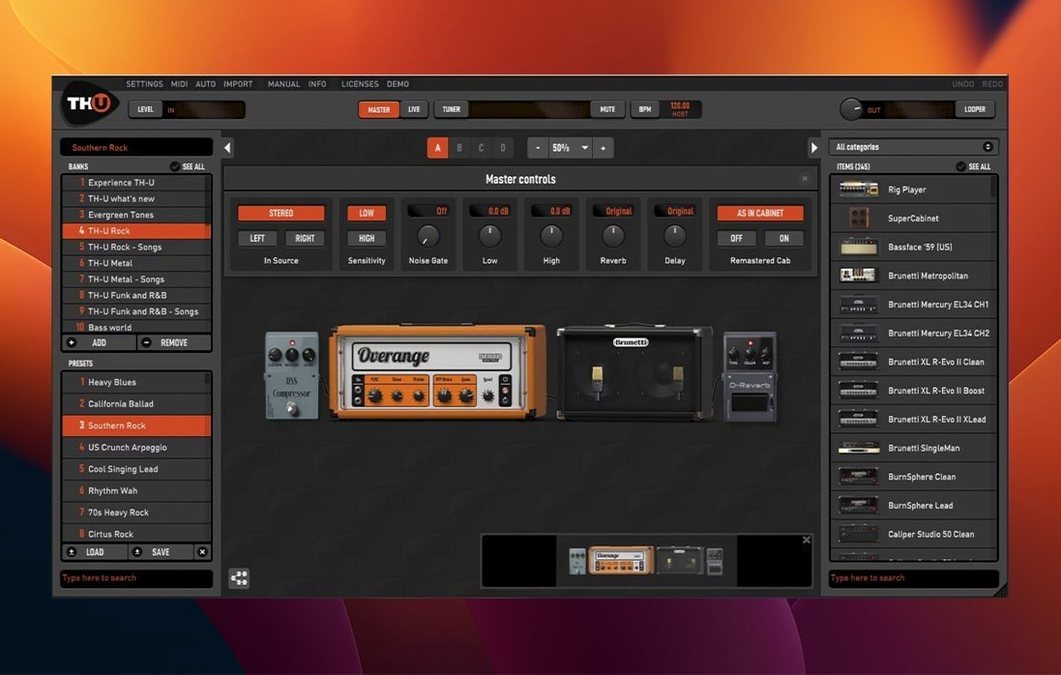
- Anyone building complex rigs. With 79 pedal and rack effects, you can chain a signal path that rivals a physical pedalboard.
IR blending takes time to learn
- The cabinet section now uses Fluid Convolution and a dual IR loader. It’s flexible, but you’ll want to spend time learning how the IR blending behaves.
- Fifty guitar cabs and two bass cabs is generous, though players who rely on very specific third-party IRs may still reach for an external loader.
- Scenes let you recall different model setups inside a single preset, which is handy for live work—just remember to map your controller ahead of time.
Moving the mic transforms the tone
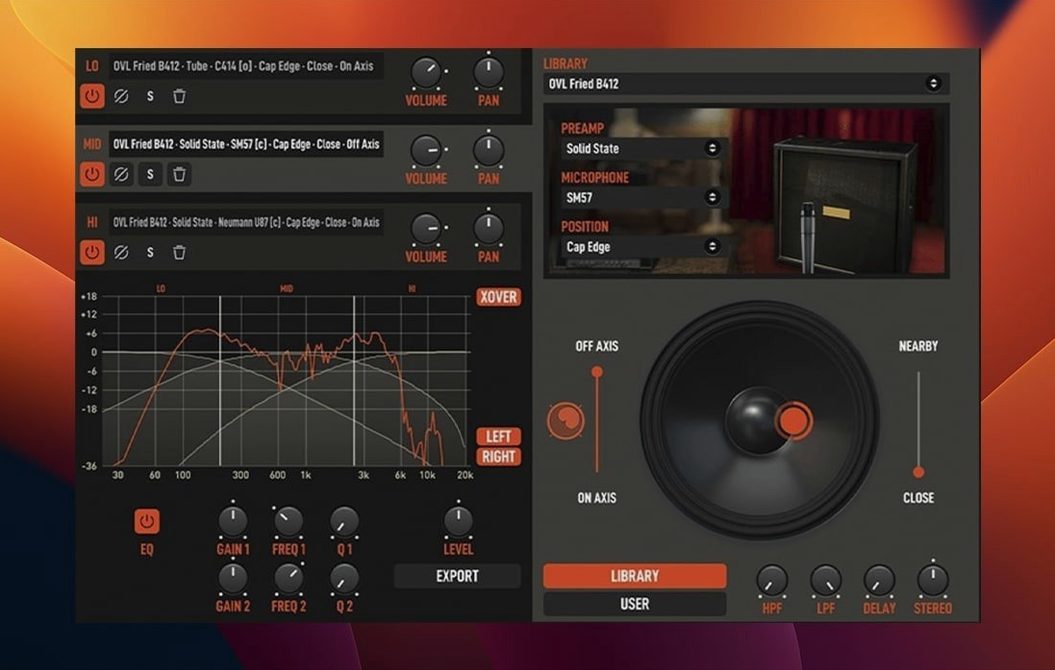
- Ignoring the mic placement. Each cab lets you use up to four mics, but a lot of players drop one on and call it done. Moving a mic a few inches in the interface changes the bite and body more than swapping the amp model half the time.
- Loading a preset and never touching the gain staging. The input trim on your audio interface feeds TH-U before the amp sees it. If you're running a hot signal from a pedal upstream, back it off at the interface first—otherwise every preset will feel fizzy and you'll chase your tail tweaking the amp.
- Forgetting the bass bank exists. It's tucked away, and people treat TH-U as a guitar-only tool. Four bass amps and two cabs with the same mic flexibility deserve a look, especially for DI tracks that need some room sound.
Map a footswitch to scene changes
- MIDI mapping. Even with a simple two-button footswitch, map one to scene up and one to scene down. Scenes recall different amp and effect configurations inside a single preset, so you can flip from clean to lead without loading anything new.
- IR loader blend. Open the cabinet module and load a second IR into the dual loader. Start with a dynamic mic on one and a ribbon on the other, then nudge the blend slider. That alone tightens a muddy low end faster than any EQ pedal in the chain.
- TH3 preset import path. If you have old TH3 patches sitting in a folder, point TH-U at them in preferences. They load cleanly, and you'll recover sounds you forgot you had.
Bottom line: a deep all-in-one that sits comfortably next to your DAW, your existing TH3 patches, and whatever else is on your channel strip.
Version 2.1.0 brings SuperCabinet into the fold, plus a handful of new ways to move sound around. The changes that matter:
- SuperCabinet is now included, giving you deeper control over cab and microphone combinations.
- Scenes. You can recall completely different amp and effect configurations inside one preset without loading a new file.
- The cabinet module gets Fluid Convolution and a built-in dual IR loader for blending two impulse responses.
- New effects arrive: PHASE STONE, Reverse Delay, and ModulaVerb join the pedal roster.
- macOS 10.14 Mojave or later
- Intel or Apple Silicon Mac (native support for both)
- Intel Core i3 1.4 GHz or better
- 4 GB RAM
- 1280×800 display or higher
Notes from the tables 0
Sign in or pull up a chair to leave a note.
No notes on this one yet. They go up after I read them.