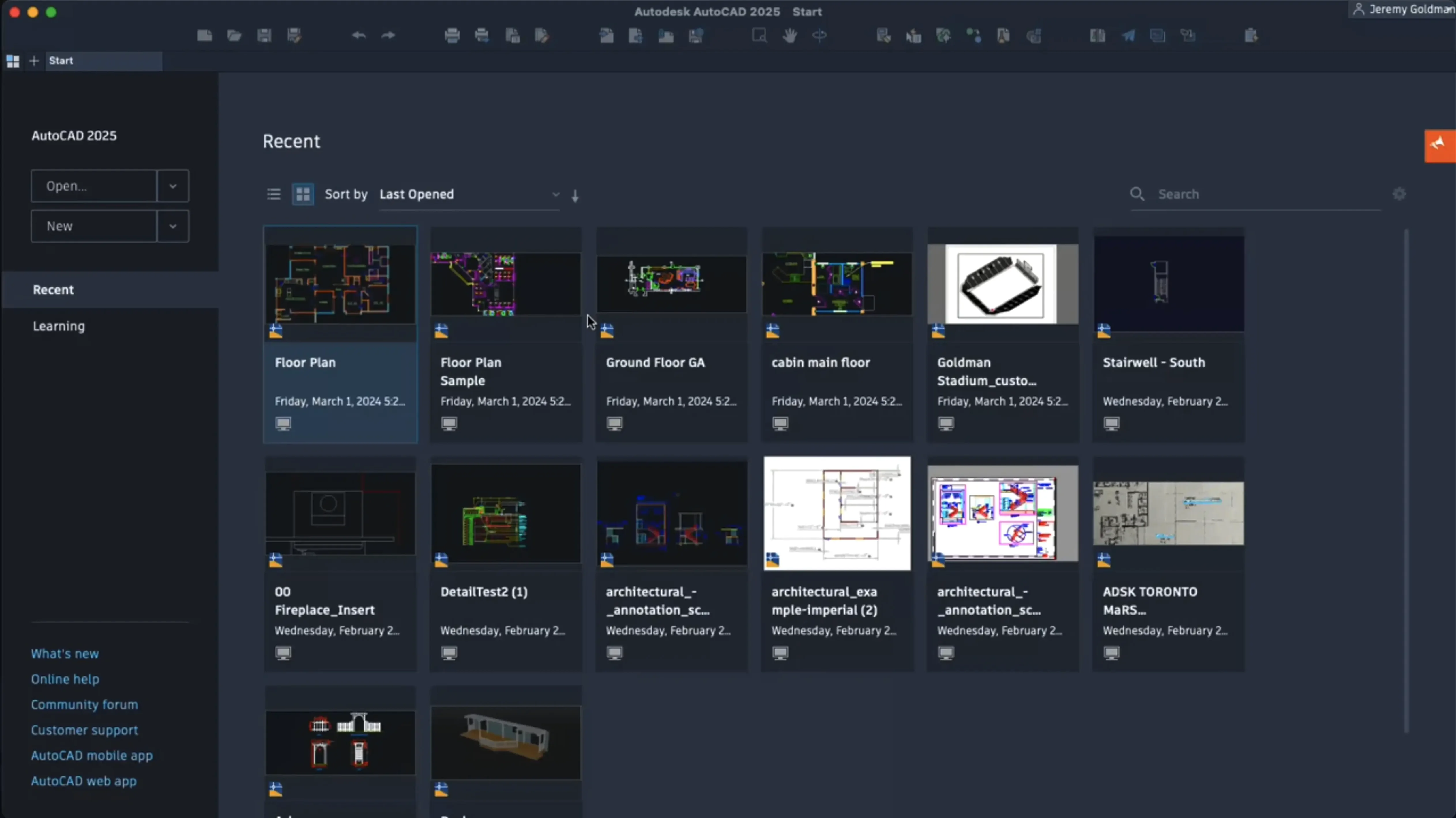
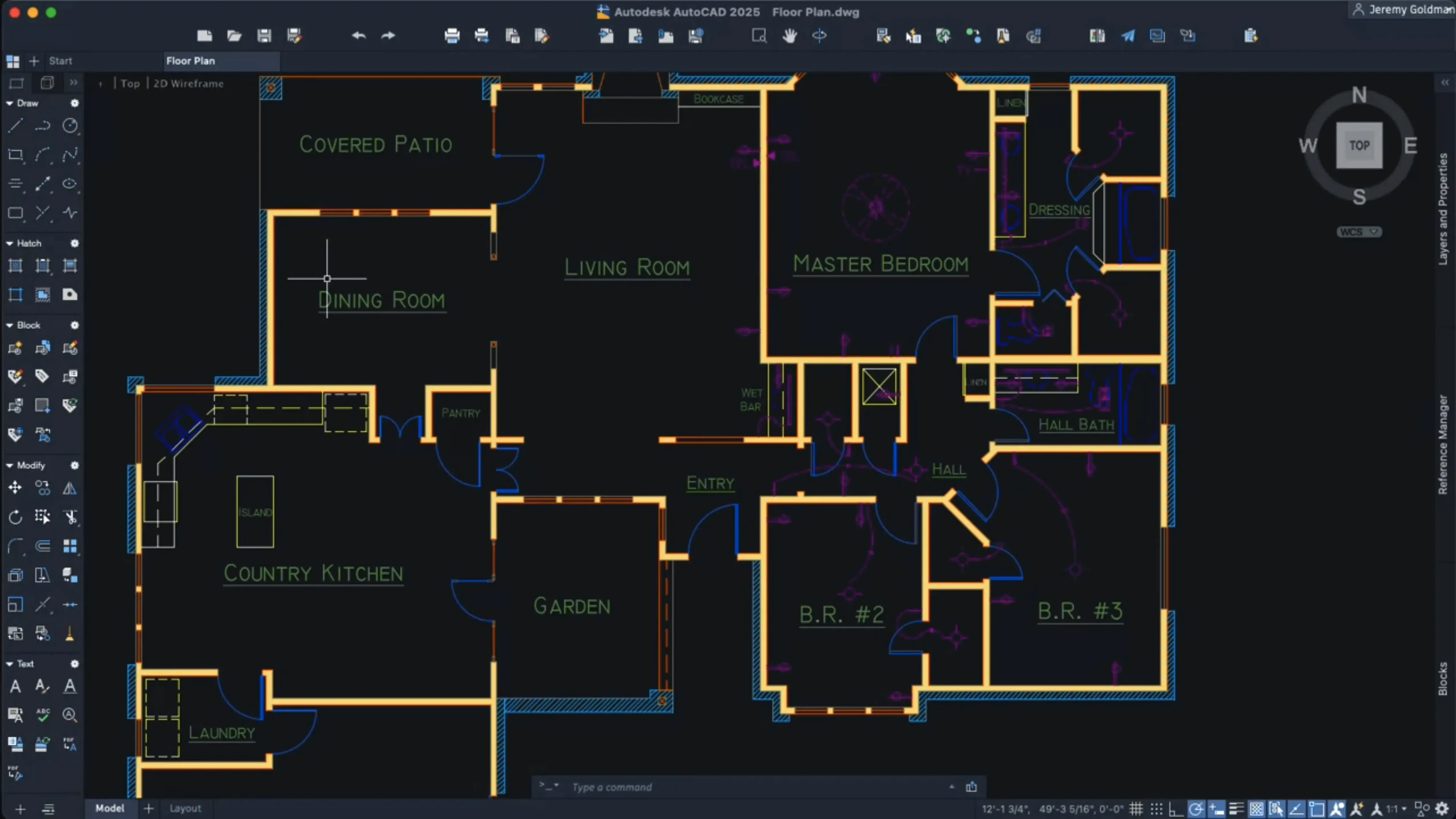
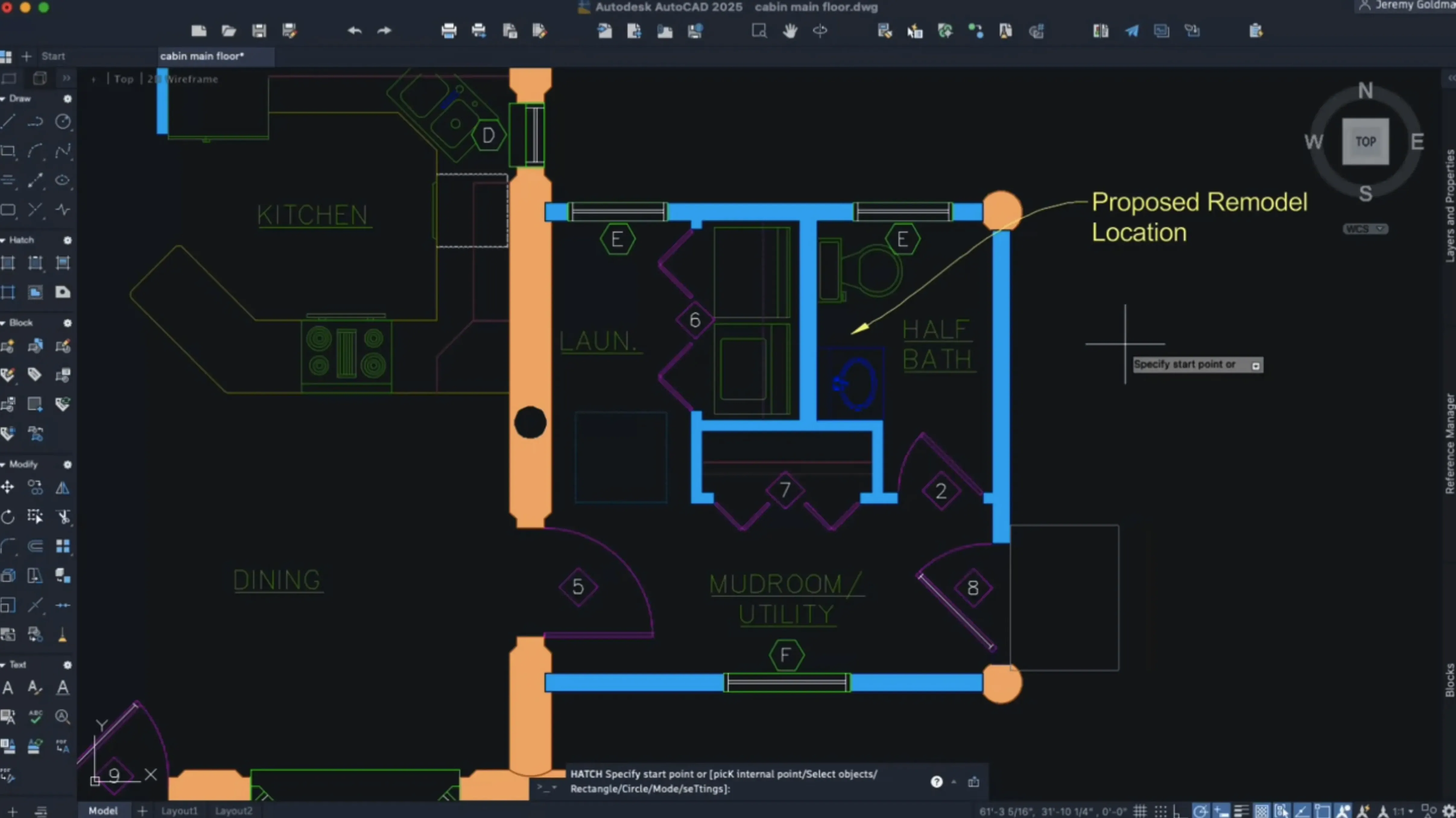
AutoCAD for Mac is Autodesk's drafting and documentation software that puts full 2D and 3D CAD power on macOS, using the same DWG file format as the Windows version.
The 2027 release tightens a few bolts and removes some old plumbing. Natively built for both Intel and Apple silicon machines, it now relies entirely on the Metal graphics engine — OpenGL support is gone. That shift pays off in 3D navigation, which feels snappier when you orbit a model or walk through a building scene. On the drafting side, a new Autodesk AI feature scans your drawing and spots geometry that could be turned into reusable blocks, something that saves real minutes on cluttered floor plans. Hatching got quieter improvements too: you can now create shaded shapes and hatch along a contour without existing boundary geometry laying the groundwork first.
A small but practical addition is Geometry Cleanup, which tidies loose ends and tiny gaps that sneak into imported files. Dynamic grip menus now play nicely with shortcut keys in localized versions, and the Help system works both online and offline, so you aren't stranded on a job site with flaky Wi-Fi.
DWG files open the same way on Mac and Windows
AutoCAD was never a walled garden, and the Mac build leans into that. Files move between Mac and Windows machines without conversion rituals because both sides speak the same DWG format. Send a drawing to a structural engineer on a PC, get it back with markups, open it — the geometry lands where it should.
The Apple silicon story is straightforward. The app runs natively, so it isn't borrowing performance through translation. On an M-series MacBook Pro, Metal is doing the heavy lifting, and that shows when you spin a 3D model with a dozen xrefs attached. Large coordinate scene optimization also does its part: complex site plans with coordinates that would make a lesser app stutter feel manageable, with reduced CPU and GPU load.
It also respects Mac conventions more than you'd expect from a program with this much Windows heritage. Native file dialogs, standard keyboard shortcuts, Quick Look thumbnails on DWG files in Finder. If you work with PDFs as underlays or export to share with clients, the round trip is clean. Other Mac apps can read the exports without fuss, whether it's Preview, a PDF editor, or a rendering tool on the side.
Layout tab switching now feels instant
Stability is the quiet headline here. A program that crashes mid-command is a program you stop trusting, and this release holds up through long sessions. Switching layout tabs got faster, which sounds minor until you spend a day jumping between ten sheets. The small delays add up, and removing them keeps the rhythm going.
Memory use is reasonable for a CAD package. A drawing with thousands of objects sits comfortably on a 16GB machine, though 32GB gives more breathing room if you keep multiple large files open at once. The cleanup tools help indirectly: a drawing full of tiny geometry errors is a drawing that asks more of your machine. Geometry Cleanup fixes what it can, and the block conversion feature shrinks file complexity without you hand-picking every repeated element.
Speed in 2D remains solid. Pan and zoom feel immediate on modest hardware. In 3D, the Metal-only approach means no fallback path to slow things down — you get one rendering engine that was built for the current macOS graphics stack.
Disable SIP first or the installer fails
The install package is explicit about one thing that trips people up: System Integrity Protection must be disabled before installation. Skipping that step leads to a confusing failed install, and it's the single most common first-run problem.
Another frequent misstep is ignoring the block suggestions from the Autodesk AI scan. New users often leave repeated geometry as loose lines and circles, then wonder why their drawings bloat. Selecting the suggested objects and converting them into blocks with the built-in scaling and rotation options keeps files lean and easier to edit later.
Some people coming from Windows versions also look for the old OpenGL settings out of habit. They're gone in 2027, and there's nothing to configure — Metal handles it. Poking around the preferences for a graphics toggle is wasted time.
Customizing shortcut menus is another underused move. The option exists in this release, and setting up your own right-click menu before a big project saves more clicks than most people realize.
Bottom line: no reinvention here, just a steadier, Metal-only engine, smarter block detection, and cleanup tools that keep drawings tidy.
The 2027 version leans harder into Metal and adds a bit of AI muscle. Here's what changed:
- Autodesk AI block detection — scans drawings for objects that can be converted into blocks.
- Geometry Cleanup — new tool for fixing small gaps and stray geometry in imported files.
- OpenGL dropped — Metal is now the only graphics engine, which bumps up 3D navigation speed.
- macOS 12 or later
- 64-bit Intel or Apple silicon processor
- English interface
Questions I actually get
Does AutoCAD for Mac 2027 work on Apple silicon?
Yes, it runs natively on both Apple silicon and 64-bit Intel processors.
Can I share DWG files with Windows AutoCAD users?
Absolutely. The Mac version uses the same DWG file format, so files move cleanly between Mac and Windows.
What graphics engine does AutoCAD for Mac 2027 use?
It depends entirely on the Metal graphics engine. OpenGL is no longer supported, which improves 3D performance.
Notes from the tables 0
Sign in or pull up a chair to leave a note.
No notes on this one yet. They go up after I read them.