

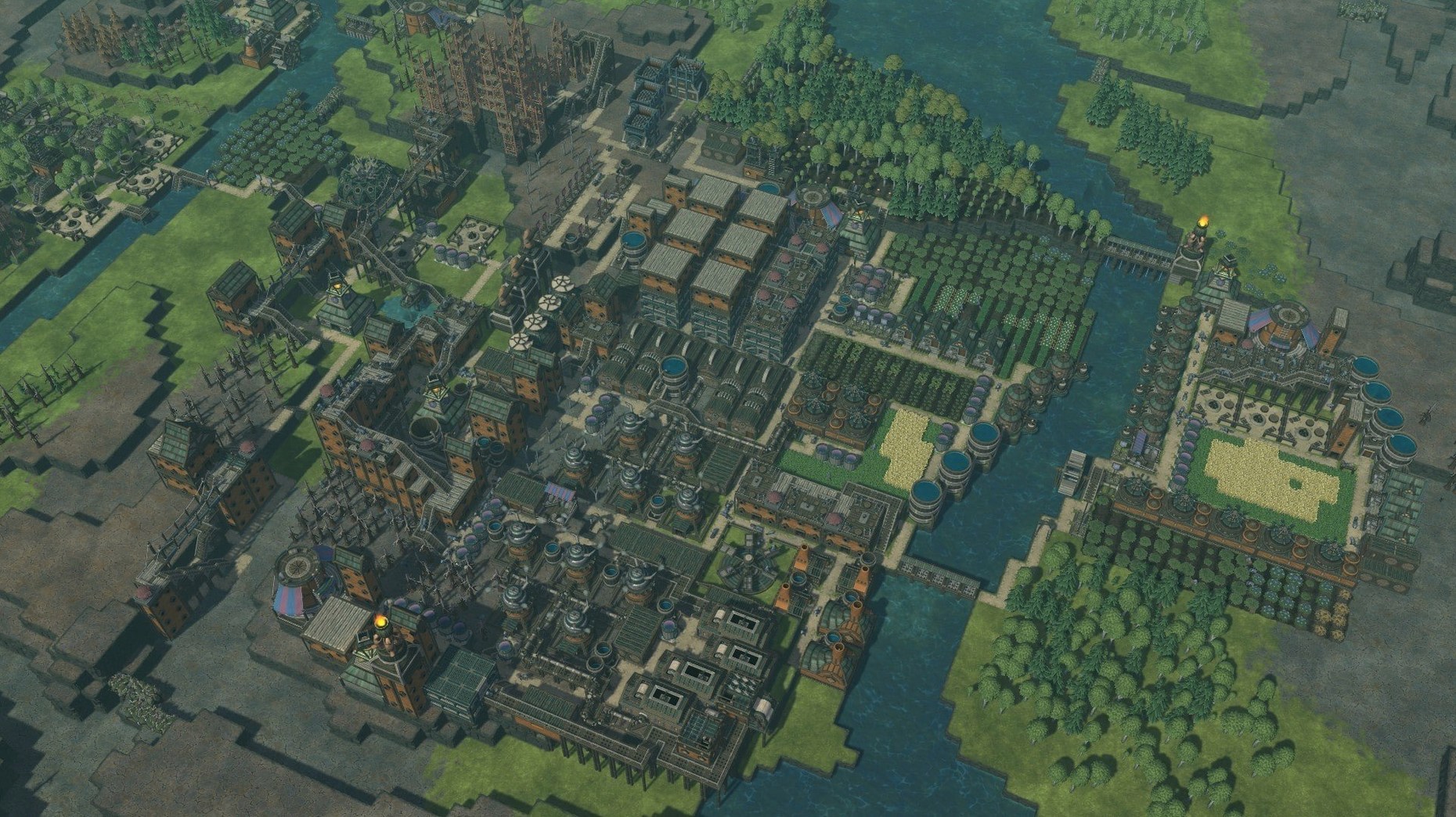
You've placed a floodgate across the river to get your crops through a dry season. The reservoir holds, the wheat ripens, and for a moment the colony is safe. Then a kit gets stranded on the wrong ledge and you spend twenty minutes building a staircase out of platforms to get him home.
Reroute the river
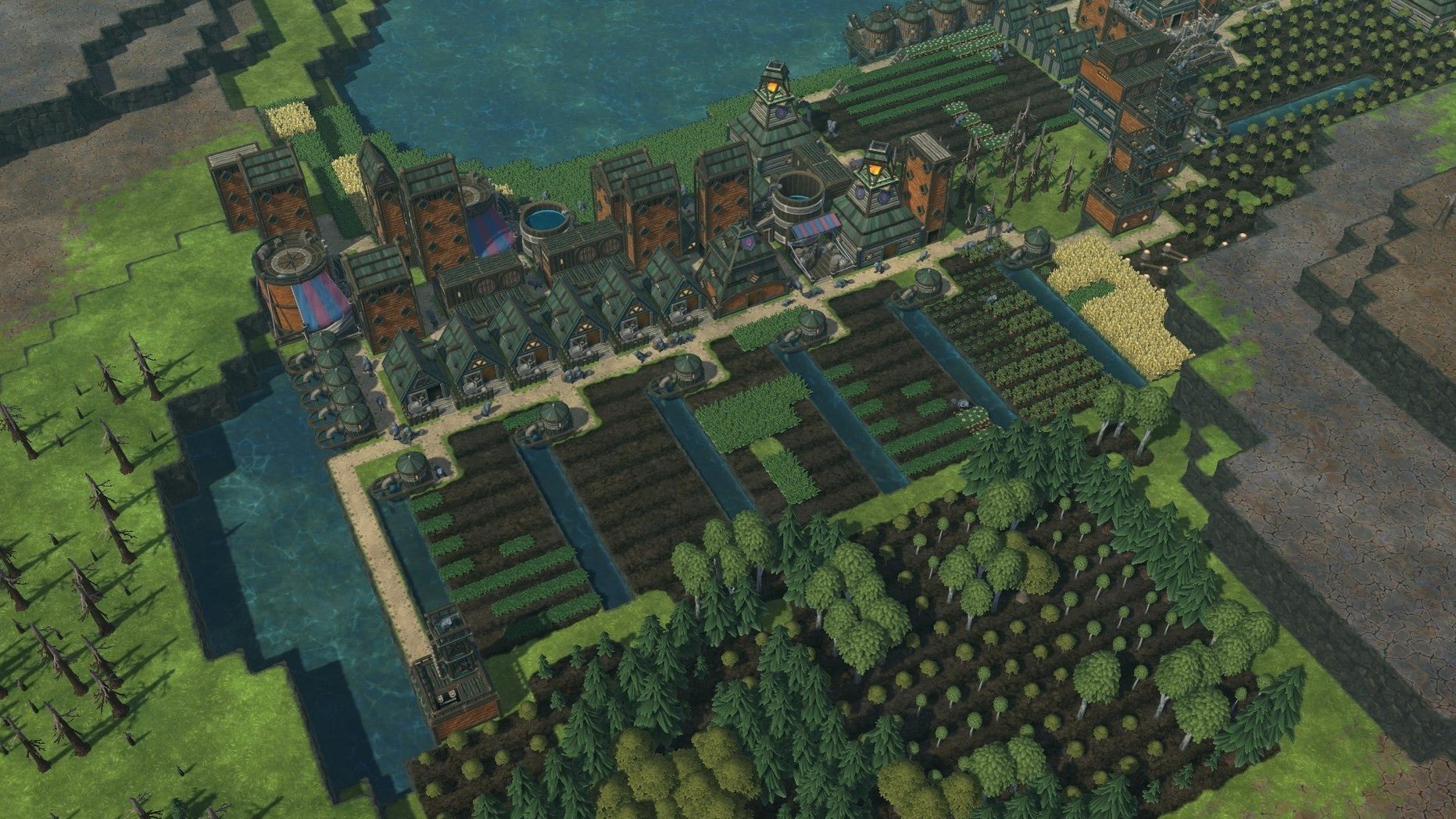
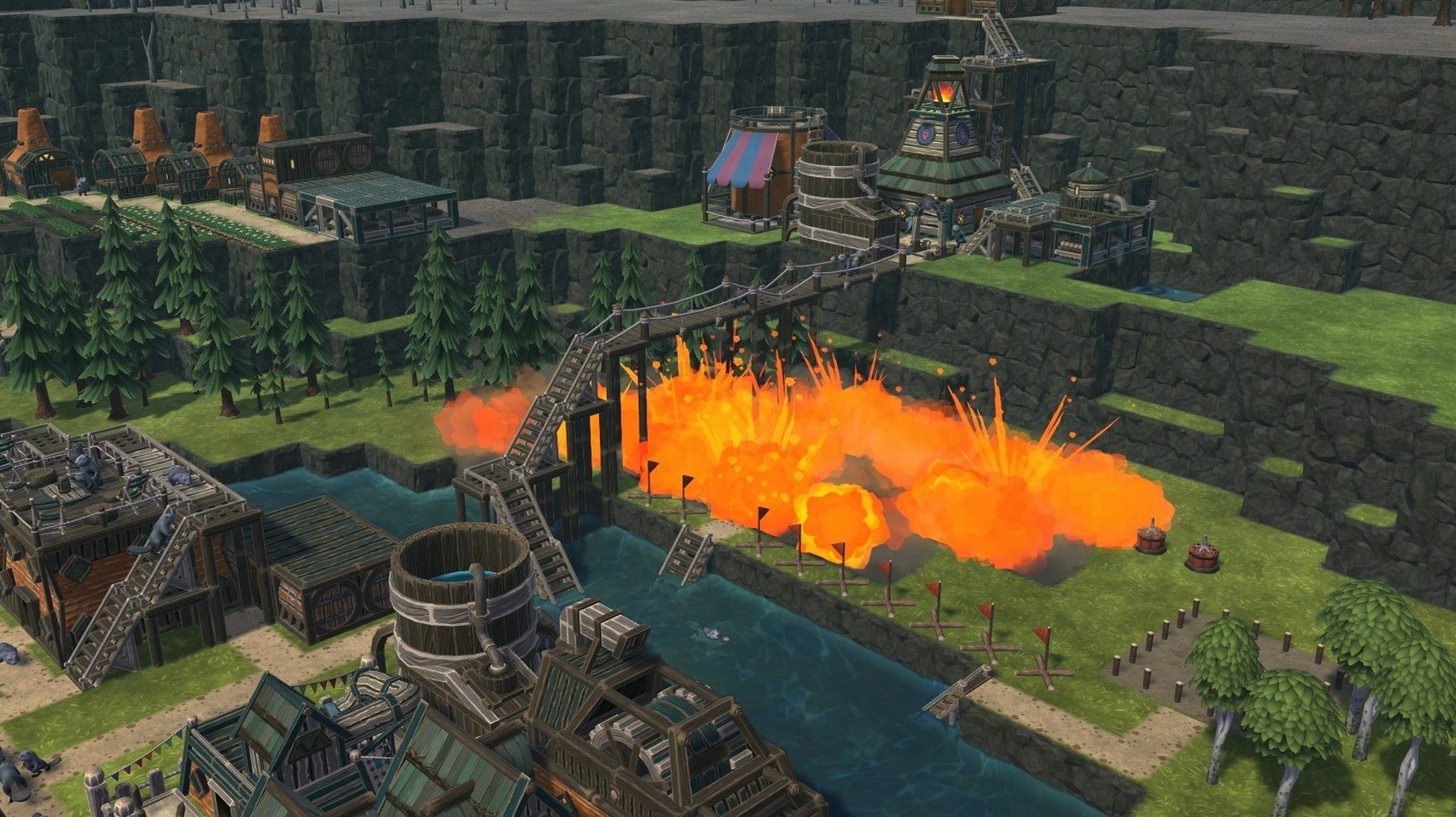
The heart of Timberborn is water engineering. Blast channels, raise dams, and plan aqueducts so your farmland stays green when the drought arrives. If physics puzzles and the satisfaction of a well-placed levee sound good, you'll feel right at home.
Stack a beaver high-rise
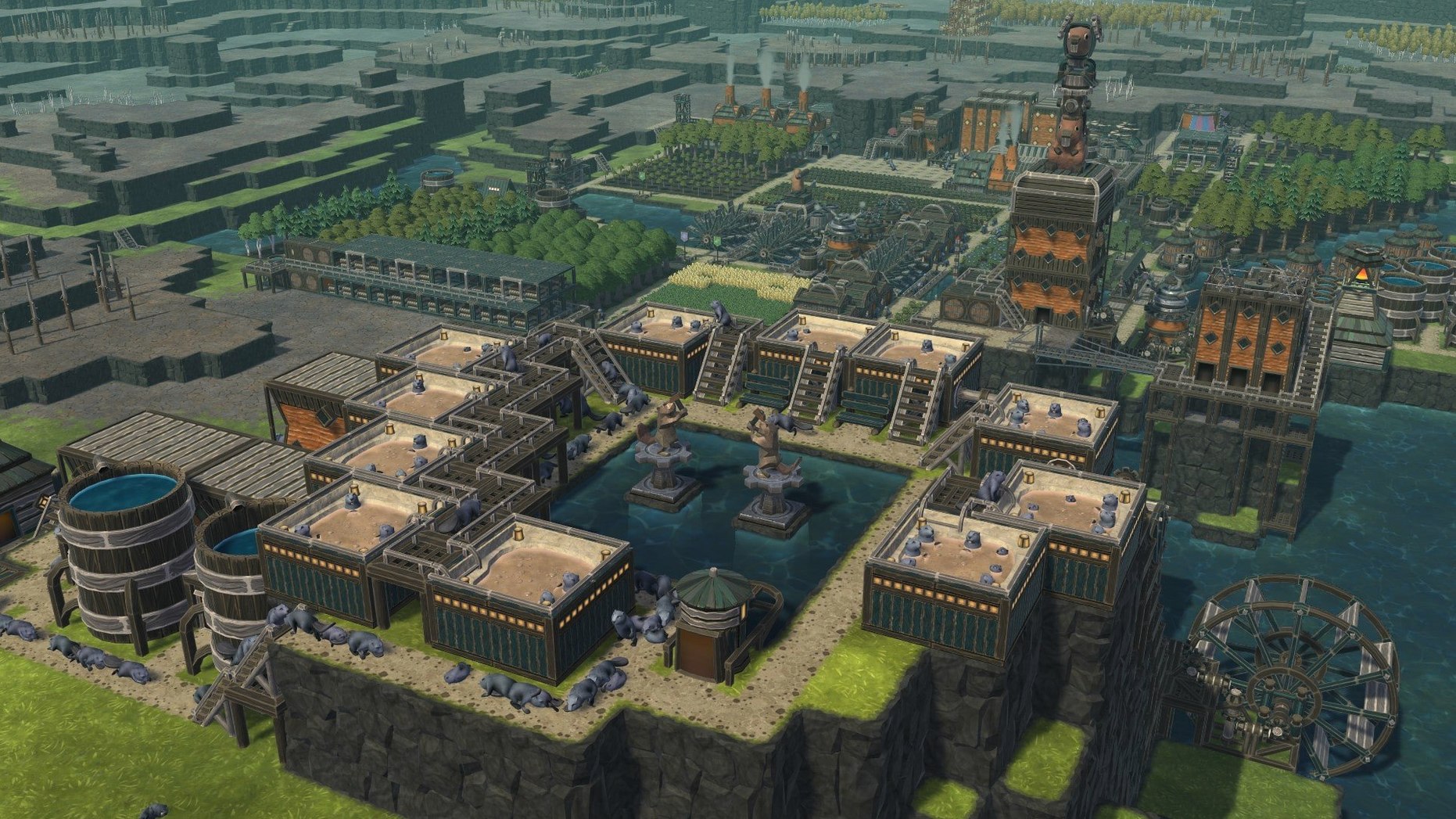
The game lets you build vertically with platforms, bridges, and multi-story lodges. Managing tight space scratches the same itch as a compact factory layout, but with furrier residents.
Live with your mistakes
This is a slow burn. A bad canal angle can take a full cycle to reveal itself. You'll enjoy it if you like rethinking a design at 2 a.m. and starting a fresh map with a better idea. Skip it if you prefer immediate feedback over long-term tinkering.
Fueling a colony with birch logs and engine ambitions
I boot a fresh map on the Plains and pick the Iron Teeth because I want to try their engines later. First thirty minutes: plop down a lumberjack flag near a stand of birch, queue a water pump on the nearest bend, and lay four small houses in a tight row. I pause often—placing paths before buildings, and buildings before I unpause, is a habit that saves a lot of demolished scaffolding. By the time the first drought warning pings, I've dammed the upstream fork with a two-block wall that funnels water into a decent reservoir. The colony has twelve adults, twenty-four carrots in storage, and a kit who decided to climb a ruined bridge for no reason at all.
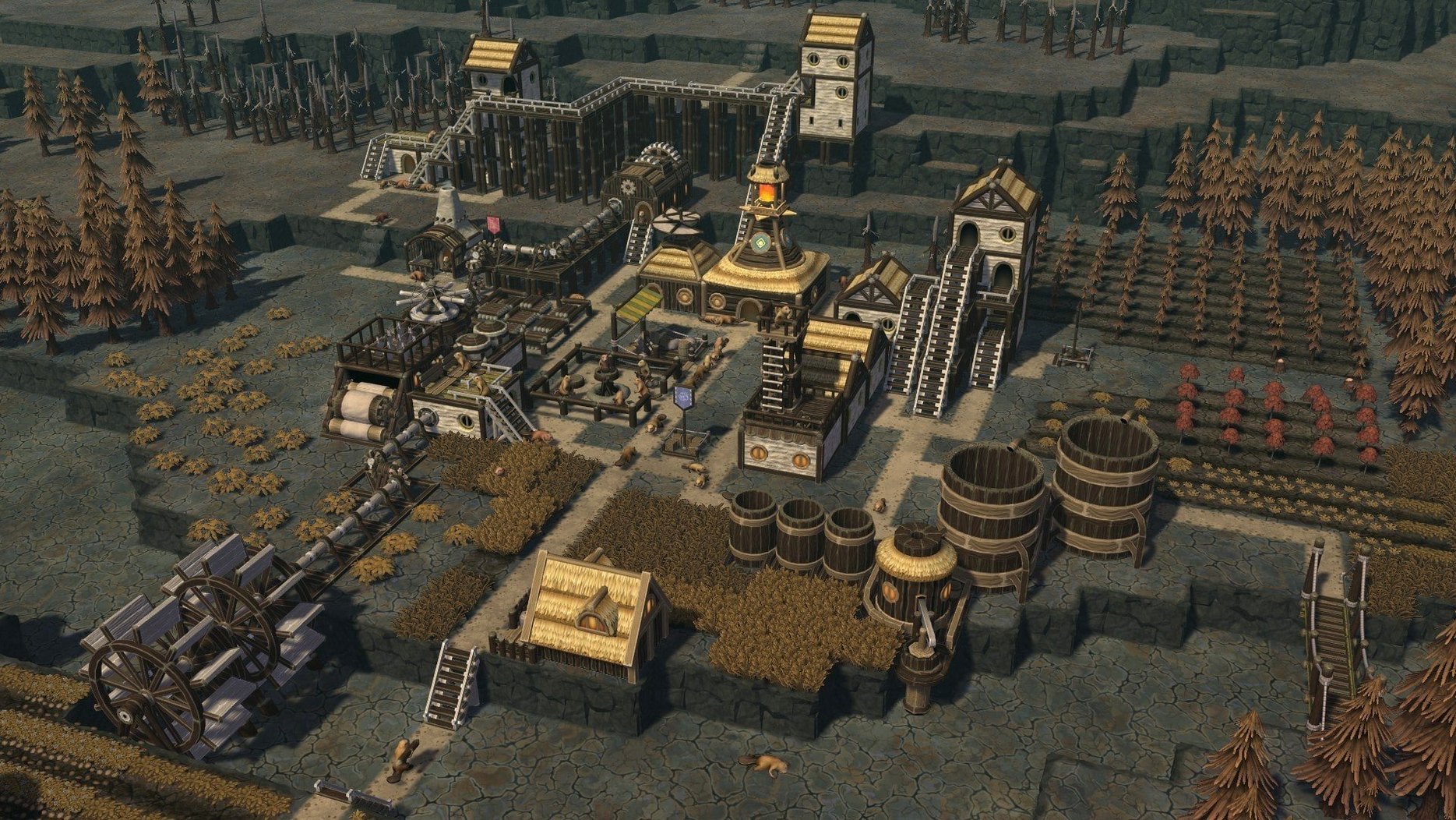
From here the rhythm settles in. I map a district boundary at the far end of the plateau, set up a distribution post, and route planks, grilled potatoes, and water eastward. The Iron Teeth need power for their advanced machines, so I start breeding a line of oaks toward the motor building. Getting the engine online takes nearly a full cycle because I miscalculated the log overhead. The crank generator hums to life one hour before a five-day drought, and I realize I forgot to assign a hauler. That's Timberborn: the plan is always two steps ahead of the workforce.
The engine room hum
On an M4 Mac mini, the simulation ticks along without any stutter I can point to. I've scrolled across a two-district colony at speed three with sixty-plus beavers, flowing water, and a web of power shafts, and the camera still pans as smooth as a fresh install. The frame rate only dips when I zoom through a dense canopy of fully grown maples at sunset—something about the leaf shadows makes the GPU think for a beat. Memory sits around 3 GB during late-game saves, which leaves plenty of breathing room for a podcast or a browser full of wiki tabs.
Stability has been boringly good. I left a settlement running overnight on speed one by accident and came back to a flooded berry patch and a colony that hadn't crashed. Autosaves fire every cycle and load fast enough that I never felt the urge to turn them off.
Reading production graphs instead of guessing carrot counts
The 1.1 update brought fresh maps into the rotation, and the new statistics panel gives you a proper breakdown of production versus consumption without scribbling numbers on a sticky note. Before this, I guessed how many carrots I needed. Now I click a tab and see the shortfall before the famine starts. The map editor improvements also mean the community workshop has a steady flow of player-made river basins, which doubled my reason to keep the timberborn mac download folder handy for a quick reinstall when I want a clean start.
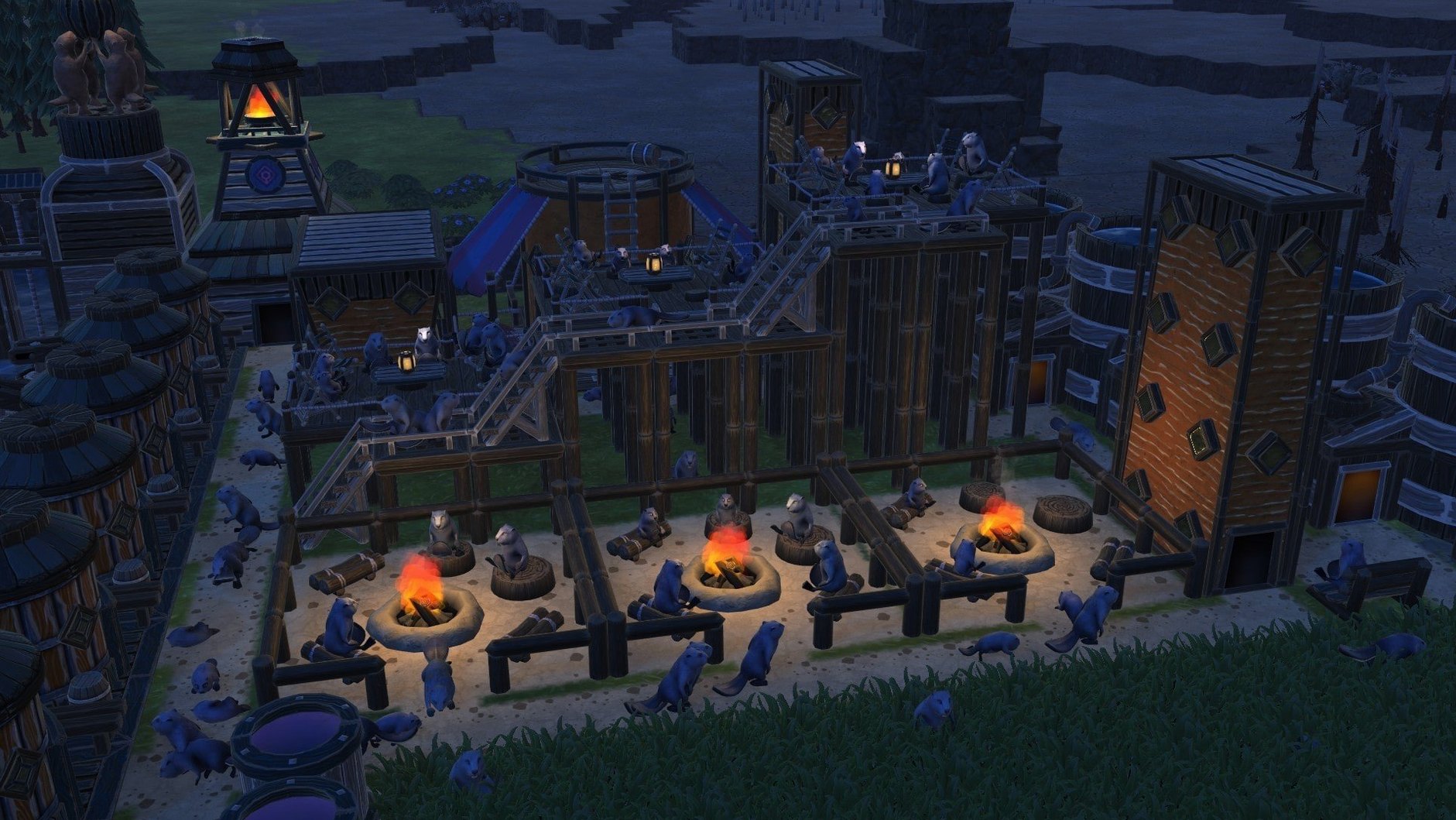
Night work got refined too—beavers assigned to late shifts now move with lanterns through the dark, and the lighting makes the stacked districts feel more alive. It's a small touch that makes the colony readable when you scroll through at speed two, checking why the water wheel stopped.
A fresh set of maps and some handy new ways to track your colony's numbers landed in the 1.1 update.
- New maps added to the official rotation
- Expanded statistics screens so you can watch production and population trends
- macOS: information unavailable
- Architecture: Apple Silicon and Intel (64-bit)
- Interface languages: English, Russian, German, Spanish, Italian, Simplified Chinese, Korean, Polish, Portuguese, Ukrainian, French, Japanese
Questions I actually get
What are the two playable factions in Timberborn?
You can choose between the Folktails, who favor farming and cooperation, and the Iron Teeth, who rely more on industry and efficiency. Each faction has its own building styles and play rhythm.
Can I create my own maps in Timberborn?
Yes, the game ships with a custom-map editor. You can build your own terrain and river systems, then share them with the community through the built-in sharing tools.
Does Timberborn run natively on an Apple Silicon Mac?
The build supports both ARM (Apple Silicon) and 64-bit x86 architectures, so it runs well on modern Macs without needing Rosetta.
Notes from the tables 0
Sign in or pull up a chair to leave a note.
No notes on this one yet. They go up after I read them.
More from the Games page
The whole page Games 78 GB
Tiny Bunny
2026.05.12
Games 78 GB
Tiny Bunny
2026.05.12
 Games 6.1 GB
The Planet Crafter
1.618
Games 6.1 GB
The Planet Crafter
1.618
 Games 3.7 GB
Tomb Raider: GOTY
1.2
Games 3.7 GB
Tomb Raider: GOTY
1.2
 Games 17 GB
The Last Plague: Blight
0.12.7
Games 17 GB
The Last Plague: Blight
0.12.7
 Games 2.6 GB
The Farmer Was Replaced
2026.04.21
Games 2.6 GB
The Farmer Was Replaced
2026.04.21
 Games 100 MB
The End of the Sun
2.0.2
Games 100 MB
The End of the Sun
2.0.2
 Games 5.8 GB
The Elder Scrolls III: Morrowind
1.6.18.20
Games 5.8 GB
The Elder Scrolls III: Morrowind
1.6.18.20
 Games 2.4 GB