

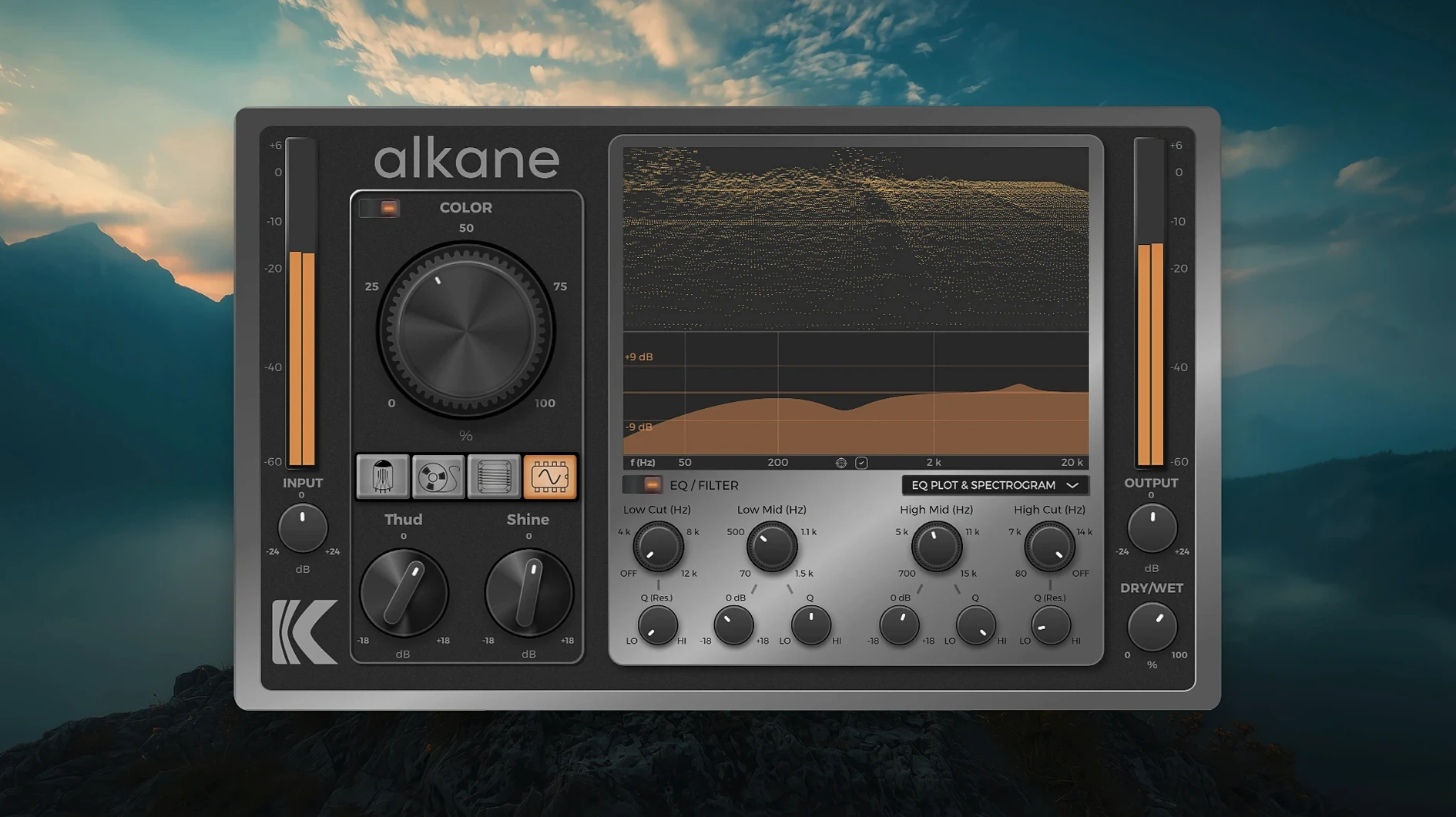
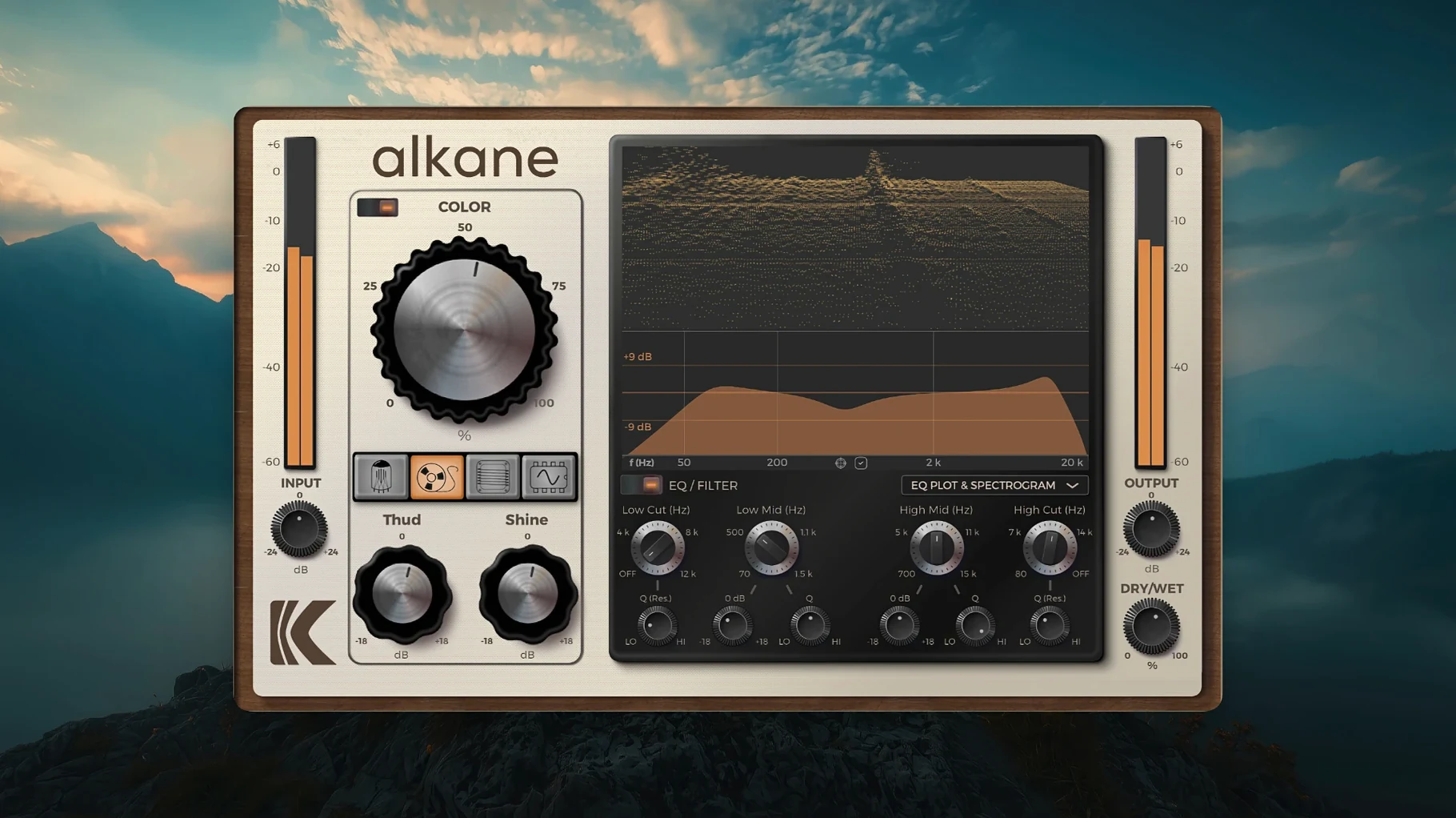
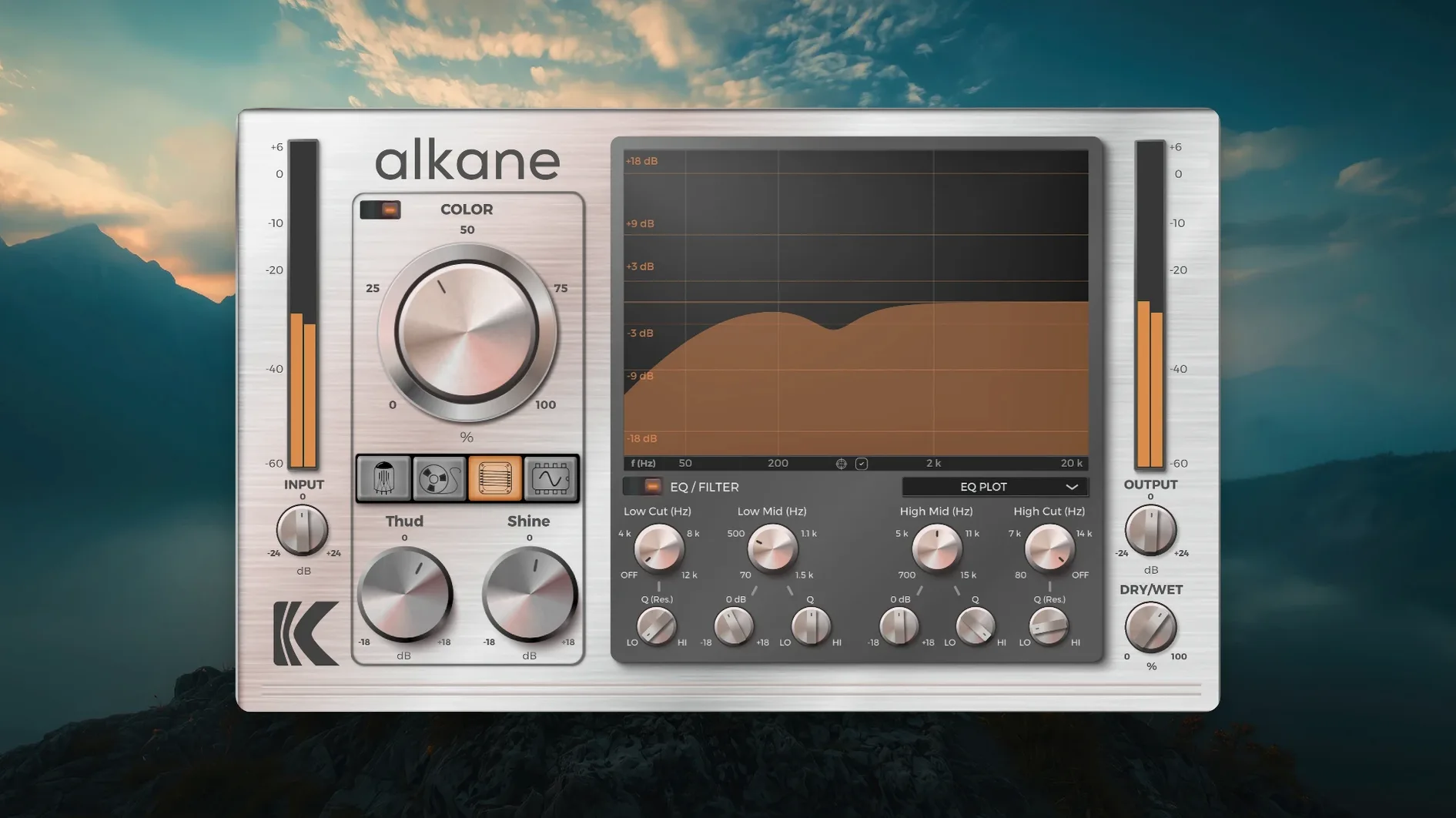
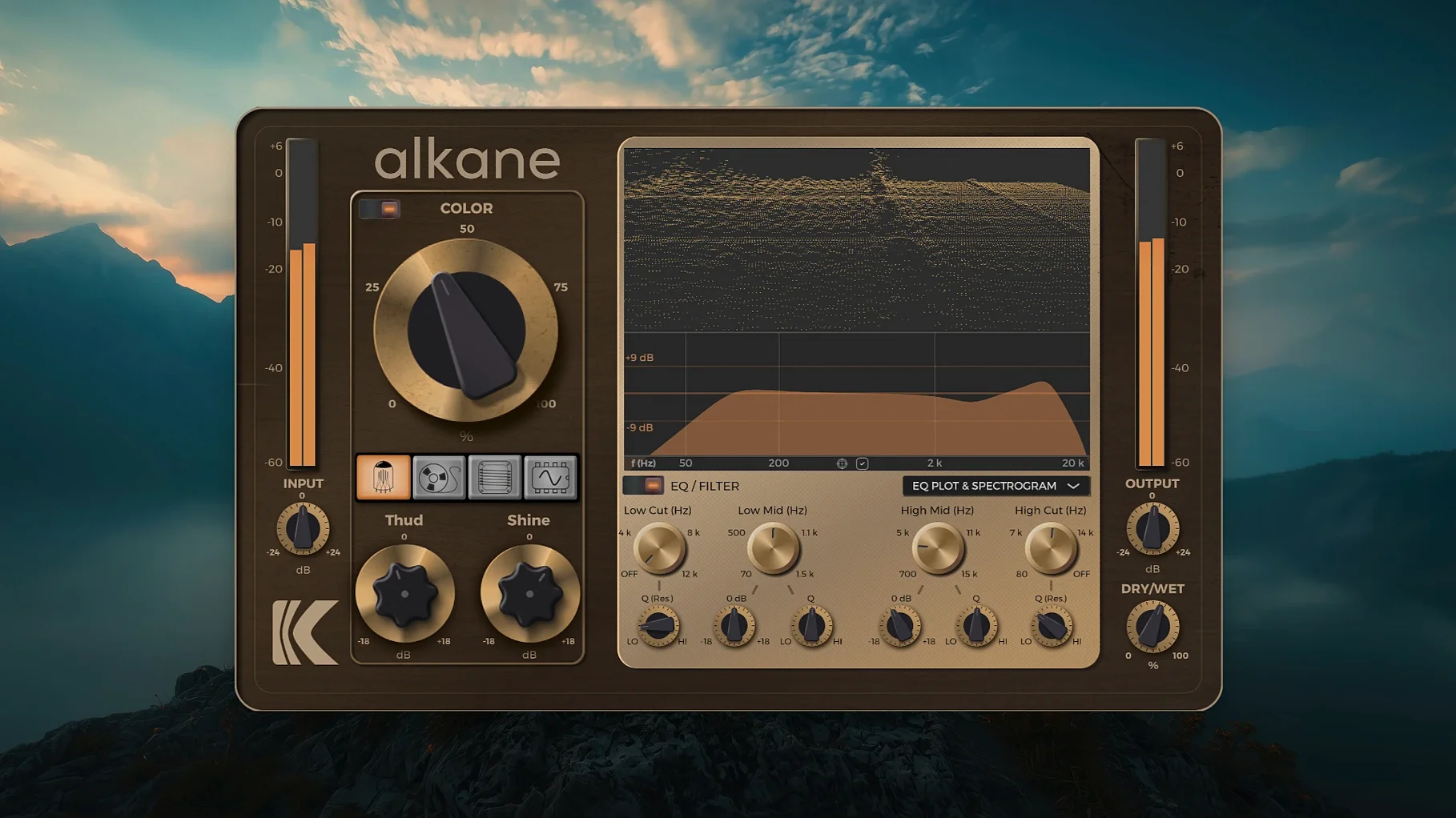
Version 1.0.17.0 didn't add new features, but it tightened up the code underneath. If you grabbed an early build, this is the one to install. The plugin runs natively on Apple Silicon and shows up as AAX, AU, or VST3 in your DAW, so it slots right into Logic, Ableton Live, Pro Tools, or whatever you use on a Mac running macOS 11 or later.
Formats and where it fits
KD Alkane is a macOS-only plugin that comes in three formats: AU for Logic and GarageBand, VST3 for Cubase, Bitwig, and most cross-platform hosts, plus AAX for Pro Tools. It's ARM-native, so no Rosetta translation layer needed. The installer is a standard disk image—nothing to wrestle with. Once it's scanned by your DAW, it appears as a single insert effect with a built-in 3D spectrogram and an EQ plot that reacts as you dial.
How the four circuits behave
Under the hood, four circuit models sit in parallel: Tube, Tape, Transformer, and Synth. Each one adds a different flavor of saturation. Tube warms up vocals and bass without swallowing the low end. Tape rounds off transients on a drum bus and glues things together. Transformer pushes the mids forward in a way that works on guitars and keys. Synth is the outlier—it gets fizzy and aggressive, more of a sound-design tool for running pads or 808s through. A two-band parametric EQ with high-pass and low-pass filters lets you shape what hits the circuits, and the whole engine runs at 8x oversampling to keep aliasing down.
Switch the tube stage to your own default
Out of the box, the plugin loads with the Tube circuit active and the EQ flat. That's fine for a quick listen, but a couple of tweaks make it feel more like your own. The first thing I reach for is the Color module—it defaults to neutral, and bumping it just a few percent adds transient-safe harmonics that don't flatten your attacks. On drums, that means crack stays crack, just with more weight behind it.
The second setting is the oversampling behavior. 8x is always on, which is great for print tracks, but if you're stacking four or five instances during composition, your CPU will feel it. Switch the visualizer to the parameter editor view instead of the 3D spectrogram when you're not analyzing—the display redraws eat fewer cycles that way.
Third, the high-pass filter on the EQ section starts at 20 Hz. Nudge it to 30 or 40 Hz on bass-heavy material before the signal hits the circuits. You'll still get warmth, but with less mud piling up in the sub frequencies the Tape and Transformer models can exaggerate.
- macOS 11 or later
- Apple Silicon Mac
- AAX, AU, or VST3 host
Questions I actually get
Is KD Alkane an Apple Silicon native plugin?
Yes. It uses ARM architecture and runs natively on Apple Silicon Macs without Rosetta.
What kind of EQ does the plugin include?
It has a two-band parametric EQ with high-pass and low-pass filters for shaping the signal before or after saturation.
Notes from the tables 0
Sign in or pull up a chair to leave a note.
No notes on this one yet. They go up after I read them.
More from the VST Plugins page
The whole page VST Plugins 264 MB
Komplete FX Bundle
2026.1
VST Plugins 264 MB
Komplete FX Bundle
2026.1
 VST Plugins 3.2 GB
iZotope RX
12.0.0
VST Plugins 3.2 GB
iZotope RX
12.0.0
 VST Plugins 2.1 GB
Komplete Kontrol
3.5.4
VST Plugins 2.1 GB
Komplete Kontrol
3.5.4
 VST Plugins 785 MB
KORG Collection
1.0.3
VST Plugins 785 MB
KORG Collection
1.0.3
 VST Plugins 175 MB
iZotope Neutron
5.2.0
VST Plugins 175 MB
iZotope Neutron
5.2.0
 VST Plugins 928 MB
KORG TRITON
1.4.7
VST Plugins 928 MB
KORG TRITON
1.4.7
 VST Plugins 586 MB
iZotope Nectar
4.1.0
VST Plugins 586 MB
iZotope Nectar
4.1.0
 VST Plugins 545 MB