



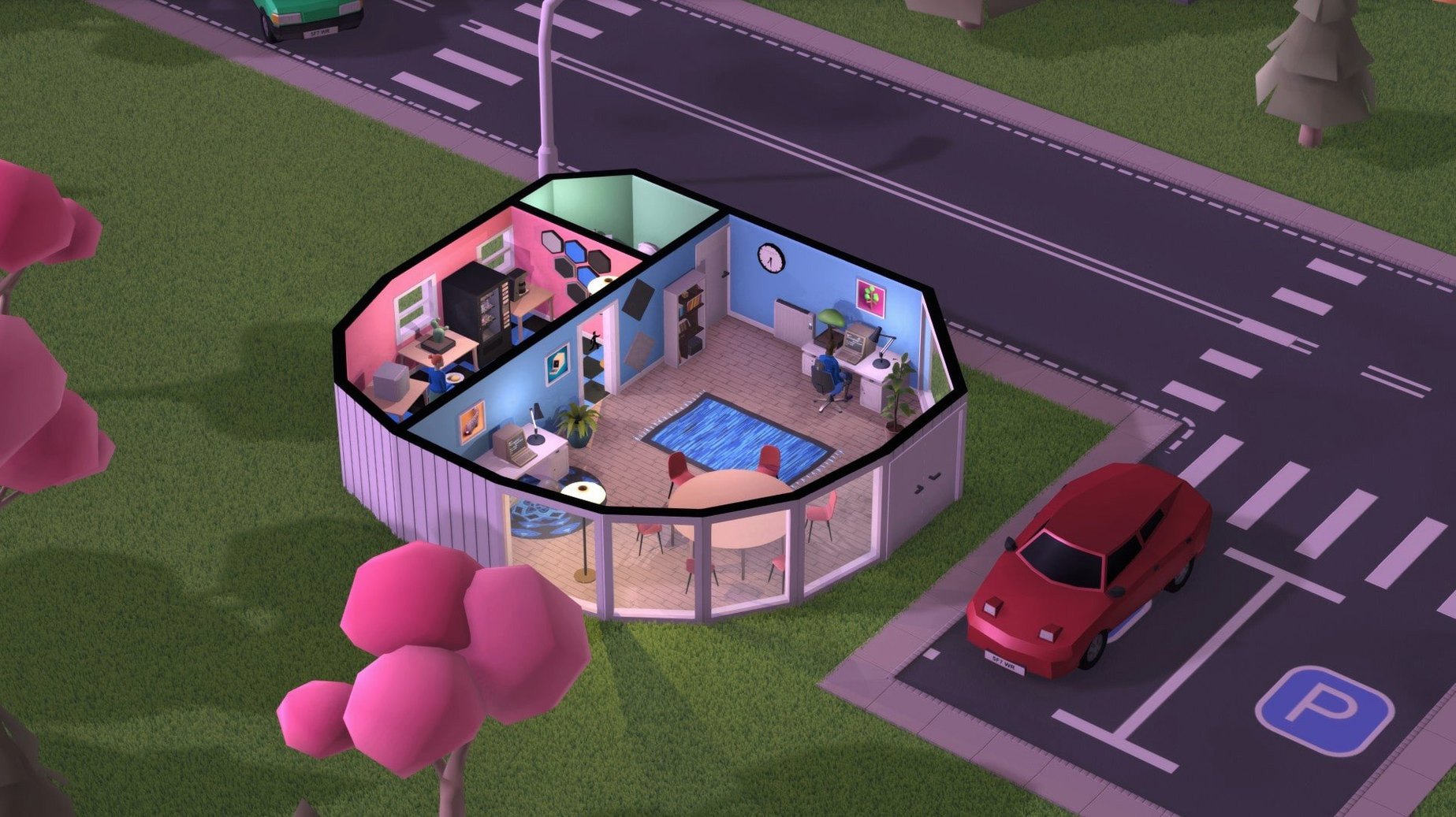
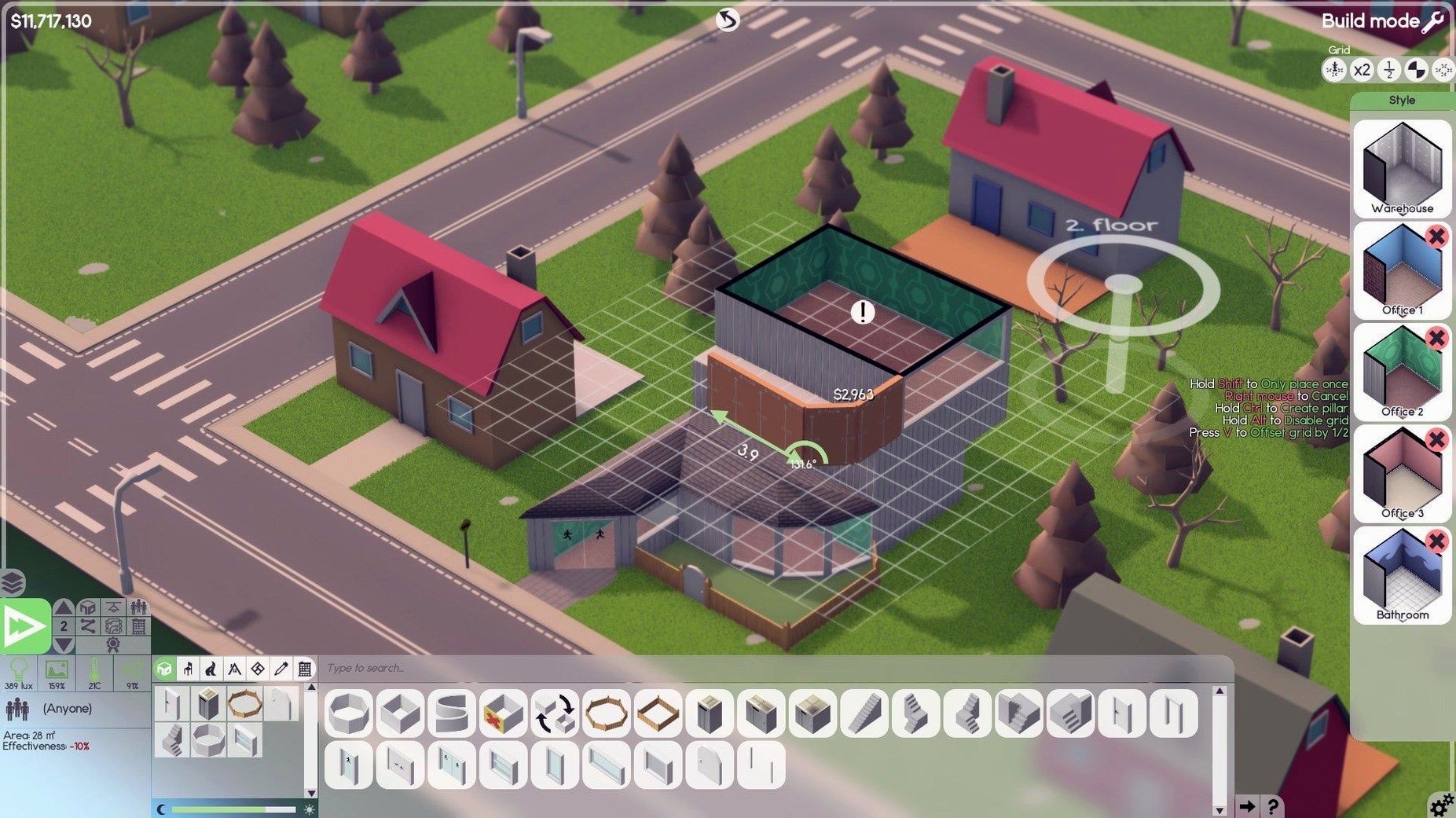
Ten floors of office space, a basement for the servers, and a team that needs desks before they can write a line of code. Software Inc is a business simulation that hands you the keys to your own software company and steps back — you handle the hiring, the building, the research, and the sales.
| Fact | Detail |
|---|---|
| Developer | Coredumping |
| Current version | 1.8.41 |
| Interface | English |
| Status | Early access |
This one is for players who enjoy tinkering with floor plans as much as they enjoy a good spreadsheet. You hire designers, developers, support, and even maintenance staff to keep the furniture from falling apart. You can sell products, sign contracts, or offload shares to keep the lights on. Customizing your avatar is a nice touch, but the real personality comes from the offices you build and the team you assemble. It will not click with someone looking for a narrative arc or fast-paced action — the tension here comes from a missed deadline or a server room that got too hot. If the idea of decorating a break room on the sixth floor sounds like a chore, move along. If it sounds like a Tuesday evening well spent, you have found your game.
Building too much office before your first product
Most new players build too much office too soon. They lay out four floors of cubicles before the company has shipped a single product, then wonder why the bank balance hits zero in March. Start small — one floor, six desks, a shared bathroom. You can always expand upward when the royalties start coming in.
Another common slip is hiring specialists before you need them. A full research team sitting idle while you are still coding your first word processor will drain your funds fast. Hire for the project in front of you, not the one you hope to build next year.
- Ignoring maintenance staff. Furniture breaks, rooms get dirty, and employee satisfaction dips. One janitor and one repair person can keep a small office humming.
- Skipping the tutorial contracts. Those small publishing deals teach you the rhythm of development without the risk of your own IP flopping.
- Forgetting to assign leaders. A team without a lead drags through milestones. Leaders coordinate the work and keep subordinates from stepping on each other.
Keeping Notes open while you play
Software Inc does not plug into other applications — there is no export to Excel or link to a project manager — but it sits comfortably alongside the tools a Mac user might already have open. I keep Notes running on a second screen to track which employee is training in what, because the game trusts you to remember. Some players use a simple spreadsheet to model royalty projections before greenlighting a sequel. The game handles the simulation; you bring the organizational system.
On the macOS side, the game respects the usual conventions. It picks up your Music app or Spotify playback without muting itself, so you can build office parks to your own soundtrack. It works with Spaces if you like to swipe between desktops. I have had no trouble leaving it paused behind a browser window while checking the Steam patch notes, then clicking back in without a stutter. If you run a software inc download from a disk image, the drag-to-Applications step is the same macOS dance you already know.
Let your first company fail by year three
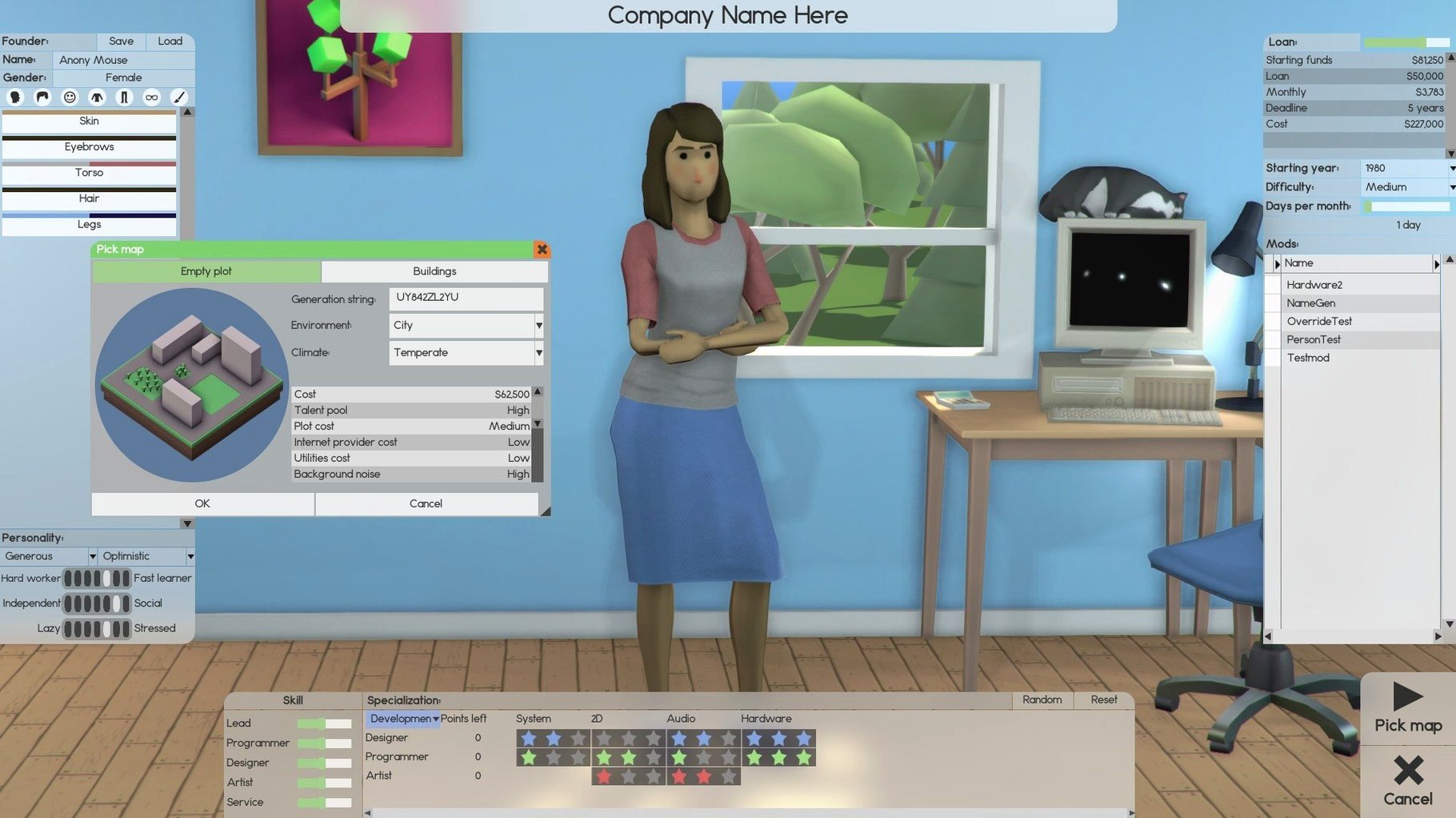
The opening hours teach you more from failure than from success, so let the first company be your sandbox. Pick a small map, name the company something silly, and accept that it will probably fold by year three. The lessons will stick better than any tutorial.
Practical moves for the first session:
- Take a contract immediately. It gives you a deadline, a small advance, and a reason to hire your first developer. Without a contract, you are burning cash on rent with nothing coming in.
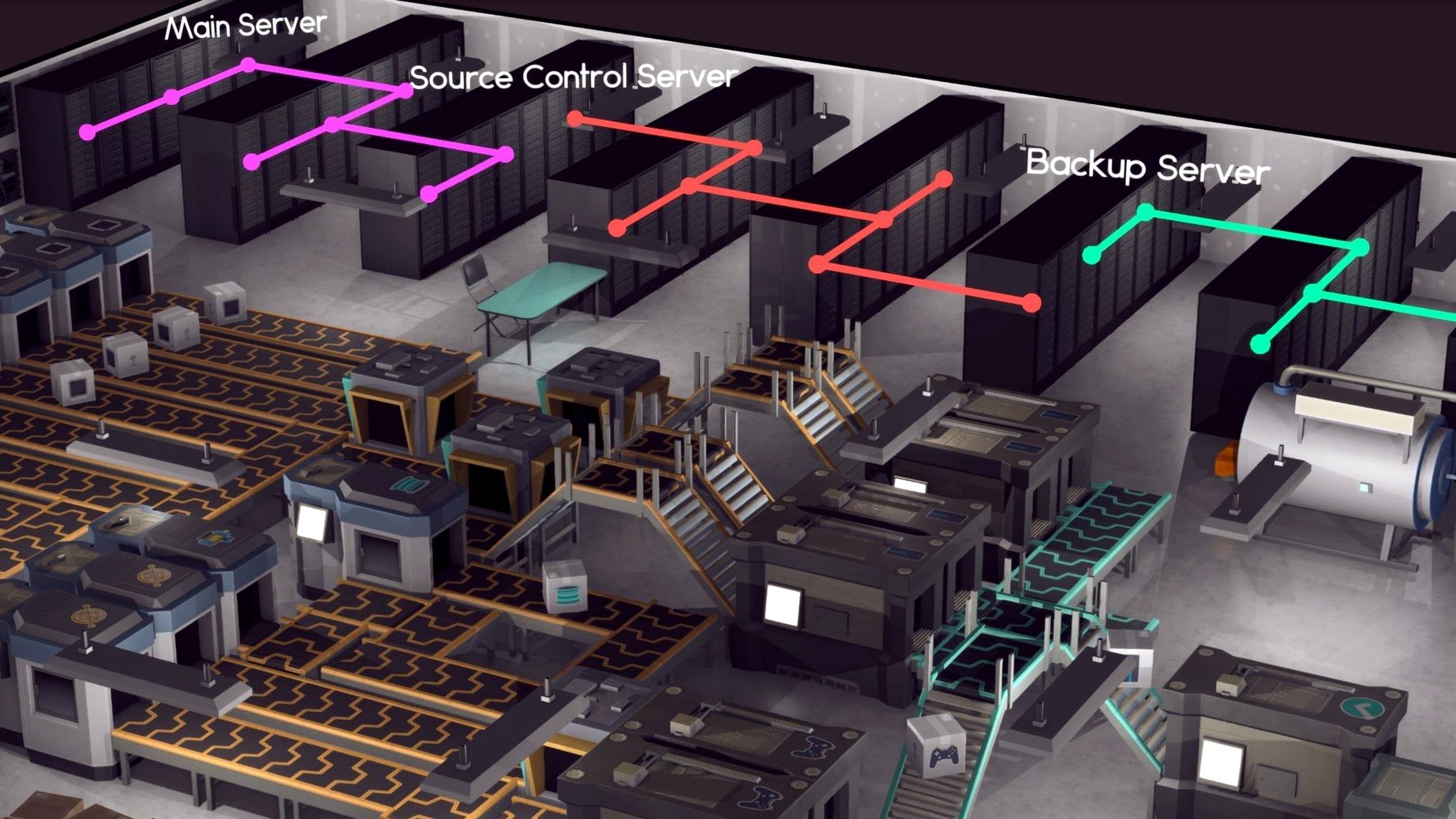
- Build a server room early, but keep it tiny. A single rack handles your first online store launch. You do not need a climate-controlled basement until you are hosting a franchise.
- Watch the employee relationships panel. Two developers who dislike each other will slow every project they share. Seat them apart or assign them to different teams before the grumbling starts.
- Save before announcing a product. The market can be unkind to a buggy release, and a flop with no backup save means starting over. The game does not hold your hand, so your own save discipline matters.
The game has been tested on macOS Tahoe on an M4 Mac mini, and it holds its frame rate even with a ten-floor office fully furnished. Early access means things can shift between updates, but version 1.8.41 plays like a finished thing in the hours that matter.
- Apple Silicon and Intel Macs
- macOS version information not specified
Notes from the tables 0
Sign in or pull up a chair to leave a note.
No notes on this one yet. They go up after I read them.
More from the Games page
The whole page Games 25 GB
Sneaky Sasquatch
2.2-993
Games 25 GB
Sneaky Sasquatch
2.2-993
 Games 365 MB
Songs of Syx
0.71.52
Games 365 MB
Songs of Syx
0.71.52
 Games 345 MB
Space Haven
1.0.4.4
Games 345 MB
Space Haven
1.0.4.4
 Games 359 MB
Stardew Valley
1.6.15.24357.8705766150
Games 359 MB
Stardew Valley
1.6.15.24357.8705766150
 Games 467 MB
Sid Meier’s Civilization VII
1.5.0
Games 467 MB
Sid Meier’s Civilization VII
1.5.0
 Games 18 GB
Stellaris
4.5.1
Games 18 GB
Stellaris
4.5.1
 Games 21 GB
Shift At Midnight
Build 24450017
Games 21 GB
Shift At Midnight
Build 24450017
 Games 816 MB