

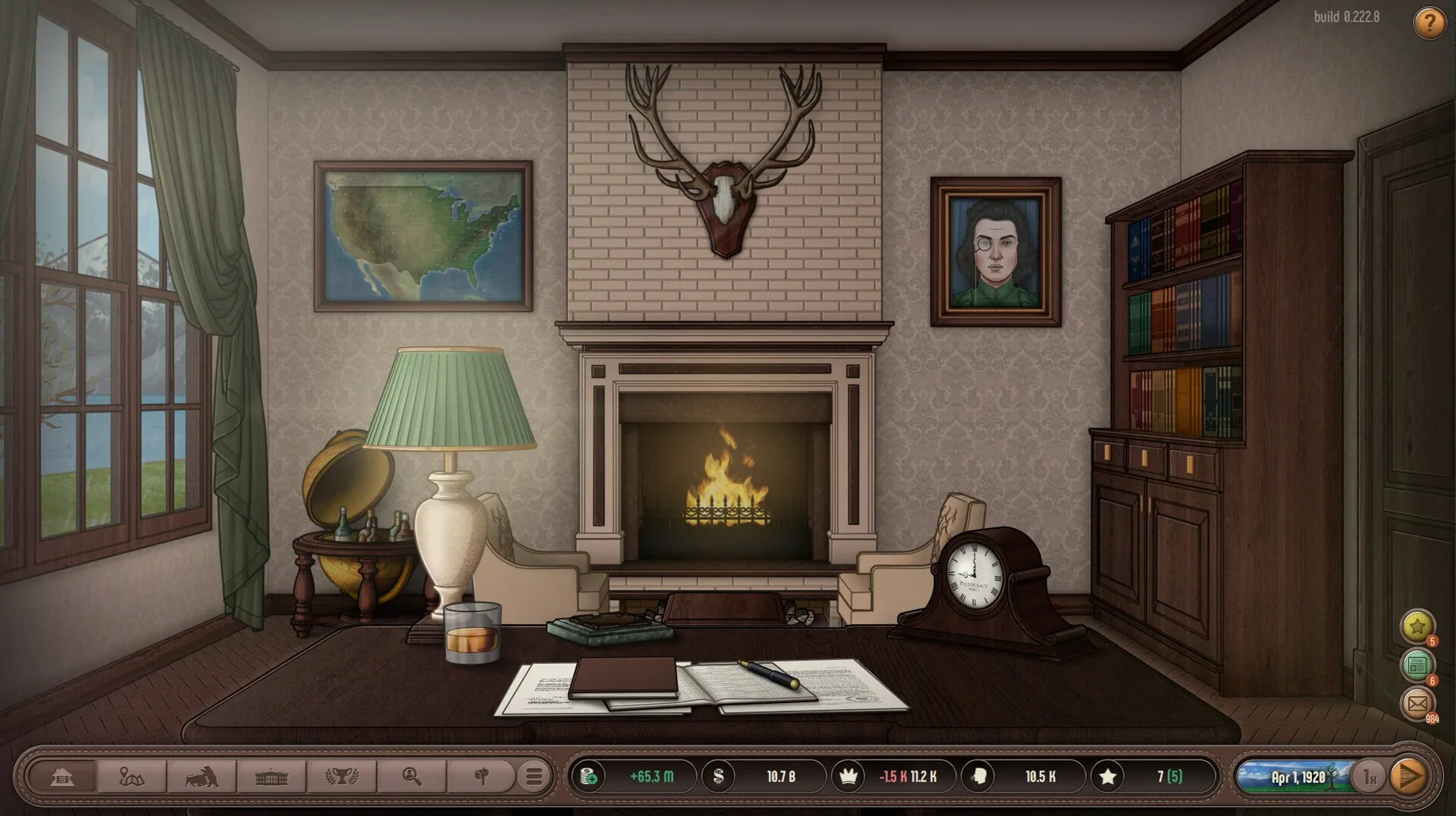
This build is steady, and the late-game economy has seen a lot of tightening so your monopolies don't run away with themselves quite as easily as they used to. If you played a year ago, the political pressure feels more real now.
The morning paper and the ledger
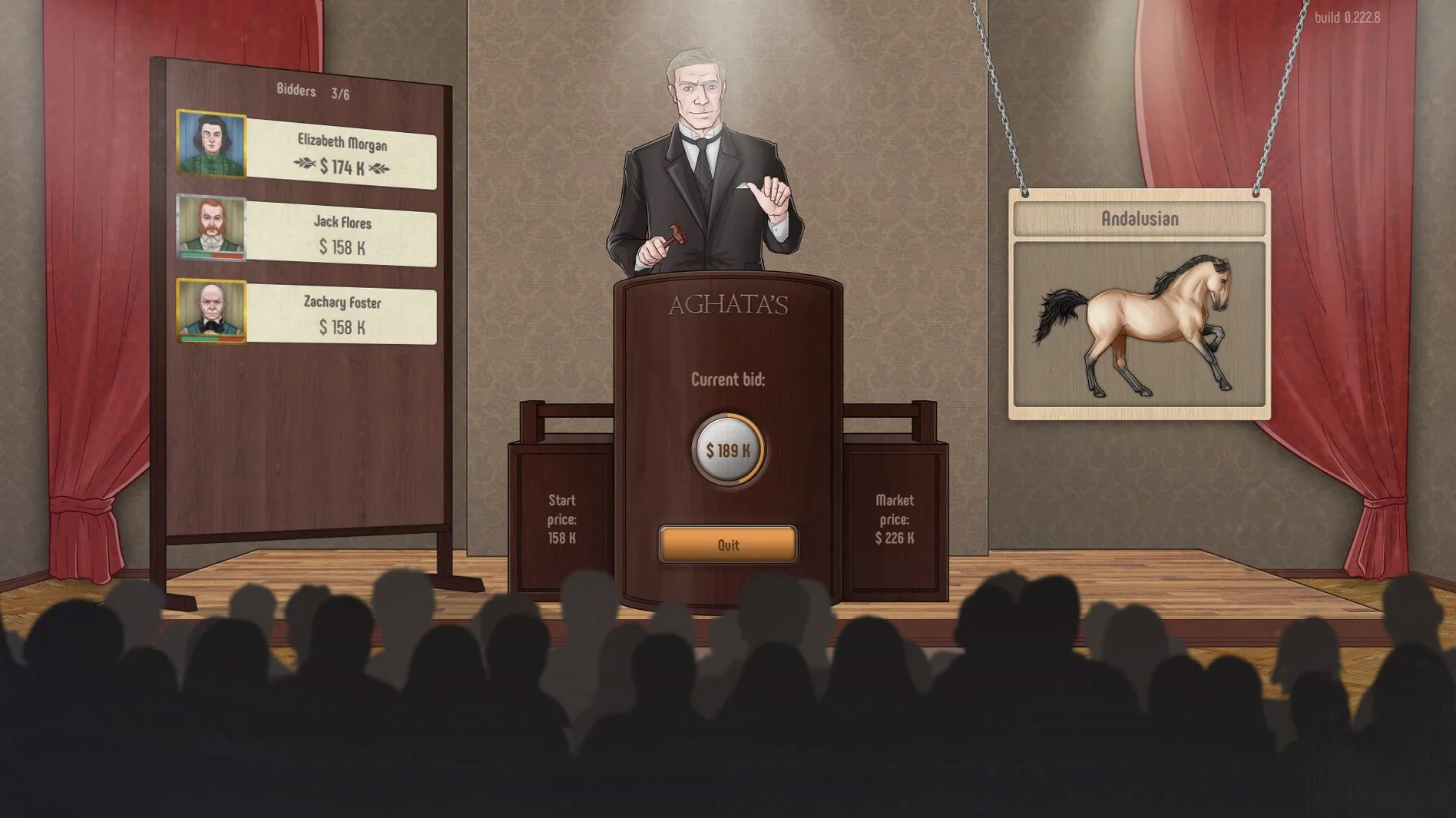
Most turns start with a newspaper telling you which senator got caught or what tariff just changed. You're not just building factories—you're watching a living economy where your decisions shift GDP and unemployment. You decide whether to dump a competitor's stock or buy them out outright. The fun is in the gray areas: hiring lobbyists to smooth over a price-fixing scandal, or risking a court battle to sabotage a rival's supply chain. There are 15,000 individuals in this world with their own ambitions and fears, so a backroom deal never feels like a spreadsheet calculation. When the cash piles up, you can spend it on real Gilded Age excess—horses, cars, yachts, even aircraft—and those purchases carry social weight with different factions.
The map and the courtroom
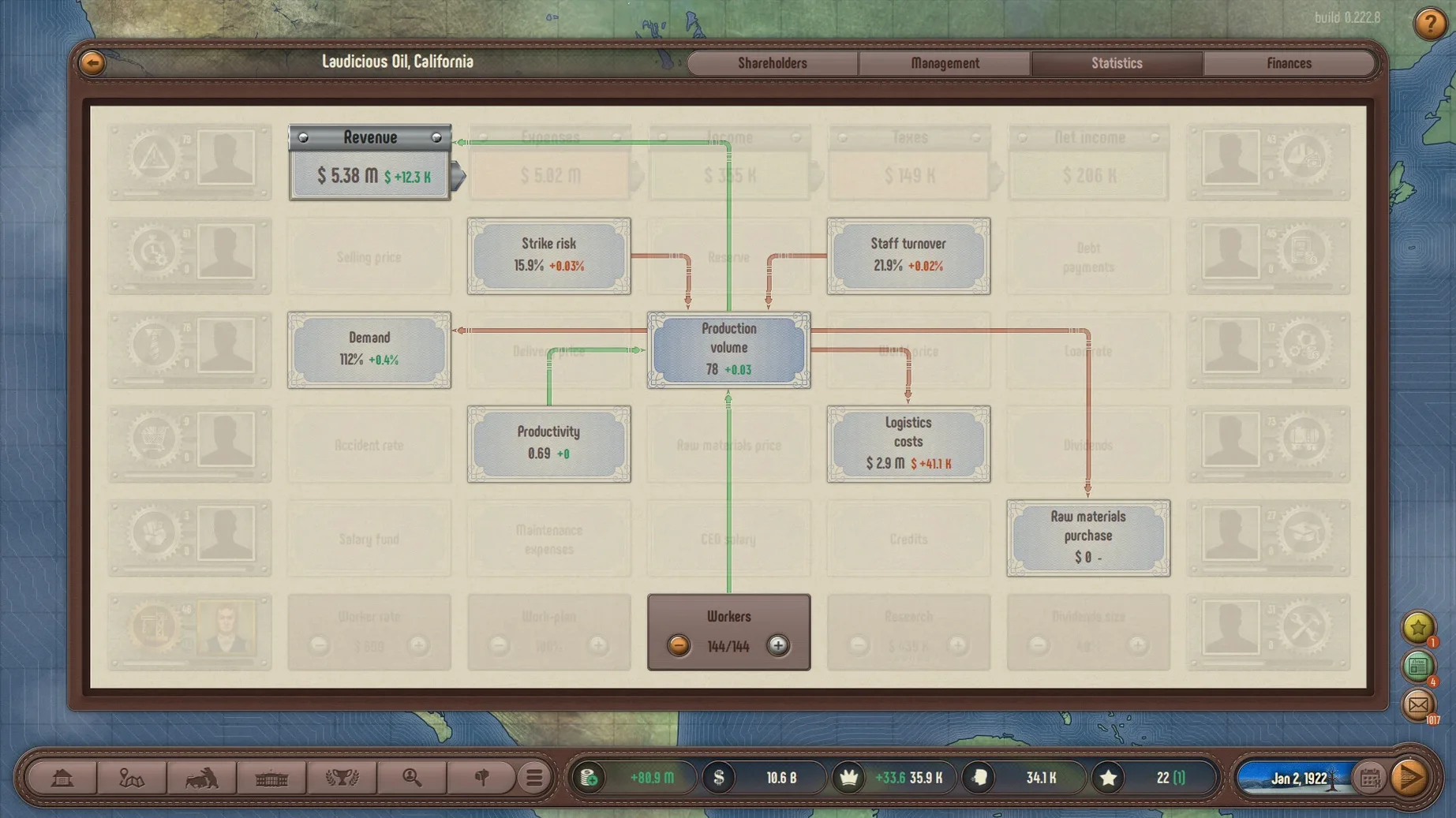
The 2D map looks simple, but it's dense with information about regional politics and labor unrest. You can play clean, but the game encourages you to get your hands dirty. Corruption, sabotage, and outright crime are all on the table, and if the courts catch up, you'll feel it in your stock price and your ability to pass favorable legislation. The political layer isn't window dressing; it runs from local mayors up to national policy, and it changes based on who you fund. A hostile administration can break a perfectly good oil trust, so you learn to keep friends in every camp.
Boardroom scheming replaces railway logistics
If you've spent time with Railway Empire, you know the pleasure of watching a network hum. Plutocracy swaps the tracks for boardroom tables and backroom handshakes. Railway Empire asks you to master logistics; Plutocracy asks you to master influence. It's closer in spirit to GearCity, where spreadsheets tell a story and one bad quarter can cascade into a crisis, but Plutocracy layers a political simulation on top that GearCity doesn't attempt. Where Capitalism Lab goes deep into retail and supply chains, Plutocracy widens the lens to include strikes, senators, and the social price of being too ruthless. It's messier and more personal.
A takeover, from handshake to monopoly
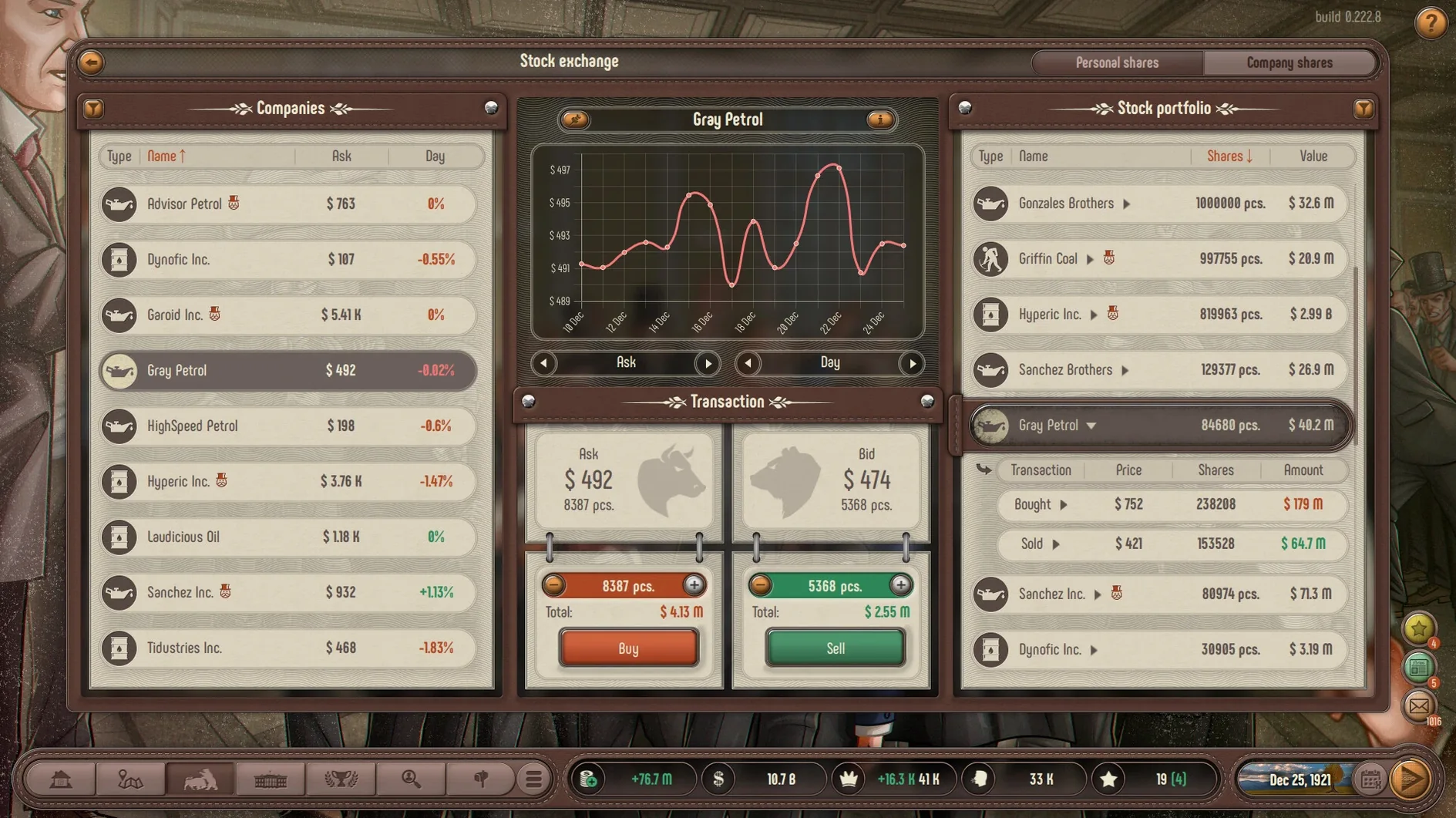
Say the steel tariff just jumped and a mid-sized Pittsburgh mill is bleeding cash. Start by buying a quiet 15% stake over a few turns so the price doesn't spike. While that's settling, send a lobbyist to the state capital to soften the local commerce committee—you'll want them looking the other way. Once your position is solid, launch a hostile bid. If the board fights back, leak a rumor about their safety record to the press and watch their stock dip further. Absorb the mill, replace the director with someone loyal, and fold it into your trust. The regional GDP ticks up, your competitors grumble, and the senator you funded last session suddenly remembers your name.
- Apple Silicon or Intel 64-bit Mac
Questions I actually get
Does the game model real historical events?
It's set during the Gilded Age and focuses on the rise of big business and the first billionaires, but the events emerge from the economic and political simulation rather than a strict historical script.
What languages does the interface support?
You can play in Russian, English, German, Spanish, Italian, Simplified Chinese, or Polish.
Notes from the tables 0
Sign in or pull up a chair to leave a note.
No notes on this one yet. They go up after I read them.