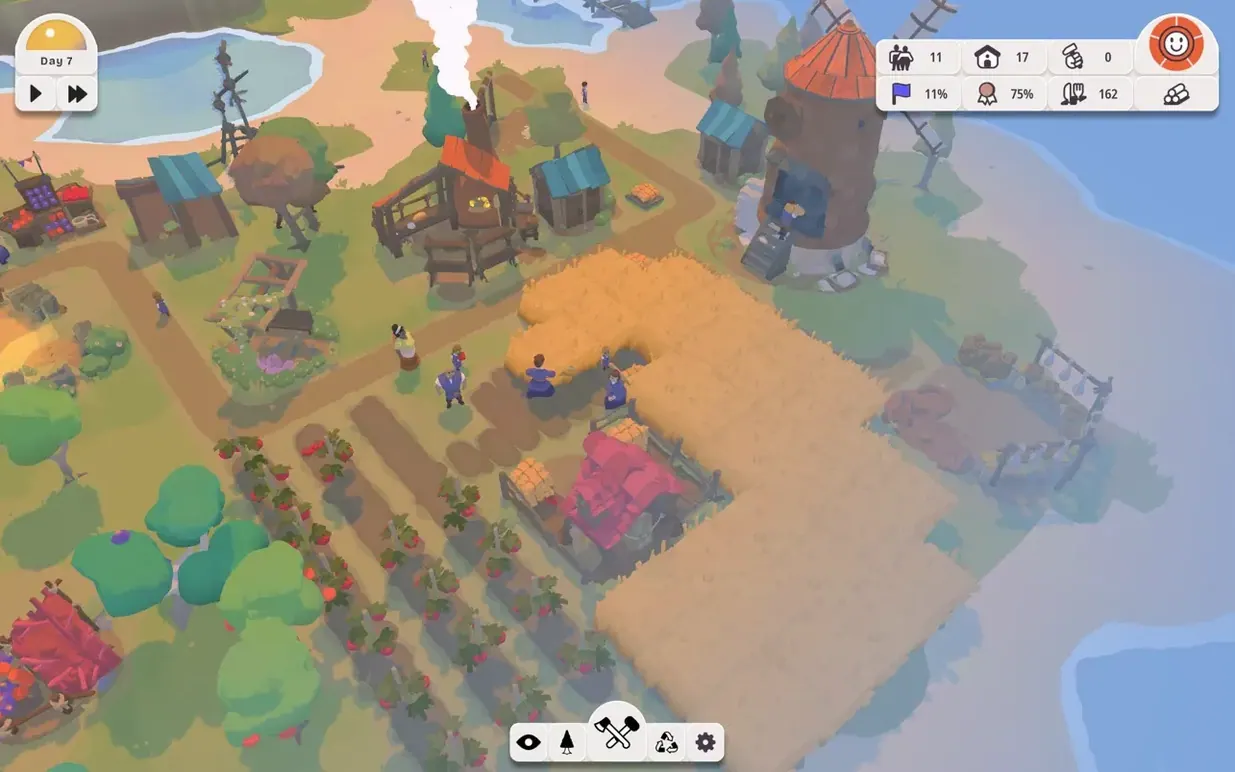
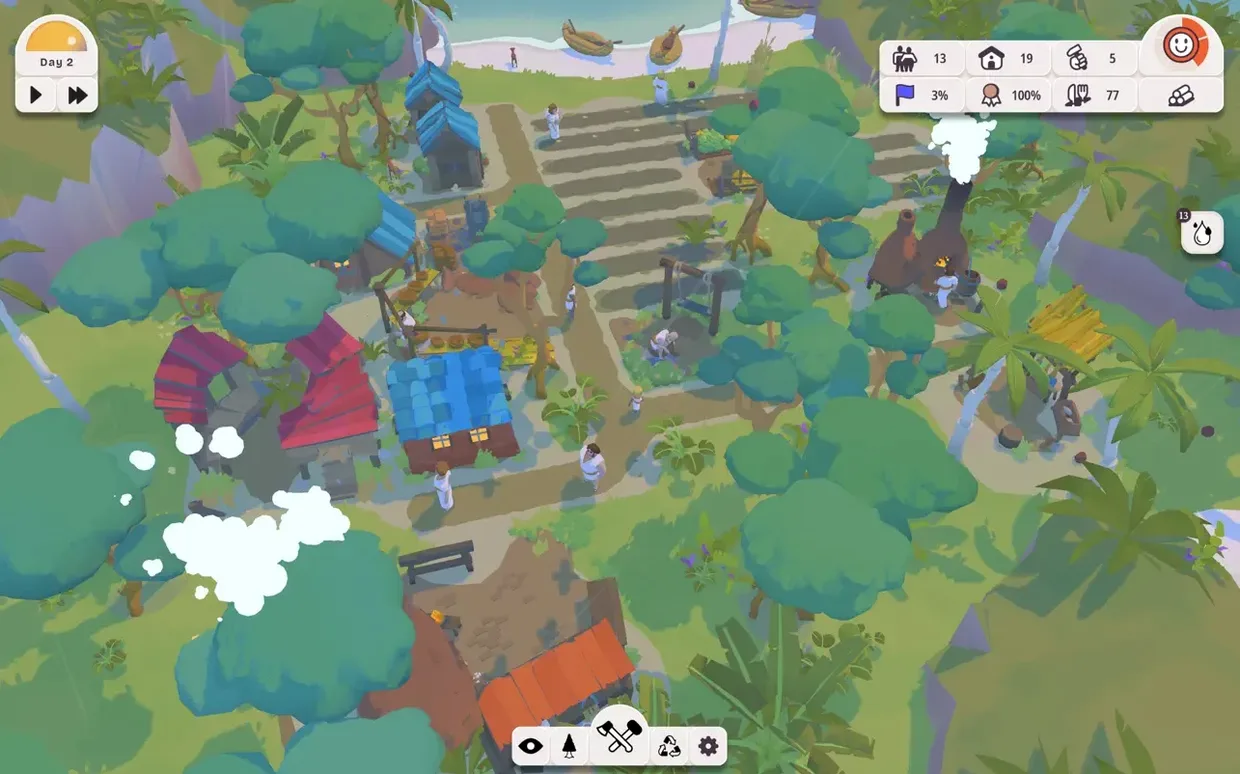
If you’ve ever lost an evening to a city builder and wished it felt a little less like a spreadsheet, Outlanders 2 gets that balance right. It’s the kind of game where a sudden rainstorm can ruin your crops right when you were feeling smug about your layout. The sequel adds more of everything, but the real question is whether its slower, problem-solving pace fits your mood.
- Campaign players who like a story in their strategy. The 21-level campaign leads you through different leaders and constraints, so you’re always adapting rather than just optimizing.
- Folks who enjoy bi-weekly bite-sized puzzles. The challenge mode refreshes every two weeks with a curated scenario, giving you a reason to return without demanding a second job.
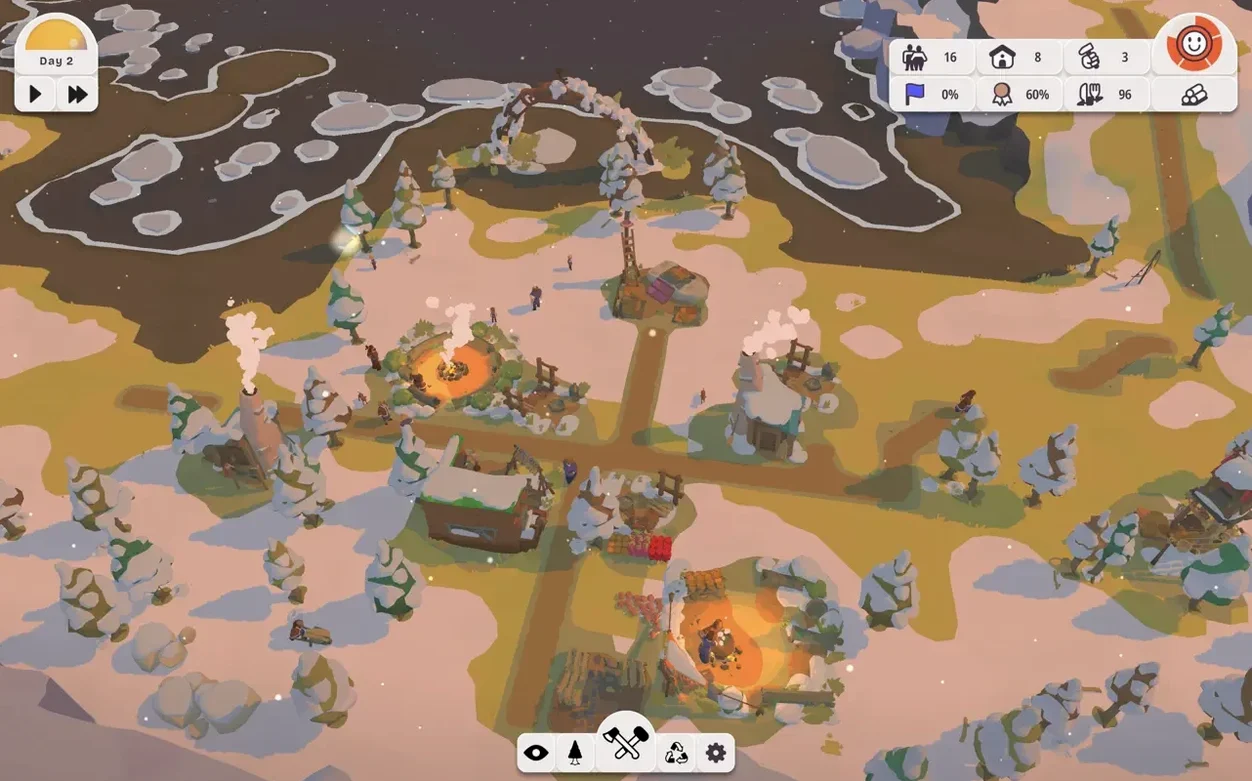
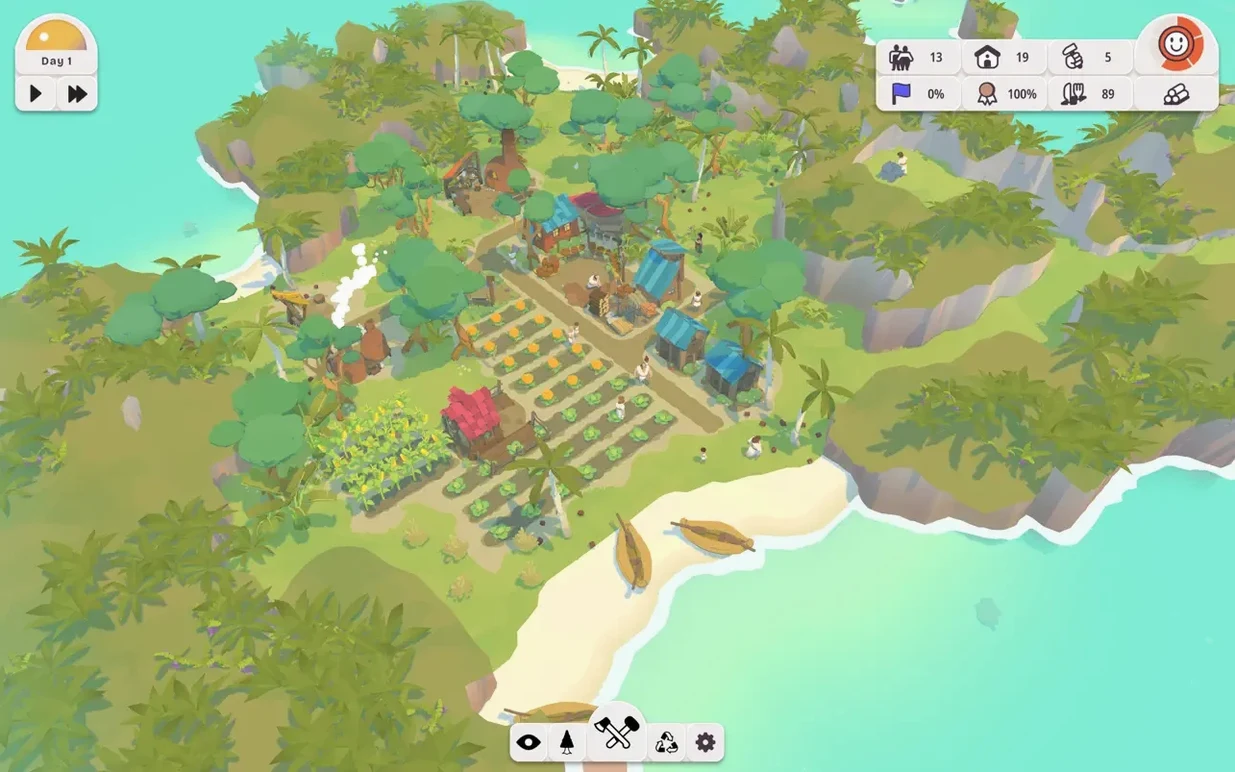
- Builders who want variety in scenery. With the Tropics and Winterlands biomes, plus revamped terrain generation, each map feels less like a reskin and more like a new set of rules.
- Not for speed-runners or combat fans. There’s no attacking, no rushing a tech tree in ten minutes. The game asks you to observe, plan around weather events, and restart when your town gets hangry.
It’s a contemplative toy box with twice the resources and buildings of the first game. You’ll love it if tinkering with supply chains sounds like a Sunday well spent. If you need constant action, it’ll feel like watching dough rise.
A cold-weather build order you can steal
Winterlands maps punish you early if you treat them like the Tropics. My go-to opening looks like this, and it’s saved me from the restart screen more than once.
- Pause immediately and scout the nearest berry bushes and the lake edge. You need a food source and water within walking distance of the town center, or your settlers spend half the day commuting.
- Drop a gatherer’s hut touching at least three berry patches, then a water well on the flattest dirt you can find. Don’t bother with roads yet; dirt paths form naturally where people walk.
- Build one stockpile close to the well, then a sawmill near the thickest stand of pine. Winterlands trees regrow slowly, so position it where you won’t have to move it later.
- Before the first weather event hits, get a healer’s hut up and assign someone with middling intelligence. You don’t need a genius; you need someone who won’t wander off to haul logs when a blizzard knocks two people flat.
- When the notification for freezing rain appears, open the overlay, see who’s working outdoors, and manually pull them into any roofed building for a minute. It’s micro, but it stops a cascade of illness that drains your herb supply.
Silent and cool after three hours
On an M4 Mac mini the game stays quiet and cool — fans never spun up across a three-hour session. Startup from the Applications folder takes about four seconds, and loading a mid-campaign save with 80-plus settlers hovers under six. Memory use sits in the 400–500 MB range, which leaves plenty of breathing room for a browser and music in the background. I’ve had exactly one crash in two weeks of daily play, and it happened while scrubbing through the challenge-mode leaderboard, not during a live map.
The real stability test is the bi-weekly challenge refresh. Those scenarios load with freshly generated terrain and weather seeds, and I haven’t seen a corrupted save or a mismatch between the preview thumbnail and the actual map. Pomelo Games clearly tested the procedural generation against their own schedule.
The first release landed with a full 21-level campaign and a challenge mode that rotates new puzzles in every two weeks. It also introduced the Tropics and Winterlands biomes right out of the gate.
- macOS 11.0 or later
- Runs on Apple Silicon and Intel Macs
Questions I actually get
Does Outlanders 2 work on Intel Macs?
Yes, it runs on both Apple Silicon and Intel Macs with macOS 11.0 or later.
How often does the challenge mode get new content?
The challenge mode updates every two weeks with a fresh scenario to tackle.
What languages are supported?
It includes English, German, Arabic, Spanish, Italian, Traditional Chinese, Simplified Chinese, Korean, Portuguese, Turkish, French, Japanese, and Russian.
Notes from the tables 0
Sign in or pull up a chair to leave a note.
No notes on this one yet. They go up after I read them.