

Dropping a logo bug on your outgoing feed is one of those small details that makes a stream feel professional. But before you get to the fun parts of Wirecast Pro, you need to know if your machine can handle the heavy lifting of a live multi-camera production.
macOS 11 and native Apple silicon support
- macOS 11 (Big Sur) or newer
- Architecture: Runs natively on both Intel and Apple Silicon chips
- 64-bit application
PTZ camera detection restored in this update
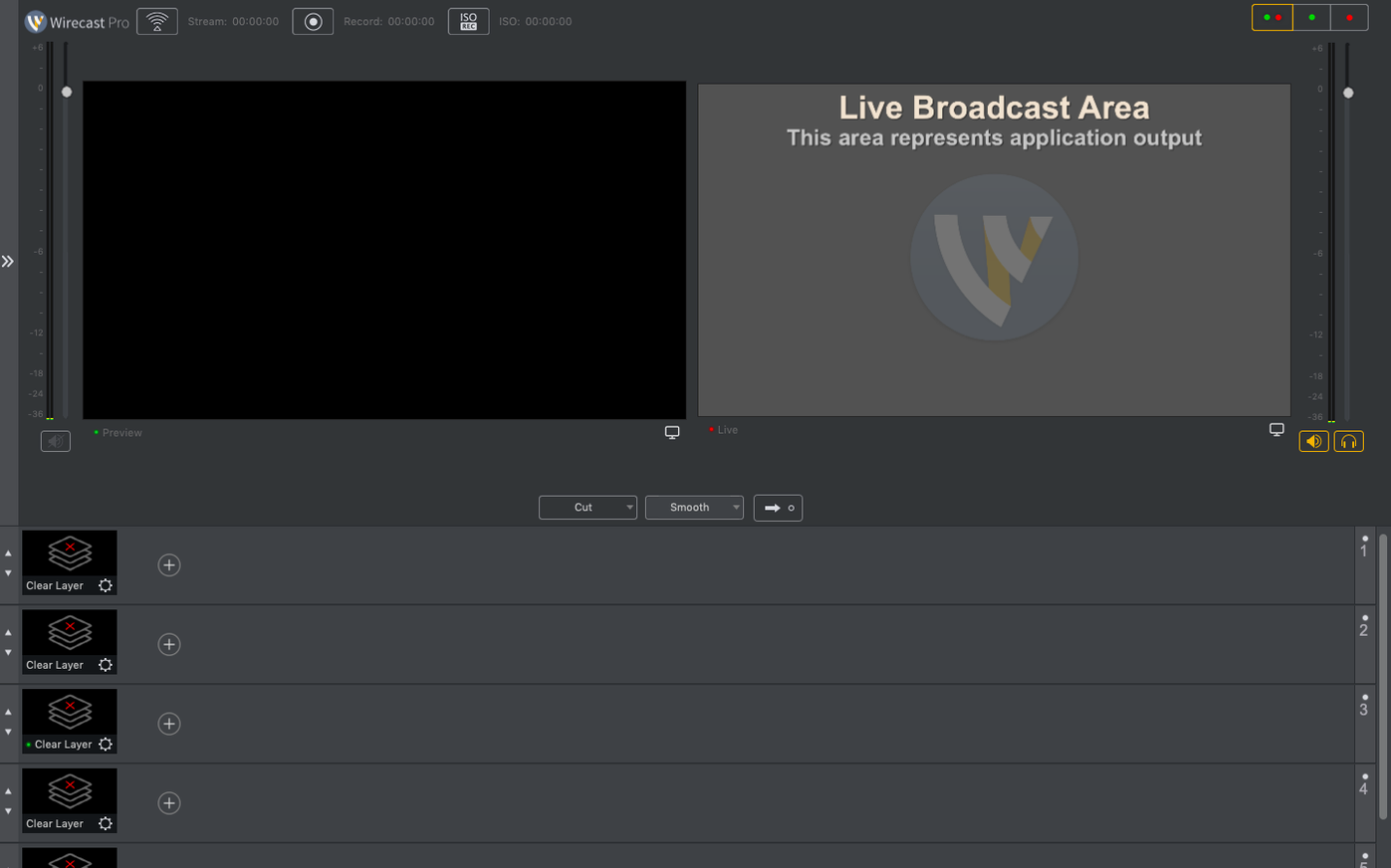
Wirecast Pro is the kind of tool small TV studios and production teams use to switch live feeds and record events. The 16.5.4 release is a maintenance drop that fixes a few specific gremlins. It restores detection of certain PTZ cameras over NDI, patches the virtual camera so it doesn't choke when your company IT blocks the mic driver, and adds a flag for discontinuous frames from NDI sources. It also still handles the basics well: placing graphics, changing text on the fly during a broadcast, and juggling multiple sources without falling over.
Where Wirecast Pro fits in your Mac toolkit
Wirecast doesn't try to be your video editor. It leaves trimming and color grading to apps like Final Cut Pro or DaVinci Resolve, and focuses entirely on the moment things go live. You'll often see it sitting between a capture card utility and a hardware switcher — or replacing a hardware switcher outright when the budget doesn't stretch that far.
On the Mac side, it plays well with NDI sources from anything on your local network, including OBS Studio running on a second machine handling lower thirds or slide decks. The virtual camera output from Wirecast shows up as a standard camera in Zoom, Teams, or QuickTime, which means you can send a fully produced feed into a video call without the other participants seeing your raw camera angles. If you run a Blackmagic capture device, Wirecast sees its inputs without extra driver gymnastics.
The built-in title and caption styles — thirty of them — are functional rather than flashy, and they're designed to be edited mid-stream. That matters when a presenter's name changes, or a sports score needs updating between plays. For heavier graphics work, some users pair Wirecast with an external character generator sent in as an NDI source, keeping the main interface focused on switching and stream health.
Three-camera high school gym broadcast fits here
Wirecast makes the most sense when you have multiple cameras and a reason to switch between them live. A single-laptop streamer doing talking-head content will find it oversized. But step into a high school gym running a three-camera basketball broadcast, or a house of worship streaming a service with lyrics overlays, and the tool clicks into place.
Corporate event teams also gravitate toward it. The virtual camera fix in 16.5.4 is aimed directly at environments where IT locks down microphone drivers — a classic enterprise friction point. Being able to push the Wirecast output into a sanctioned meeting app without the virtual mic crashing keeps a production running when compliance policies get strict.
Small studios that record interviews or music sessions benefit from the recording side. Wirecast captures an isolated master while you stream, so you walk away with a clean file for later editing. Conference organizers use it the same way: stream the keynote to a remote audience, keep the archive for on-demand playback.
Point recordings to a drive with enough space
The defaults are safe, but a few tweaks make the daily experience smoother.
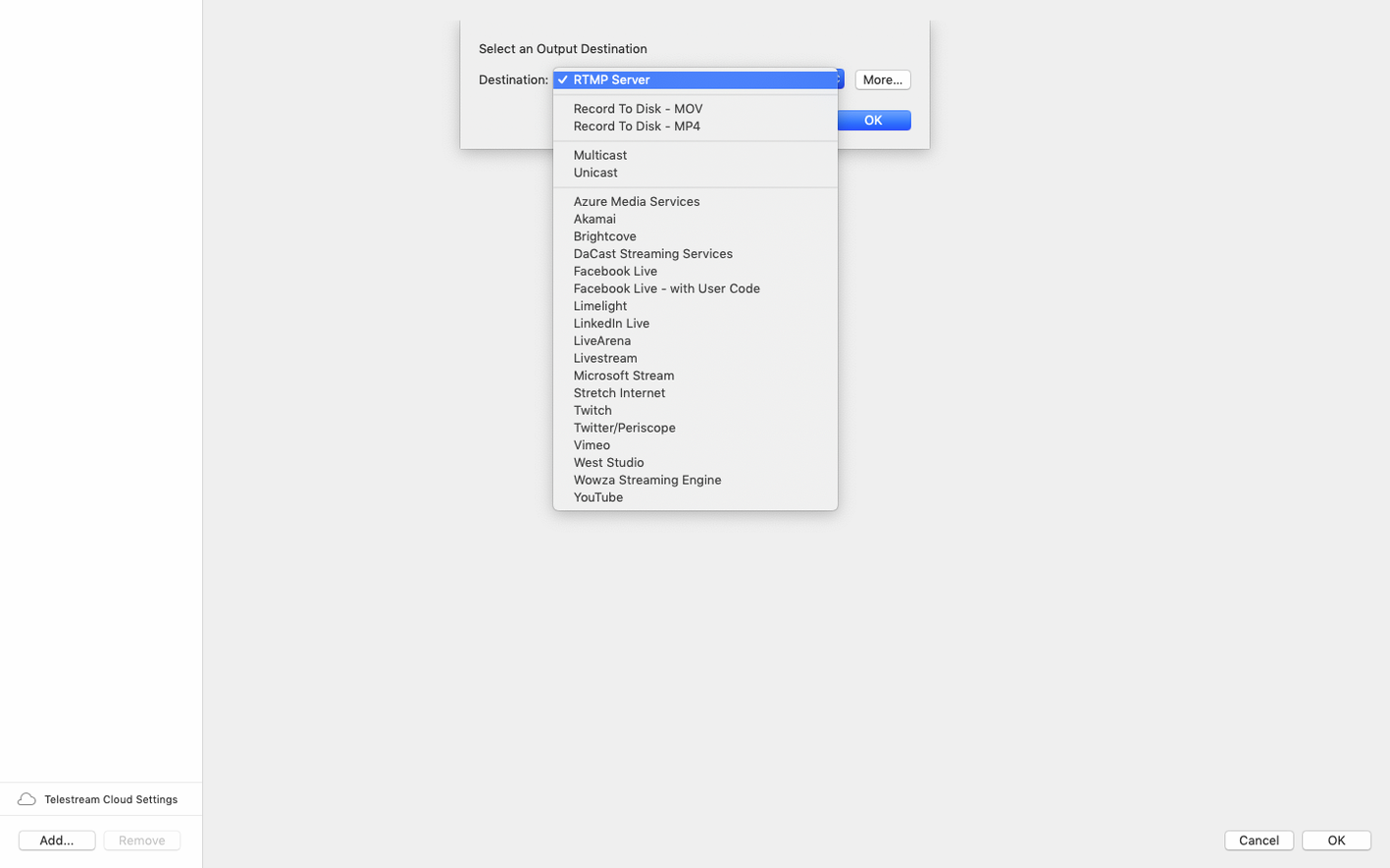
- Set your recording destination manually. Wirecast defaults to the Movies folder, but recording a two-hour event at a decent bitrate eats space fast. Point it at an external drive with room to breathe, or at least a dedicated folder you can find in a hurry after the stream ends.
- Turn on the discontinuous-frame flag for NDI sources. This is new in 16.5.4 and not on by default everywhere. If you pull in NDI feeds from cameras or converters, enabling it prevents the encoder from stuttering when frames arrive out of order — common on busy networks.
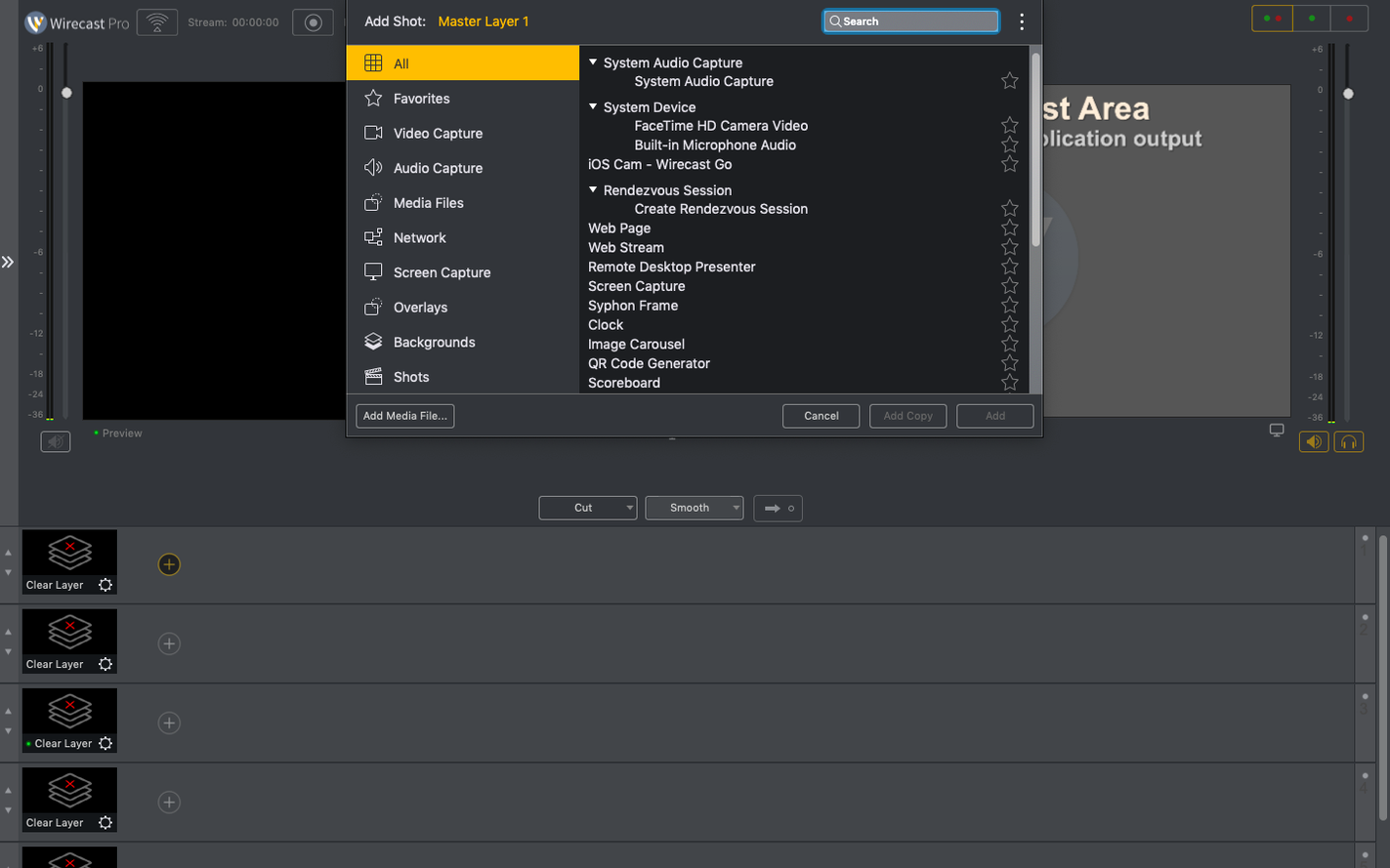
- Lock your shot presets early. Before you go live, save a few multi-layer presets that combine a camera angle with the right overlay graphics. Switching from a wide shot with a scoreboard to a tight shot with a name lower third becomes one click instead of three separate adjustments while you're talking.
- Test the virtual camera output with your meeting app before showtime. With the fixed mic-driver handling in this version, you still want to confirm that your conferencing software sees both video and audio from Wirecast. A quick dry run catches routing mistakes when there's no audience watching.
Wirecast Pro rewards the kind of preparation you'd expect from a broadcast tool. Spend a quiet afternoon dialing in these settings, and the chaos of a live production turns into the kind of controlled chaos you can actually enjoy. Bottom line: it's a workhorse for multi-camera Mac productions, and the 16.5.4 fixes keep it reliable on the hardware and network setups people actually use.
This one is mostly about tidying up the NDI and virtual camera behavior. Here's what changed:
- Fixed detection of certain PTZ NDI cameras on macOS.
- Fixed the virtual camera so it works even when corporate IT policy blocks the virtual microphone driver.
- Added a discontinuous-frame flag for NDI sources.
- macOS 11 or later
- Apple Silicon or Intel processor
- 64-bit native support
Notes from the tables 0
Sign in or pull up a chair to leave a note.
No notes on this one yet. They go up after I read them.
More from the Mac Apps page
The whole page Mac Apps 7 MB
WinZip Mac Pro
12.0.7282
Mac Apps 7 MB
WinZip Mac Pro
12.0.7282
 Mac Apps 36 MB
Wondershare Filmora
14.8.17
Mac Apps 36 MB
Wondershare Filmora
14.8.17
 Mac Apps 924 MB
Wondershare Recoverit
14.0.20.6
Mac Apps 924 MB
Wondershare Recoverit
14.0.20.6
 Mac Apps 212 MB
Wing Pro
11.1.0.0
Mac Apps 212 MB
Wing Pro
11.1.0.0
 Mac Apps 149 MB
Wondershare UniConverter
15.7.3.564
Mac Apps 149 MB
Wondershare UniConverter
15.7.3.564
 Mac Apps 324 MB
Winclone Pro
10.5
Mac Apps 324 MB
Winclone Pro
10.5
 Mac Apps 21 MB
WidgetWall
3.15.2
Mac Apps 21 MB
WidgetWall
3.15.2
 Mac Apps 396 MB