
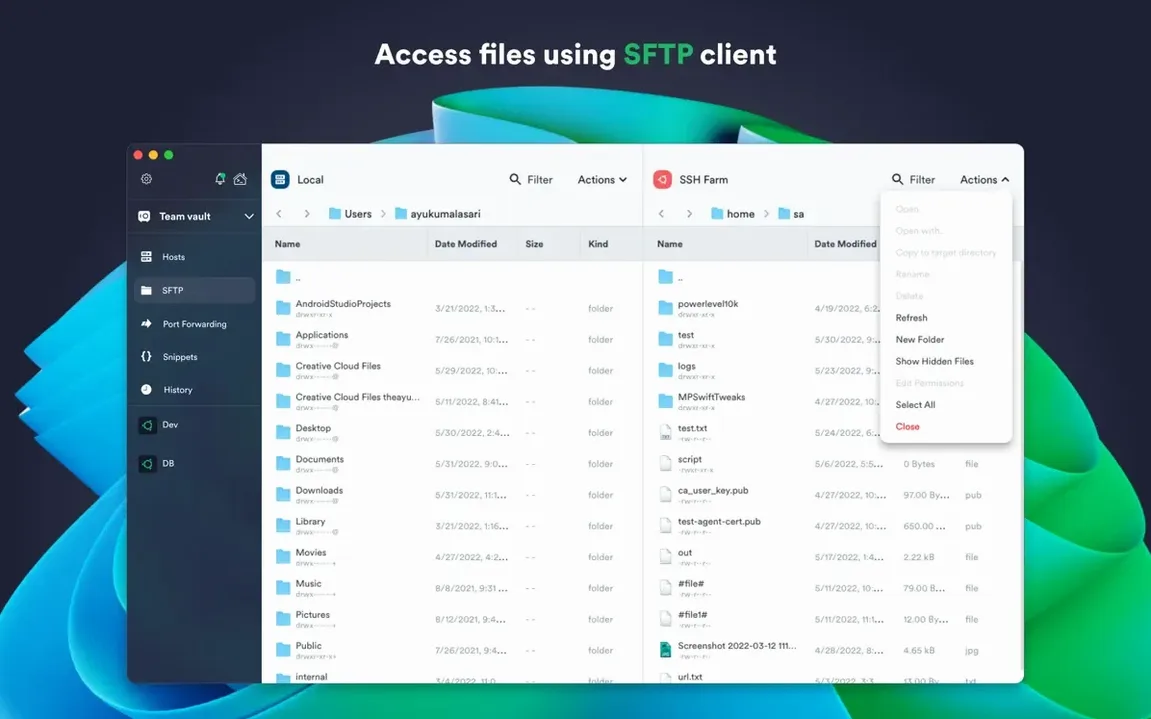
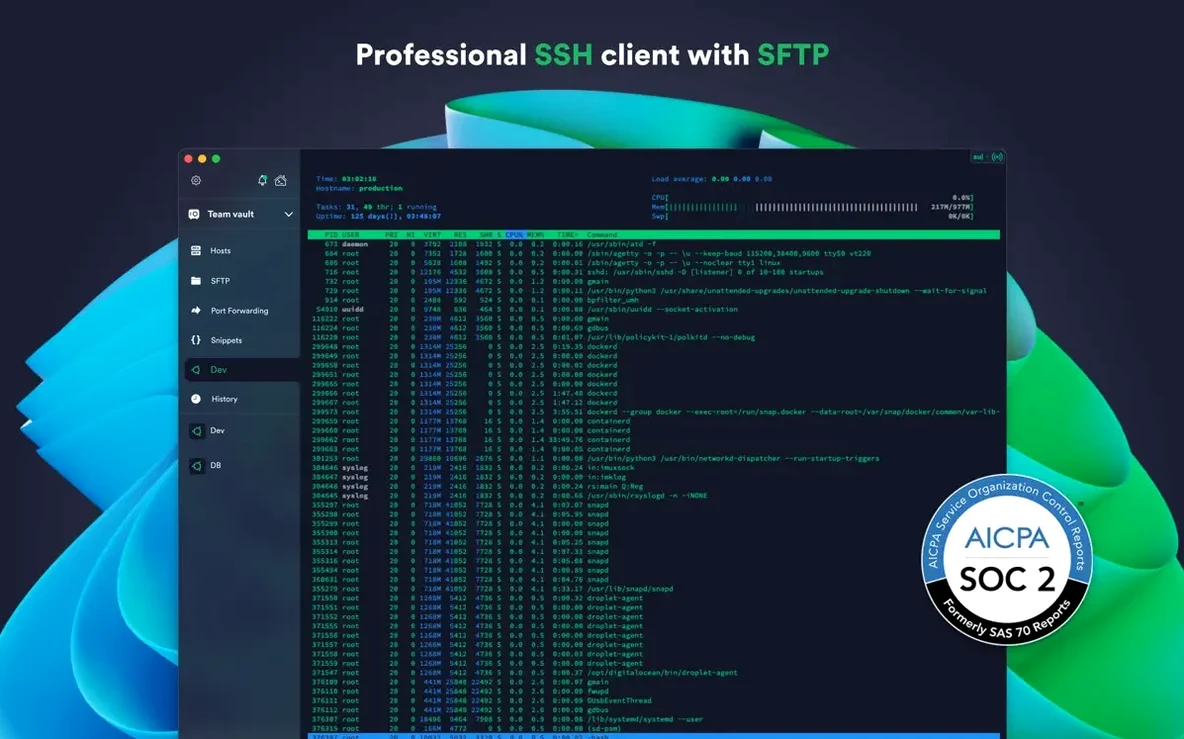
One hundred terminals open, and you can't find the command you ran three days ago. That's the kind of problem Termius was built to fix.
Save and replay commands with a single tap
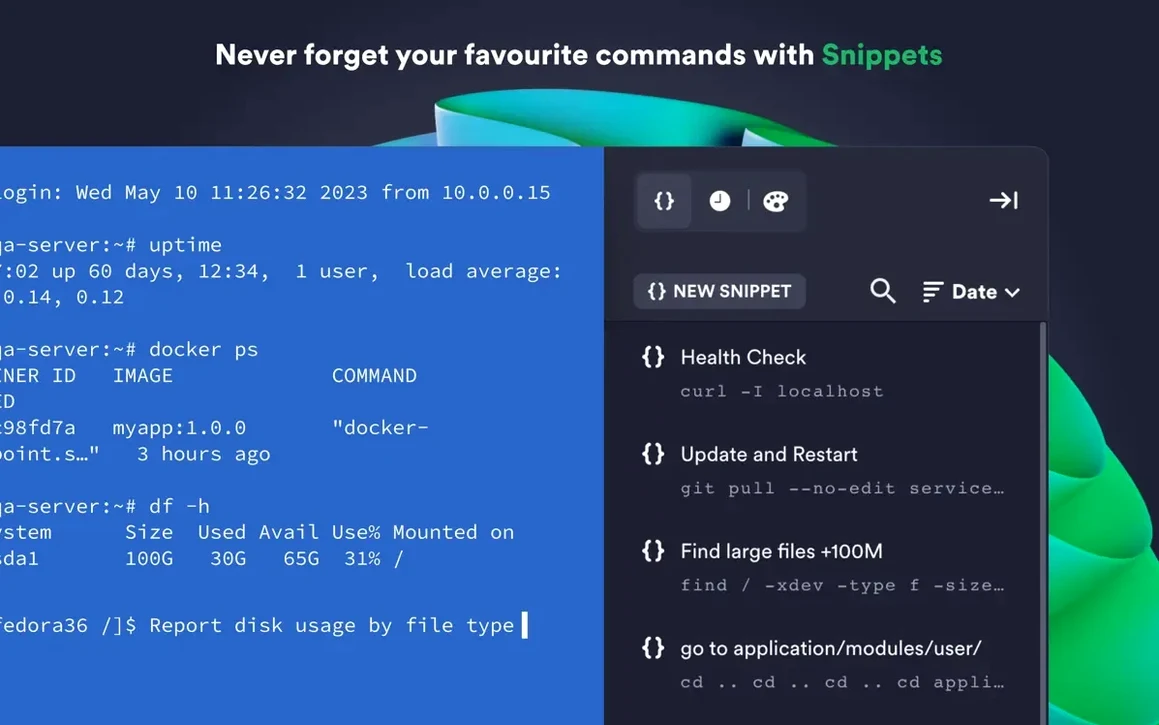
You save your frequently used commands and shell scripts right in the app, then run them with a single tap. No more scrolling through bash history or keeping a separate sticky note of incantations.
What makes the history actually useful?
Every command you run gets saved to a shared, searchable history across all your connections. The thing you typed on the web server at 2 a.m. is right there when you connect from your Mac the next morning.
Does it know about my cloud servers?
It syncs directly with AWS and DigitalOcean, pulling in your instances so you don't have to hunt down IP addresses. Proxy servers and jump hosts are built-in, so multi-hop connections are part of the normal workflow.
Can I make each server feel a little different?
You can set per-connection terminal themes and fonts, which is a small thing that saves you from typing the wrong command in the wrong window. Custom environment variables per host keep paths and settings tidy, too.
Skipping agent setup makes your private key useless
Nobody reads the manual, I get it. But skipping the key setup steps in Termius turns a sharp tool into a blunt one. The most common stumble: importing a private key and never telling the app to use the agent. SSH agent forwarding is right there in the connection settings, and leaving it off means you're typing passphrases all day.
Another one is treating the snippet library like a junk drawer. People save a command named fix and six months later they can't remember what it fixes. Give each saved command a short, boring name that describes what it actually does. Your future self will thank you.
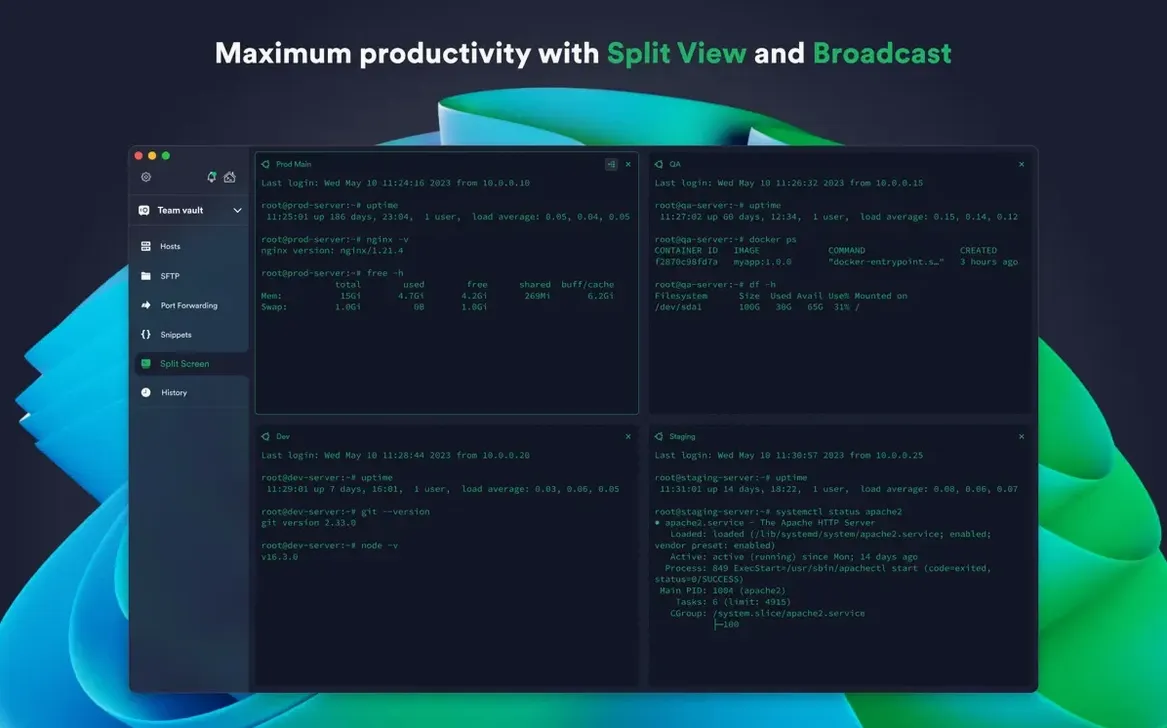
Some folks also ignore the split-view feature entirely and stack ten separate windows on one screen. The tabbed interface plus split panes keeps two or three servers visible at once, which matters when you're tailing a log on one host and restarting a service on another.
who clicks with termius fastest
System administrators who bounce between a dozen customer environments every morning get the most out of it. The synced host list and shared history mean the laptop and the desktop stay in step without any manual copying. If you're the person everyone calls when a server goes quiet, the mobile app pulling the same connections means you can at least peek at logs from a parking lot.
Engineers who deal with AWS or DigitalOcean instances benefit in a specific way: the cloud integration auto-populates hosts, so new droplets and EC2 instances appear without copy-pasting IP addresses. That's half a coffee's worth of time saved every morning.
Anyone running a homelab with a serial connection to a Raspberry Pi or a network switch gets a nice surprise too. Most modern SSH clients dropped serial support years ago. Termius kept it, and it works with a USB-to-serial cable without hunting for drivers.
Lock credentials behind your fingerprint first
- Set up Touch ID or Face ID right away. The credential lock keeps your keys behind your fingerprint, so you're not typing a master password every time you launch the app.
- Create one folder for each project or client. Grouping hosts by context beats one long flat list when you hit twenty connections. The folder becomes your mental map.
- Save the five commands you run most often as snippets. Even if they're simple things like
df -hordocker ps, having them one click away trains you to use the feature. After a week, you'll naturally add the longer ones. - Pick two terminal themes you like and assign them. Give production servers a different background from staging servers. It sounds trivial, but your fingers and eyes catch the difference before you type something dumb in prod.
- Turn on cloud sync if you also use termius on another mac or a phone. The first time you check a log from your phone while the kettle boils, you'll understand why the sync matters.
Bottom line: the first week with Termius is about shaping it to your habits instead of adapting to its defaults. Set up the agent, name your snippets, group your hosts, and let the history do the remembering.
Version 9.35.4 is a maintenance release. It fixes crashes and smooths out the rough edges.
- macOS 10.13 or later
- Works on Intel and Apple Silicon Macs
- Interface is in English
Notes from the tables 0
Sign in or pull up a chair to leave a note.
No notes on this one yet. They go up after I read them.