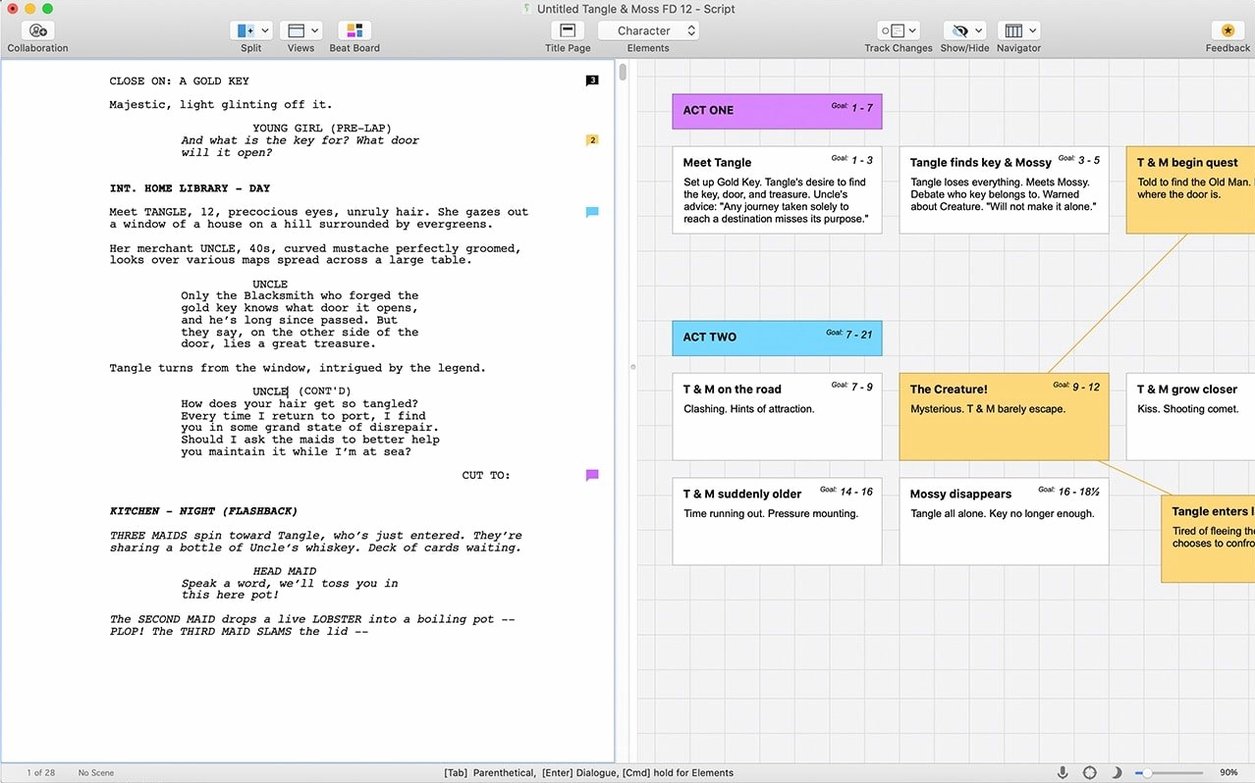
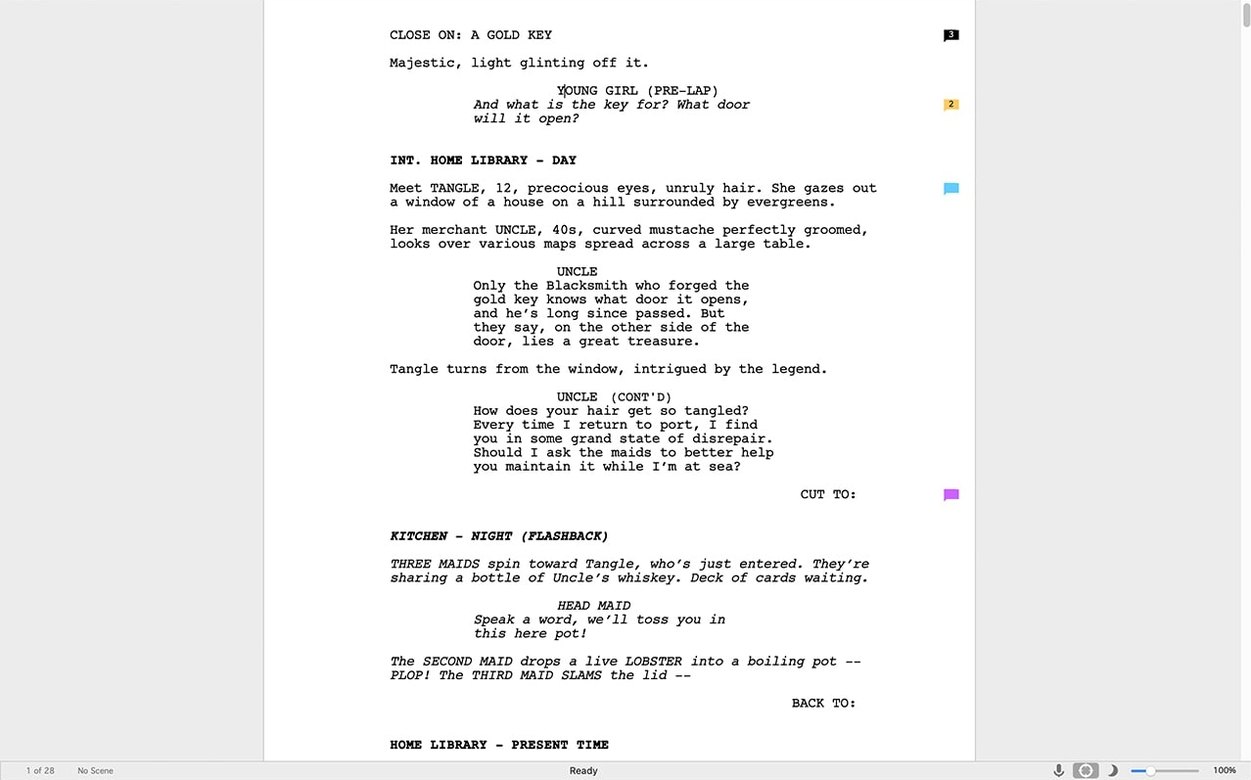
Staring at a blinking cursor is hard enough without worrying about margins, indentations, and which element comes next. Final Draft handles the formatting rules so your script looks like a real script from page one — the way a showrunner or producer expects to see it.
The current version, 13.4.0, is a maintenance release with minor bug fixes. Under the hood, it still runs on Intel Macs and requires macOS 12 Monterey or later. The core promise hasn't changed: you write, and the software keeps everything in standard industry format without you nudging tabs and rulers.
You can open the same file on a Mac or a Windows machine, and there's a companion iOS app called Final Draft Go for sketching ideas on the move. It's a focused tool — no animation timelines, no novel-writing modes — just the bones of a proper screenplay, teleplay, or stage play.
Bug fixes that steady late-night rewrites
Version 13.4.0 is a tidy-up release — nothing flashy, just the kind of bug fixes that make the app feel less creaky when you're deep in a third draft at two in the morning. If you've been running something older, the jump to 13 brought a handful of changes that actually affect how the day feels.
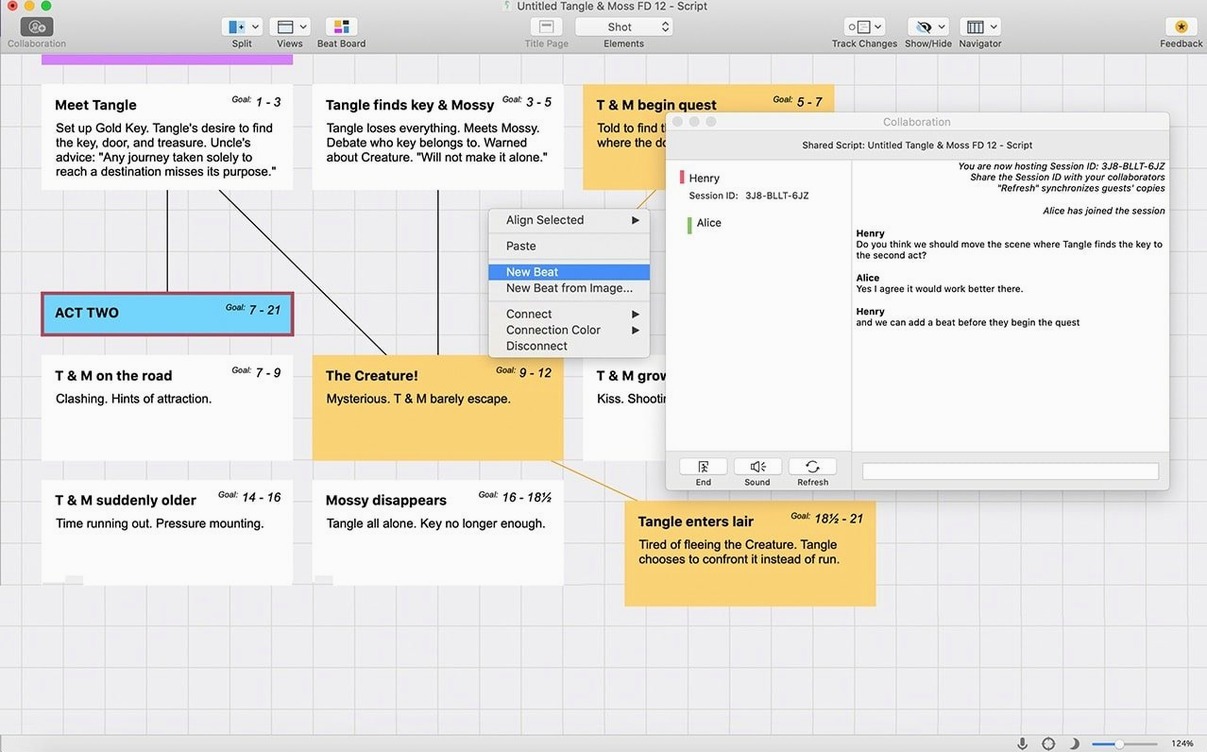
The biggest quality-of-life shift in the 13 cycle is the tighter link with Scrivener. You can now move an outline or beat board from Scrivener straight into Final Draft without exporting, converting, and fixing broken formatting for an hour. For writers who plan in one app and draft in another, that cuts out a regular annoyance.
Other changes that landed in 13 and stuck around:
- Dark mode support holds up better on newer versions of macOS — less eye strain during long sessions.
- The typeahead suggestions for character names and scene headings got a little smarter and less intrusive.
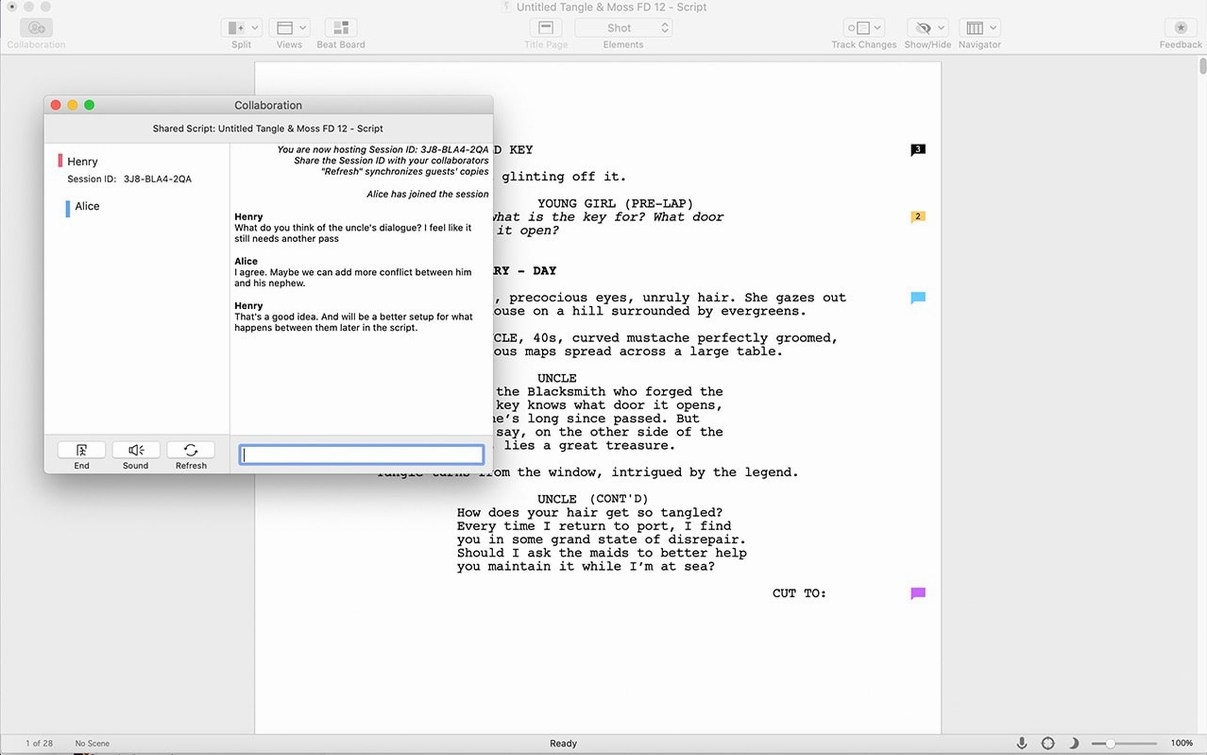
- Collaboration tools became a bit more stable, especially when more than one person is poking at the same scene.
- Outline and index cards inside the app feel snappier, making it easier to rearrange scenes without scrolling endlessly.
None of this rewrites how you write. It just strips away small frictions that pile up over a hundred pages.
The production-standard pick versus three plain-text alternatives
Final Draft isn't the only screenwriting tool on a Mac, but it's the one most productions expect you to use. Three others come up often in conversation, and each fits a different kind of writer.
Highland 2 works in plain text and uses Fountain syntax to figure out formatting as you type. There's less clicking around, fewer panels — just a clean window and your words. It's lighter on the processor and the brain. The trade-off is that Highland doesn't generate a locked production draft with colored revision pages and all the scheduling metadata a script coordinator needs. If you're writing a spec or a short, Highland is a comfortable place to live. If your script is heading to a crew, Final Draft still feels like the expected handoff.
Fade In comes closest in feature set. It reads and writes Final Draft files reliably, handles revisions, and runs on just about every platform without fuss. Some writers find the interface slightly more modern, less cluttered. But Fade In doesn't have the same deep integration with pre-production tools, and it's not the name a studio reader's eyes light up seeing. Final Draft wins on sheer industry weight — that's not a better-or-worse thing, just a practical reality.
WriterDuet is built around real-time collaboration. Two people can type in the same scene from different cities and see each other's changes as they happen. Final Draft's collaboration works, but it wasn't born as a cloud app the way WriterDuet was. For a solo writer or a pair trading pages back and forth, the difference barely registers. For a virtual writers' room, it's more noticeable.
Where Final Draft still has the clearest edge is in production workflows. Revision mode, colored pages, scene numbering that a line producer trusts — those things don't matter during a first draft but they matter enormously once a script is greenlit.
Retype a favorite scene before touching any tutorial
Don't try to learn the whole app at once. Write three pages of a script you already know. Pick a scene from a favorite film and retype it. That muscle-memory exercise teaches you more than any tutorial video because you feel how Tab cycles through elements and Enter guesses what comes next.
A few things worth doing right away:
- Go into the document settings and set your default font to Courier Final Draft or Courier Prime. Courier Prime renders cleaner on Retina screens.
- Turn on smart type for character names in preferences. The app learns your cast as you write and suggests names after a few appearances.
- Spend fifteen minutes with the index card view. Drag a few cards around and watch how the script pages follow. That view becomes the fastest way to restructure a draft without losing your place.
- If you use Scrivener for outlining, make that link early — before you write a hundred pages — so the outline and the script stay in sync from the start.
- Try the read-through feature once, even on a silly test script. Hearing your dialogue read back in a monotone voice catches clunky lines your eyes skip over.
The app asks for an internet connection during the initial sign-in, then runs fine offline after that. If you're installing from a disk image, mount it, run the gatekeeper-friendly installer, and drag the app into your Applications folder. Some Macs need a quick trip to Terminal to bypass Gatekeeper — pressing Enter once does it.
Bottom line: the first week is about building the habit of trusting the formatting. Stop adjusting margins. Stop worrying about spacing. Hit Tab, type, and let the software do its job. That's the whole point.
- macOS 12 Monterey or later
- Intel processor
- Internet connection for initial sign-in
Notes from the tables 0
Sign in or pull up a chair to leave a note.
No notes on this one yet. They go up after I read them.