

This one runs smooth on my M1 MacBook Air with macOS Sequoia, and it'll play nice with any Mac that handles modern indie titles without breaking a sweat.
What's the first thing I do when I start?
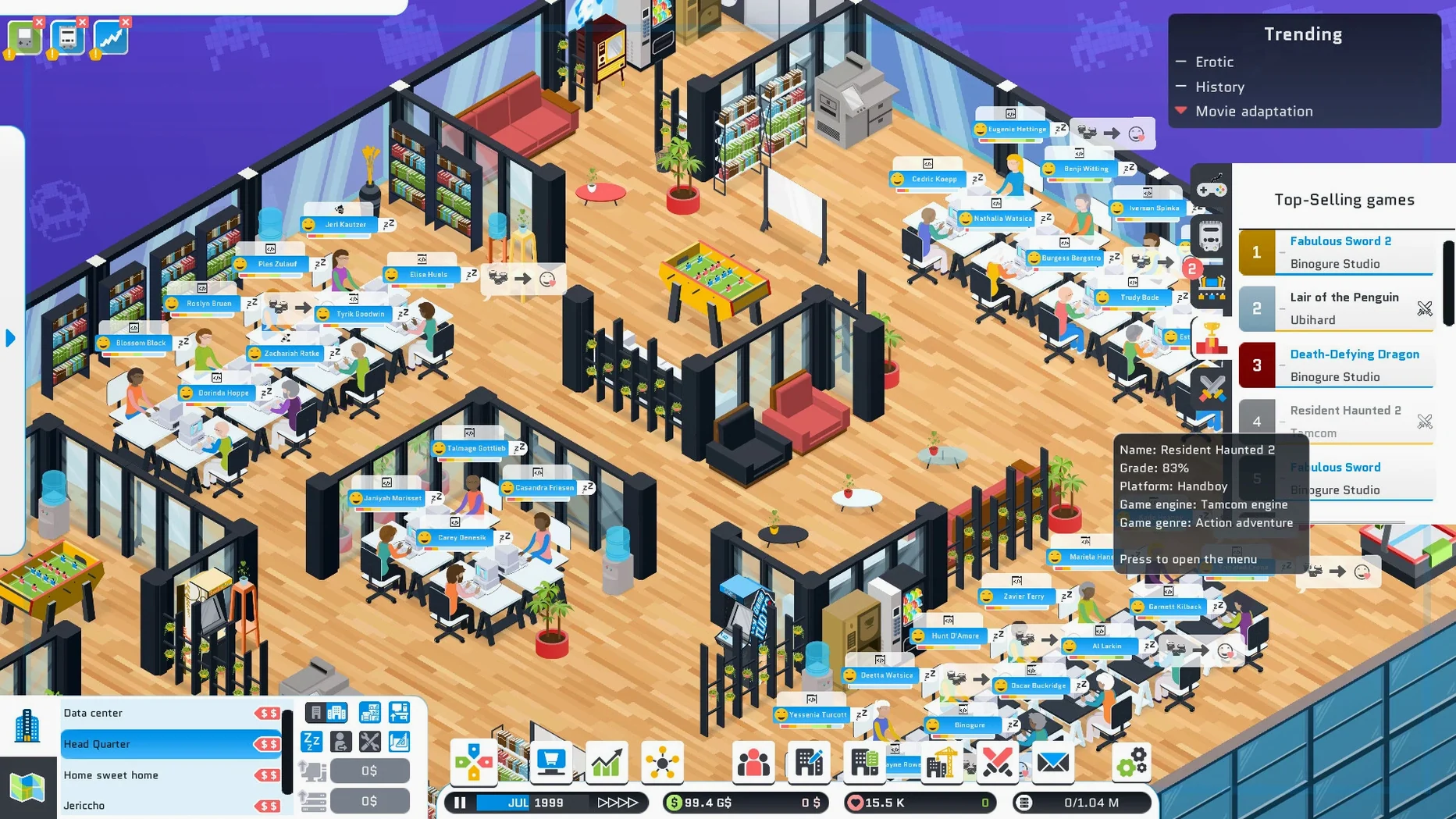
You're dropped into January 1976 with a fresh company and not much else. First job is renting a cramped office, then sitting down to design that debut game from scratch with the skills you've got.
What do I manage day to day?
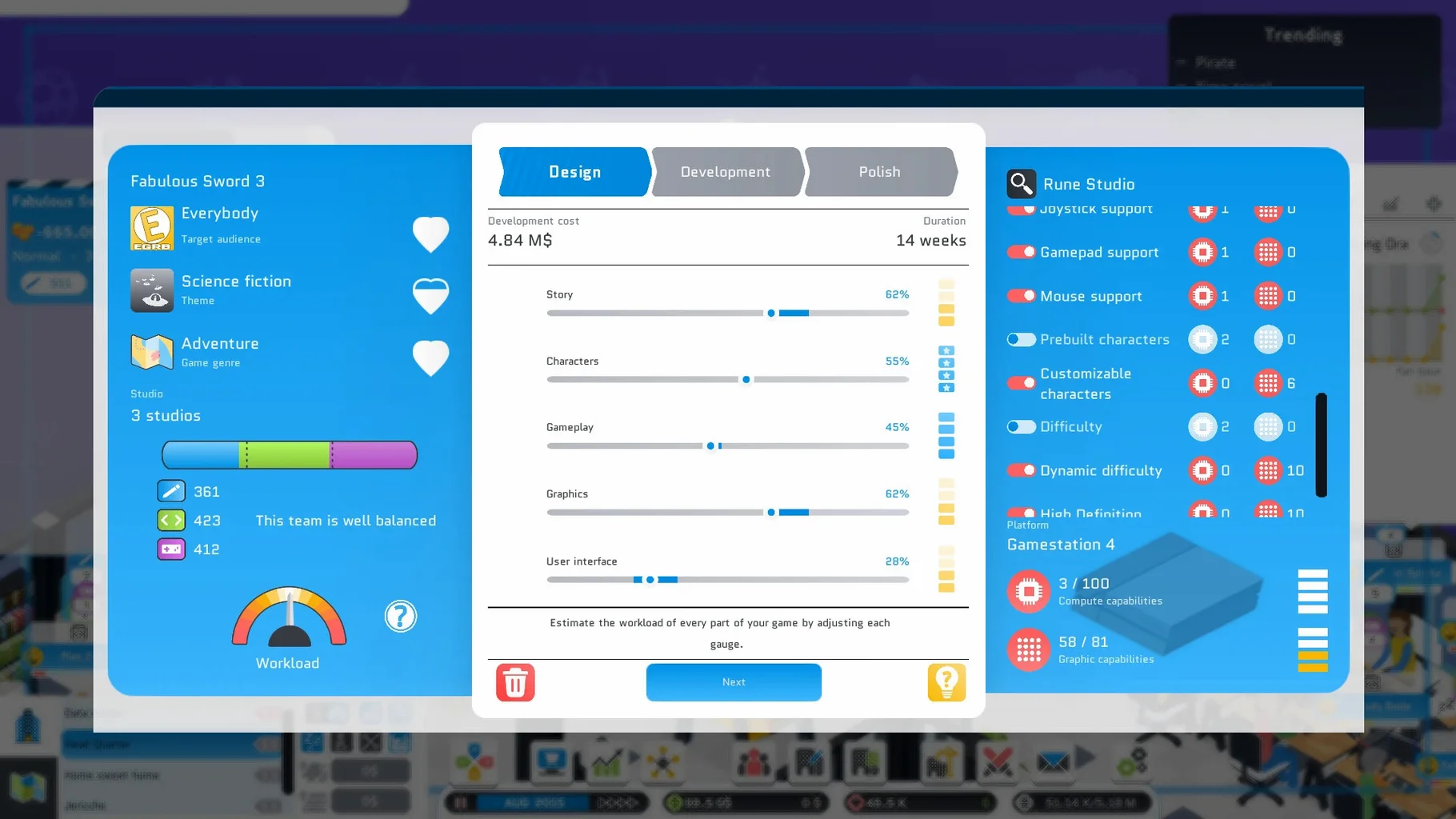
You're picking game genres, balancing features against your budget, and deciding whether to self-publish or hand a title to a bigger publisher to keep the lights on. Between projects, you're hiring talent, running your own digital store, and maybe plotting to buy out a rival studio.
What does success look like down the road?
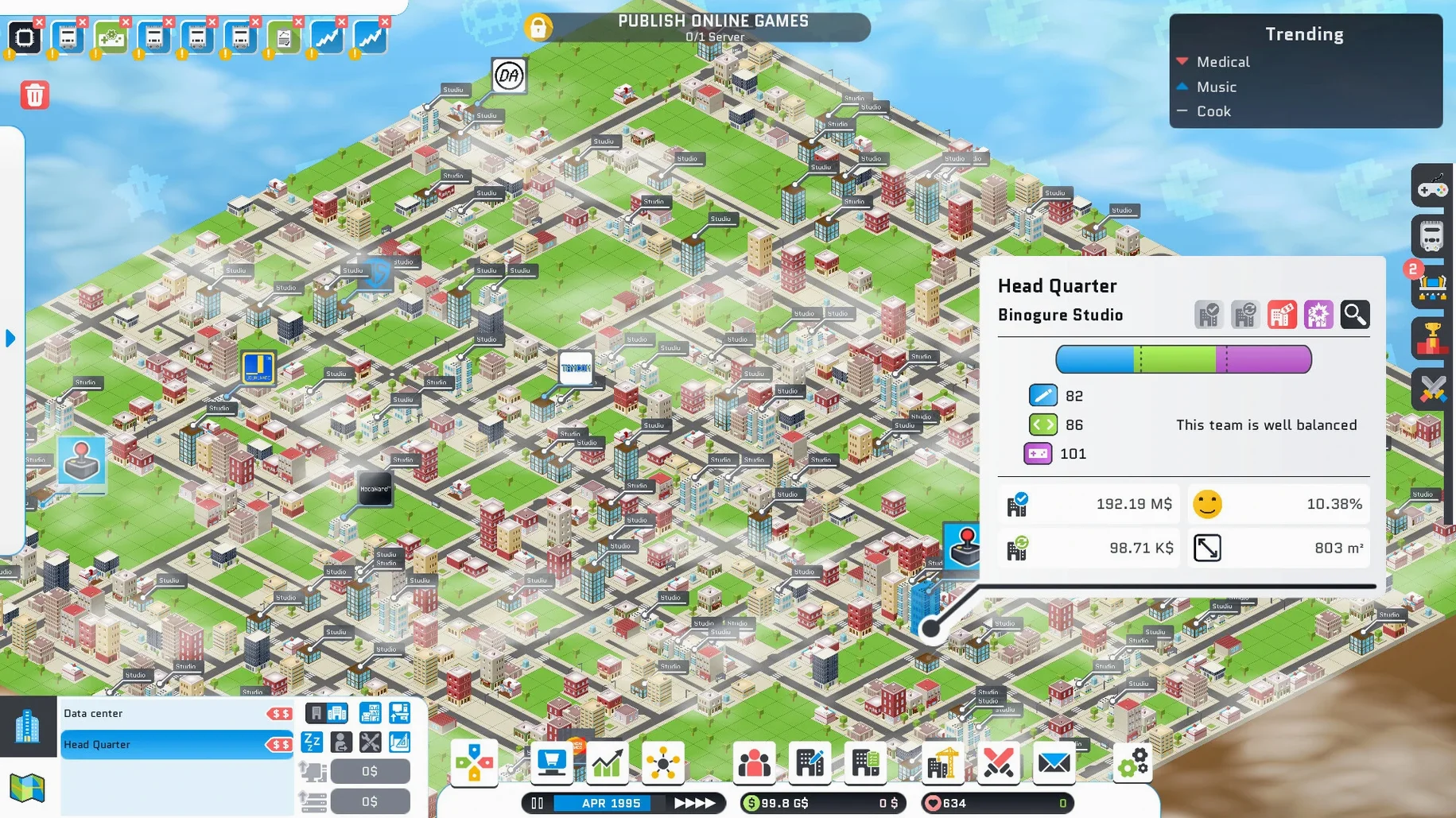
A hit game means you can move to a bigger office and publish your own contracts instead of relying on others. Keep it up and a Game of the Year award might land in your lobby, which feels like the real payoff for all those late nights.
Long-term planners who balance ambition and spreadsheets
Simulation fans who love long-term planning will sink right in. If you've spent hours in management games where one wrong hire tanks a quarter, you're the target audience. Strategy players who enjoy balancing creative ambition against a spreadsheet get the full meal here — deciding whether to build your own engine or license one, and when to stop polishing a game that's already eating your runway.
Folks who just want to design games and ignore the business side might bounce off. This isn't a sandbox for dreaming up titles; it's about running the whole shop, right down to employee schedules and marketing campaigns. Casual players should know the pacing is deliberate — your first few years can feel like scraping by in a rented office, which is exactly the point.
No industry knowledge needed to learn publishing on the fly
Does it assume I know the games industry? Not at all. The systems make sense as you go. You'll figure out publishers versus self-publishing, expos, and console ports through trial and error — the way you'd learn running a real business.
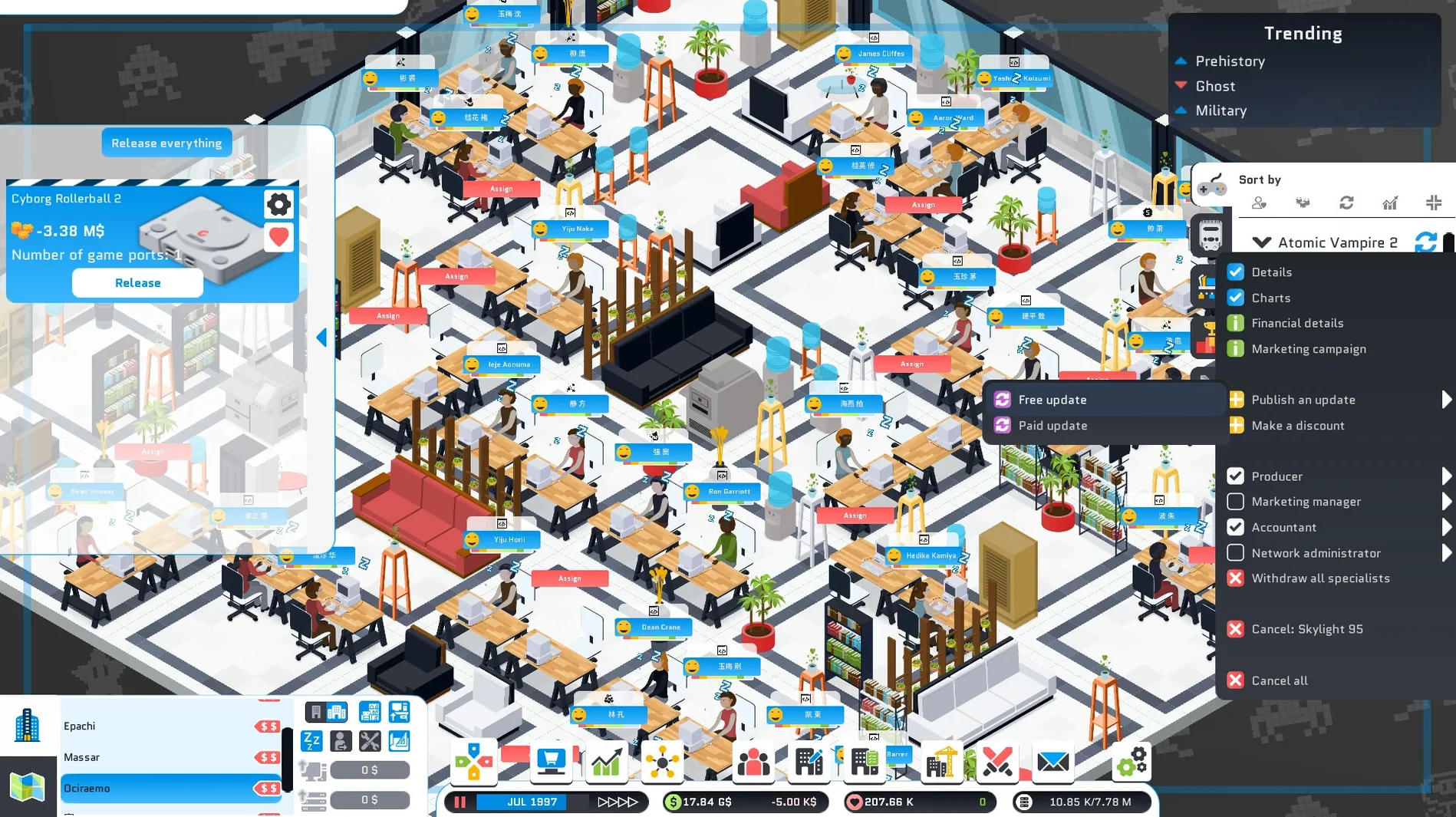
How deep does the competitor stuff go? Beyond hiring artists and testers, you can spy on rival studios, hack their projects, and eventually acquire them outright. It's optional, but it gives you tools to reshape the market instead of just reacting to it.
Is it more about creativity or management? Management, hands down. You pick genres and features, but the creative thrill comes from surviving long enough to see your studio grow from a one-room operation into something that publishes its own contracts and wins Game of the Year. When people search for city game studio your game dev adventure begins mac torrent, they're usually chasing that specific blend of business grit and pixelated nostalgia.
Bottom line: you live the grind of running a game studio, one risky decision at a time.
- macOS (runs on both Intel and Apple Silicon Macs)
Questions I actually get
What happens when I make a really successful game?
You can pack up and move the whole operation to a better office and start publishing your own contracts, giving you more control and a bigger cut of the profits.
Notes from the tables 0
Sign in or pull up a chair to leave a note.
No notes on this one yet. They go up after I read them.
More from the Games page
The whole page Games Updated 40 GB
Civilization V
1.4.2
 Games 5.6 GB
Cities: Skylines
1.21.1-f9
 Games 11 GB
Celeste
1.4.0.0
 Games
Clone Drone in the Danger Zone
1.11.1.5
 Games 1.2 GB
Cat Quest
1.2.13.11
 Games 109 MB
Command & Conquer: Generals
1.04
 Games 2.3 GB
Company of Heroes 2
1.3.8
 Games 30 GB